
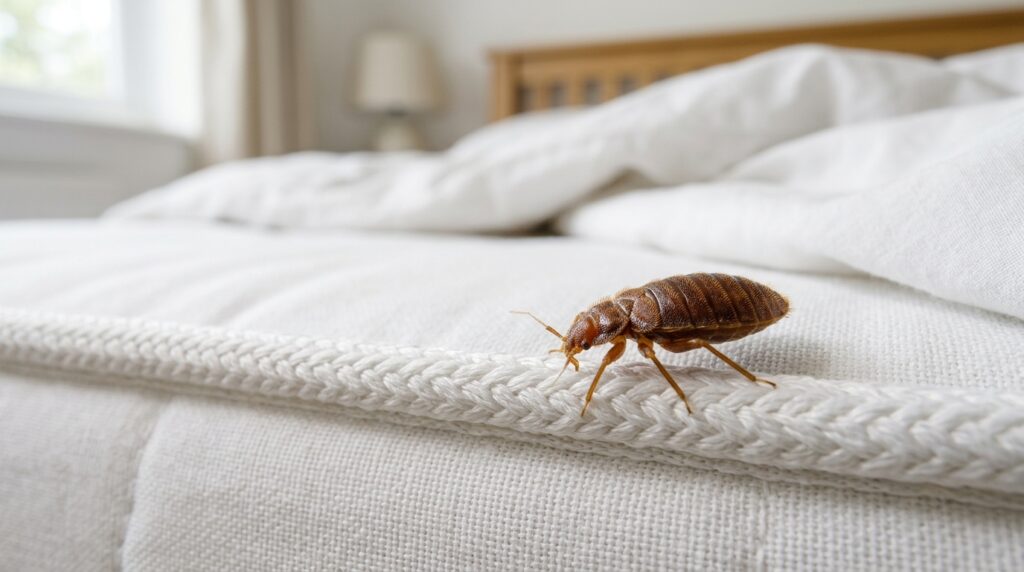
You can pick up a bed bug on a train, but it is not a likely way to get an infestation, and a confirmed case on a train is not a reason to stop commuting. Bed bugs travel on people and their belongings, and they settle where someone sits or sleeps in the same spot for long stretches. A busy commuter seat changes occupant many times a day, which is poor ground for them. The useful question after this week’s reports is not whether trains are safe, but what a commuter can sensibly do so that a brief contact on a journey never becomes a problem in a bedroom at home.

Key takeaways
- Southeastern says four of its trains were reported as having bed bugs, two cases were confirmed, both trains were cleaned before going back into service, and no bed bugs have been identified in passenger areas.
- In our experience, a passenger seat is a low-risk route for bed bugs compared with hotels, holiday lets, second-hand furniture and shared accommodation.
- Where the risk does exist, it is the bag, not the seat. Keeping bags off fabric seats and floors is the single most useful habit for a commuter.
- If you think you have been exposed, a hot tumble dryer cycle for the clothes you wore deals with any insect on them at every life stage.
- Do not change where you sleep if you find signs at home. Bed bugs follow the sleeping person, so moving rooms spreads them.
What has happened on Southeastern?
Kent Online reported on 2 October 2026 that bed bugs have been found on Southeastern trains, with some services cancelled. According to that report, the problem affected the West Marina train care depot near Hastings, which serves routes between London and Kent, and The Telegraph reported that pest control specialists were called to the depot.
Southeastern said, as reported by Kent Online, that four trains had been reported as having bed bugs, that two cases were confirmed, and that both trains were cleaned before being returned to service. Kent Online also reports that the operator says it has not found any infestations. The operator said the cases had been contained to drivers’ cabs in those two trains and that no bed bugs had been identified in areas for passengers. Kent Online also reports that bed bugs were said to have been seen on High Speed 1 services, which Southeastern denies, saying no cases have been found on that network.
Kent Online and London Now both report that at least three services were cancelled on Friday 2 October and that the first sighting was on 22 September.
We have no involvement in this case and no knowledge of it beyond what has been reported. We are writing about it because the questions commuters are now asking are ones we answer every week.
Can you catch bed bugs on a train?
It is possible, but it is not where most infestations start. Bed bugs cannot fly or jump. They walk, and they move between places by hiding in bags, coats, luggage and furniture. Once they are somewhere, they organise themselves around a person who stays still for hours, usually overnight, because that is when they feed.
A passenger seat on a busy line is the opposite of that. People sit for a short time and move on, so there is no reliable host to settle around. In our experience, the places that genuinely seed home infestations are hotels and holiday lets, second-hand beds and sofas, shared accommodation, and visits to homes that already have them. A train journey sits a long way down that list.
That is also why the detail Southeastern gave matters. A driver’s cab is a different environment from a carriage. In our experience, any small space where people sit in the same seat for long periods, keep their bags beside them and take turns using the same equipment behaves more like a workplace than a public seat, and in our wider experience workplaces are where bed bugs are more likely to establish. We covered why that happens in our piece on bed bugs in the office.
Where would a bed bug actually hide on a train?
In our experience, bed bugs in any vehicle or shared seating go to the same kinds of places they use in a bedroom: tight, dark and undisturbed. That means seams and stitching in upholstery, the joins where a seat meets its frame, gaps behind panels and trim, and anywhere bags are regularly left in the same spot. Smooth, unbroken plastic and metal are poor ground for them, though cracks and joins in hard panels still give cover.
For a passenger, the practical point is simple. The seat fabric and the floor are the two surfaces where your belongings are most likely to make contact with anything hiding there. The luggage rack or your lap is a better place for a bag.
What should commuters do this week?
None of this calls for panic, and none of it means changing how you travel. A few habits cover almost all of the realistic risk:
- Keep your bag off the seat and the floor. Use your lap, a hard surface or the overhead rack. If you see a small reddish-brown insect on a seat, move and keep your bag closed.
- Use the tumble dryer if you are worried. Put the clothes you wore straight into a dryer on a hot cycle when you get home. Heat kills bed bugs and their eggs, and it is the one genuinely effective tool most households already own.
- Do not bring your work bag into the bedroom. A hallway or a hard floor is a better place to leave it overnight while you are watching for signs.
- Check your bed over the next few weeks. Look for small dark spots along mattress seams and the bed base, shed pale skins, and bites appearing in lines or clusters overnight.
- Do not treat bites alone as proof. Many things cause bites and rashes, and people react to bed bug bites very differently. Physical evidence in the bed is what tells you it is bed bugs.
Our bed bug identification and treatment guide shows what the evidence looks like in a home, and our earlier guide on how people bring bed bugs home covers the more common routes.
What if you find bed bugs at home?
Keep sleeping in the same bed. It sounds wrong, but moving to the sofa or a spare room is the most common way a one-room problem becomes a whole-house one, because the insects follow you. Do not throw the mattress out through the house either, as dragging it through rooms and stairwells spreads them.
Shop-bought sprays and foggers tend to scatter bed bugs deeper into a room rather than end the problem. A professional treatment is planned around the room and the people in it, and covers follow-up visits to catch insects hatching from eggs after the first visit. We explain what that involves in how professionals get rid of bed bugs, and why heat treatment is often the strongest option.
If you live in a flat, tell your landlord or managing agent early. Bed bugs move between neighbouring homes, which is why infestations in blocks of flats need treating as a building rather than one door at a time.
What should transport and fleet operators take from this?
In our experience, the lessons from commercial buildings carry straight across to vehicles. Cleaning alone does not always reach bed bugs hidden inside seams and voids, so a treatment plan matters. A survey usually looks wider than the spot where a sighting was reported, and a clear reporting route for staff helps keep any case small.
For operators of buses, coaches, trains and staff vehicles, it is worth checking whether your pest control contract mentions bed bugs at all. Many commercial plans are written around rodents and flying insects. Our commercial pest control team can survey and advise.
How we can help
Our technicians hold RSPH (BPCA) Level 2 qualifications and treat bed bugs in homes and commercial premises across the country, including Kent, East Sussex and London. We respond within 24 hours, every day of the year except Christmas Day. If you have found signs at home or at work, call the number at the top of the page and we will arrange a visit.
Frequently asked questions
It is possible but uncommon. Bed bugs settle where a person stays still for long periods, usually a bed, so a seat that changes occupant many times a day is poor ground for them. The more realistic route is an insect getting into a bag left on a fabric seat or the floor, which is why keeping bags on your lap or the rack is the most useful precaution.
They can survive in vehicles, hiding in upholstery seams, seat joins and gaps behind panels, but without a regular overnight host they struggle to build up numbers in a busy passenger area. Spaces where the same people sit for long shifts, such as a driver’s cab or a staff area, are more likely to support them.
Keep your bag off fabric seats and floors, leave your work bag out of the bedroom, and if you think you have been exposed, put the clothes you wore through a hot tumble dryer cycle when you get home. Then check your mattress seams for small dark spots over the following weeks.
An adult is flat, oval and reddish-brown, roughly the size of an apple seed, and becomes rounder and darker after feeding. Young bed bugs are smaller and paler. In a home, you are more likely to see the signs they leave, such as dark spotting on mattress seams and shed skins, than the insects themselves.