
More five-star Trustpilot reviews than any other UK pest control specialist
Independently reviewed by real customers - 35,769+ reviews across Trustpilot and Google (as of November 2026).
4.7
out of 5
Rated Excellent on Trustpilot
28,590 Trustpilot reviews
4.6
out of 5
Google reviews
7,179+ Google reviews
RSPH (BPCA) Level 2 certified techniciansSame-day responseFree, no-obligation adviceGuaranteed treatmentsTrusted since 2010

Bed bug treatment across the UK

Bites in lines on your arms or shoulders, small blood spots on the sheets or dark specks along the mattress seams usually mean bed bugs. JG Pest Control treats bed bugs in homes, rented properties and businesses across every mainland county of England, Scotland, Wales and Northern Ireland, with technicians who are RSPH (BPCA) Level 2 certified and trained. Technicians attend from early until late, every day except Christmas Day, and you can book online or on web chat any time.

In the 12 months to September 2026, JG Pest Control and its group brands booked nearly 5,000 bed bug jobs across the UK. Bed bugs are not a sign of a dirty home. They travel in luggage, clothing and second-hand furniture, and in flats they can move between neighbouring rooms.

YouTube video
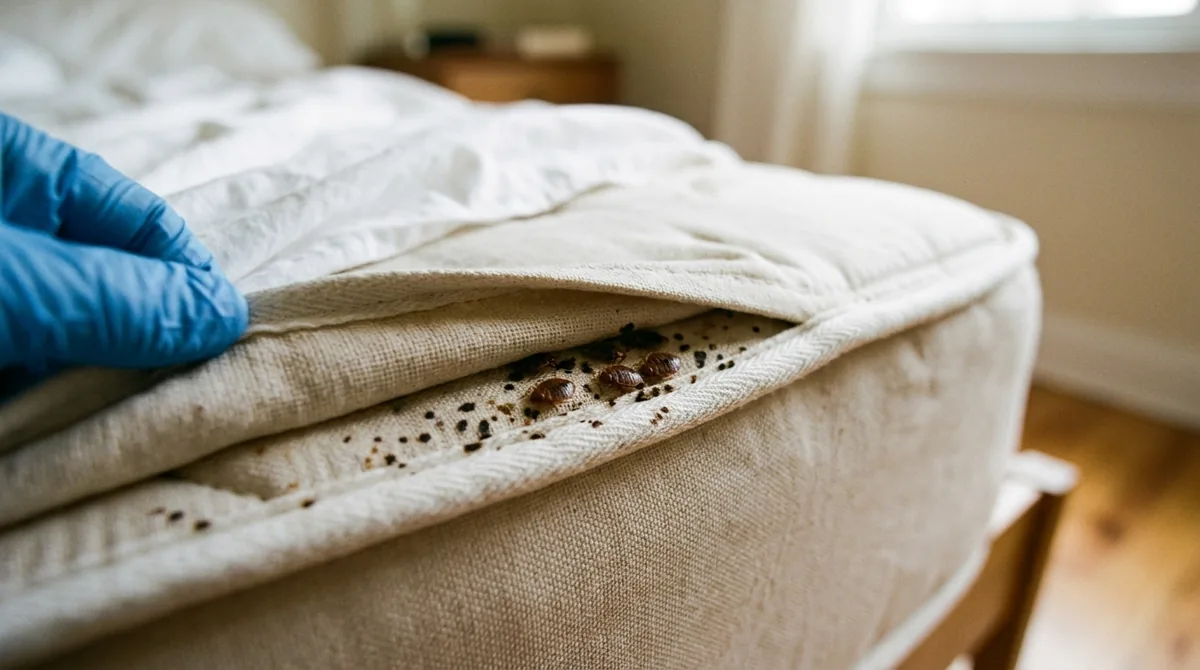
Bed bugs and dark spotting along a mattress seam
Bed bugs and their dark spotting along a mattress seam.

How to tell if you have bed bugs

Bites in a lineItchy bites in rows or clusters, often on skin left uncovered in bed such as arms, shoulders and neck.
Spots on the sheetsSmall red or rusty spots on sheets and pillowcases where a bug has been crushed after feeding.
Dark specksBlack or dark brown specks of droppings along mattress seams, slats, headboards and bed frame joints.
Empty skinsPale, empty shells left behind as young bed bugs grow and moult.
EggsTiny white eggs, about the size of a pinhead, tucked into seams, cracks and joints.
The bugs themselvesFlat, oval, reddish-brown insects up to about 5mm long, hiding close to where people sleep or sit.

Heat treatment or spray treatment

We offer two main treatments, and we will recommend the one that suits your property and the size of the infestation:

  • Heat treatment raises the room to a temperature that bed bugs and their eggs cannot survive, and holds it there long enough to reach into mattresses, furniture and gaps. It kills every stage of the life cycle, including the eggs.
  • Insecticide (spray) treatment is applied to the places bed bugs hide. Insecticides do not reliably kill bed bug eggs, so a spray treatment usually needs more than one visit to catch the bugs that hatch afterwards.

Nearly half of the bed bug treatments carried out by JG Pest Control are heat treatments, and that share has stayed between 45 and 50 percent in every half-year since April 2024. It is not just a London choice: across London, the South, the Midlands and the North, between 4 and 5 in every 10 customers chose heat. In Scotland and Northern Ireland most of our bed bug treatments are sprays, as we do not have a dedicated heat team there. See our heat treatment hotspots and heat treatment information.

YouTube video

What happens when we treat

  • Inspection. The technician checks the beds, furniture and the rest of the room to find where the bed bugs are and how far they have spread, including neighbouring rooms where needed.
  • Treatment. We treat the affected rooms and the areas around them, so bugs hiding nearby are not missed.
  • Furniture and belongings. We can arrange disposal of badly infested furniture, such as beds and sofas, and treat luggage and belongings.
  • Aftercare. We give you advice on what to expect after the visit and when to get in touch if you see more activity.
YouTube video

Before we arrive

We send preparation instructions for your treatment before the visit, as heat and spray treatments need slightly different preparation.

Landlords, hotels and care settings

We treat bed bugs for landlords and letting agents, hotels and B&Bs, hostels and care homes, and can work around guests, tenants and residents. See our pages on bed bug control for hotels, hostels and care homes.

More on bed bugs

Frequently asked questions

Once an infestation has spread, there is no reliable DIY method. Shop-bought sprays and foggers rarely reach the eggs or the gaps where bed bugs hide, and they can drive the bugs into other rooms.

Insecticides do not reliably kill bed bug eggs. A follow-up visit treats the young bed bugs that hatch after the first treatment. Heat treatment kills the eggs as well, which is why many customers choose it.

We carry out heat treatments in many parts of the UK. In Scotland and Northern Ireland most of our bed bug treatments are sprays, as we do not have a dedicated heat team there. Get in touch and we will tell you which treatments are available at your address.

Bed bugs usually arrive in luggage after a stay away, on second-hand furniture or clothing, or from a neighbouring flat or room. They are not caused by a dirty home.

Bed bugs are not known to spread disease, but the bites can be very itchy and an infestation can affect sleep. Speak to a pharmacist or your GP if bites become infected or you have a reaction.

Our specialist sister site

Bed bugs are all we do at our sister site Bedbugsgone.co.uk, part of the same group as JG. Same technicians, same heat treatment, a site devoted to bed bugs alone.

Reviewed by our experts
Roy Couch
Written / verified by
Roy Couch, Technician Manager

Roy Couch is the Technician Manager at JG Pest Control, leading the technician team across the UK. He holds the BPCA Diploma and the RSPH Level 2 Award in the Safe Use of Aluminium Phosphide, and is qualified in the Safe Use of Rodenticides.

LinkedIn

Peter Bowers-Davis
Technically reviewed by
Peter Bowers-Davis, Non-Executive Director, BPCA

Peter Bowers-Davis is a board volunteer at the British Pest Control Association (BPCA), the UK trade body for professional pest management. He works across the Tyro UK group of companies, including JG, setting technical standards, treatment protocols and training programmes.

LinkedIn · BPCA volunteer profile