Itchy bites around your ankles, a pet that will not stop scratching, or tiny dark insects jumping on the carpet usually mean fleas. JG Pest Control treats flea infestations in homes, rentals and businesses across every mainland county of England, Scotland, Wales and Northern Ireland, with technicians who are RSPH (BPCA) Level 2 certified and trained. We are open every day except Christmas Day, early until late.
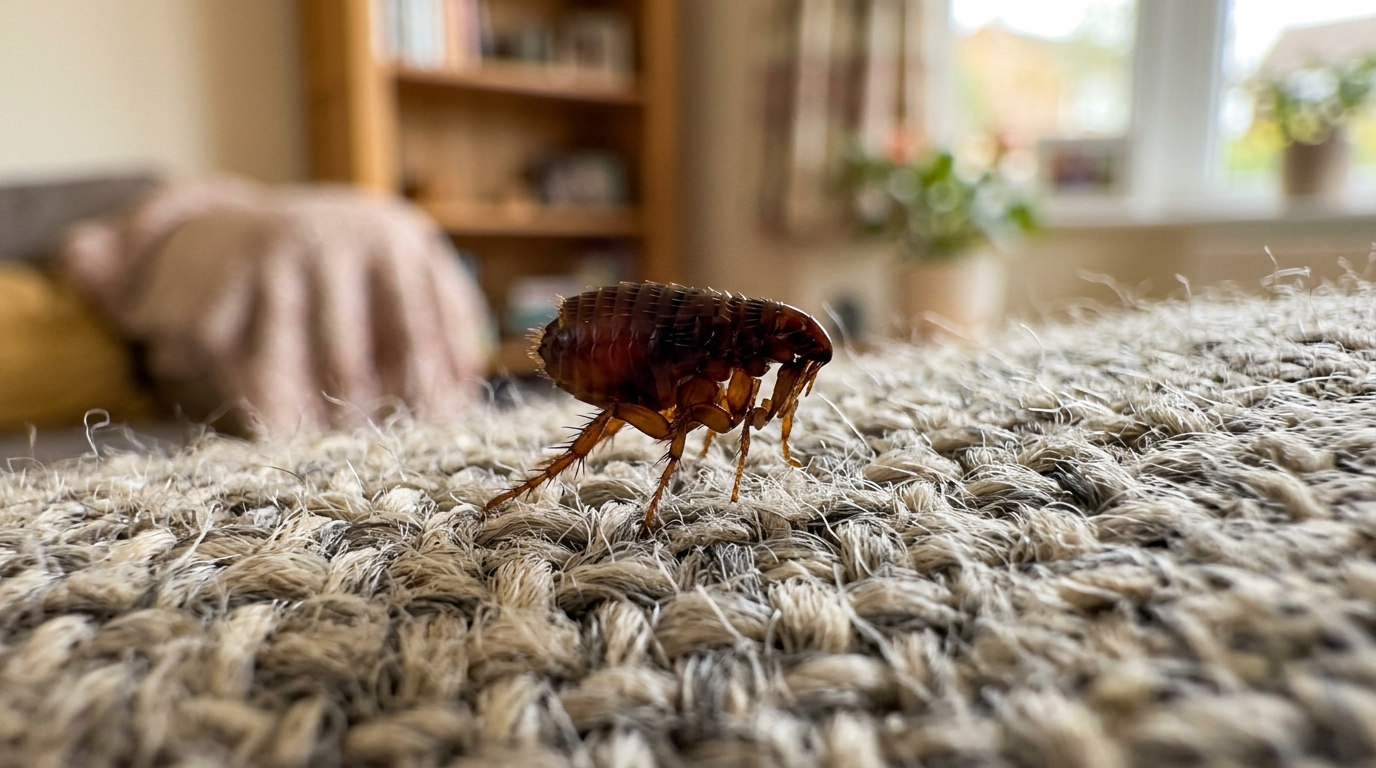
Most flea problems in UK homes come from the cat flea, which lives on cats and dogs as well as biting people. The fleas you can see are only part of it. Their eggs, larvae and cocoons are in carpets, pet bedding, sofas and the gaps along skirting boards, and that is where treatment has to reach.
Bites on ankles and legsSmall, itchy red bites, usually around the ankles and lower legs, often in groups.
Pets scratchingCats and dogs scratching, biting at their fur or restless when they settle.
Jumping insectsTiny dark insects, a few millimetres long, jumping on carpets, rugs or socks.
Flea dirtSmall black specks in pet bedding or on the carpet that turn reddish when dampened.
Bites after time awayA burst of bites when you come home after a holiday, as waiting fleas hatch.
A new homeBites soon after moving into a property where the previous occupants kept pets.
Why fleas keep coming back
Fleas are hard to clear on your own because of how they breed:
Eggs fall from the pet into carpets and bedding wherever it sleeps and walks.
Larvae hide deep in carpet fibres and gaps, away from light, feeding on flea dirt.
Cocoons protect the developing fleas, and they can sit unhatched for a long time until vibration or warmth from people or pets wakes them.
Adults jump onto the nearest pet or person to feed.
That is why fleas can appear after a holiday, or in a home you have just moved into where the previous occupants had pets, and why a spray from a shop that kills the adults rarely ends the problem.
How we treat fleas
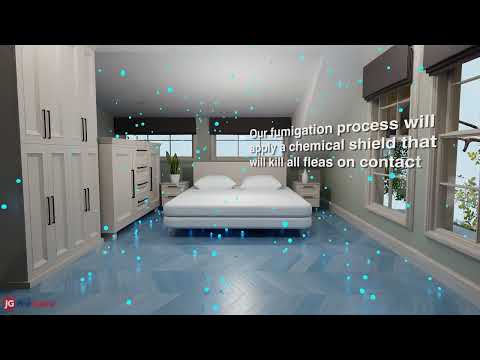
We start by finding where the fleas are breeding: where pets sleep and spend time, carpets and rugs, sofas, beds and the edges of rooms. Then we treat the affected areas so the treatment reaches the larvae and the places they hide, not just the adult fleas.
Residual insecticide treatment of carpets, floors and furnishings, which keeps working as new fleas hatch from their cocoons.
Heat treatment, where it suits the property, as an alternative for some homes and businesses.
We give you written preparation instructions before the visit, and clear aftercare advice so you know what to expect.
Treating your pets
If you have pets, they need treating at the same time as the house, using a flea product recommended by your vet. Treating the house without treating the pets, or the other way round, leaves fleas to start the cycle again. Wash pet bedding on a hot wash, or replace it, before the treatment visit.
Before and after treatment
Before the visit, vacuum thoroughly, including under furniture and along the edges of rooms, clear the floors, and wash bedding and throws.
After the visit, it is normal to see some fleas for a few weeks as young fleas hatch from their cocoons and meet the treatment.
Keep vacuuming regularly after treatment. The vibration helps bring fleas out of their cocoons. Empty the vacuum outside each time.
Follow our aftercare instructions on when you can wash floors and carpets, so the treatment has time to work.
Yes, for a while. Fleas in a home without pets usually came from previous occupants' pets, or from cocoons that hatched when the property was lived in again. They will bite people, but they cannot keep breeding for long without an animal to feed on.
Fleas inside cocoons are protected while they develop, so new fleas can hatch for a few weeks after treatment. They meet the treatment as they emerge. Keep vacuuming and follow our aftercare advice.
Yes. Pets need a vet-recommended flea treatment at the same time as the house is treated, or fleas on the animals will start the cycle again.
Shop-bought foggers mostly reach exposed surfaces. Flea eggs, larvae and cocoons are deep in carpets, gaps and furnishings, which is why infestations often come back after them.
Yes. We treat fleas in rented properties, hotels, offices and other businesses, as well as homes, and can work around tenants and opening hours.
Roy Couch is the Technician Manager at JG Pest Control, leading the technician team across the UK. He holds the BPCA Diploma and the RSPH Level 2 Award in the Safe Use of Aluminium Phosphide, and is qualified in the Safe Use of Rodenticides.
Peter Bowers-Davis is a board volunteer at the British Pest Control Association (BPCA), the UK trade body for professional pest management. He works across the Tyro UK group of companies, including JG, setting technical standards, treatment protocols and training programmes.
Real reviews left on Trustpilot by JG Pest Control customers who mention flea treatment.
★★★★★
It was a pleasure to meet Ryan and his manner made me at ease immediately. I have no hesitation in recommending him. The process was quick, my home left in order and minus fleas !
★★★★★
Polite man by the name of Tom arrived this morning to flea my property, he’s done a very good job and didn’t make me feel awkward
★★★★★
I rang this company regarding a flea issue and the very next day someone come out to see what the problem was.Only thing I would say is despite coming to the outcome of it is a flea issue I would've appreciated someone coming out to the do the actual job and not come out to just give advice,other then that I would recommend this company.Miles was absolutely friendly polite and helpful.
★★★★★
Flea treatment.
Ryan was very punctual and informed me when he was an hour away. Very respectful of my property and well informed and reassuring by explaining everything.
Contains information related to marketing campaigns of the user. These are shared with Google AdWords / Google Ads when the Google Ads and Google Analytics accounts are linked together.
90 days
__utma
ID used to identify users and sessions
2 years after last activity
__utmt
Used to monitor number of Google Analytics server requests
10 minutes
__utmb
Used to distinguish new sessions and visits. This cookie is set when the GA.js javascript library is loaded and there is no existing __utmb cookie. The cookie is updated every time data is sent to the Google Analytics server.
30 minutes after last activity
__utmc
Used only with old Urchin versions of Google Analytics and not with GA.js. Was used to distinguish between new sessions and visits at the end of a session.
End of session (browser)
__utmz
Contains information about the traffic source or campaign that directed user to the website. The cookie is set when the GA.js javascript is loaded and updated when data is sent to the Google Anaytics server
6 months after last activity
__utmv
Contains custom information set by the web developer via the _setCustomVar method in Google Analytics. This cookie is updated every time new data is sent to the Google Analytics server.
2 years after last activity
__utmx
Used to determine whether a user is included in an A / B or Multivariate test.
18 months
_ga
ID used to identify users
2 years
_gali
Used by Google Analytics to determine which links on a page are being clicked
30 seconds
_ga_
ID used to identify users
2 years
_gid
ID used to identify users for 24 hours after last activity
24 hours
_gat
Used to monitor number of Google Analytics server requests when using Google Tag Manager