
From 30 November 2026, Awaab’s Law will cover pest problems in social housing in England that present a significant risk of harm, not only emergencies, with fixed deadlines to investigate them and make the home safe. Emergency hazards, which can include a serious infestation, have been covered since 27 October 2025. Government guidance for Phase 2 names pest infestation within the “domestic hygiene” hazard, and gives a serious infestation that poses an immediate threat to health as an example of an emergency hazard, which must be investigated and made safe within 24 hours. As the Property Care Association noted in Construction Management on 5 November 2026, domestic hygiene includes pest control. Here is what changes, and what it means in practice for councils, housing associations and their tenants.
Key takeaways
- Phase 2 of Awaab’s Law applies from 30 November 2026 to social housing in England, and brings domestic hygiene, including pest infestation, into scope where it presents a significant risk of harm. Emergency hazards have been covered since 27 October 2025.
- The government guidance gives “serious pest infestation which poses an immediate threat to health” as an example of an emergency hazard.
- Emergency hazards must be investigated and made safe within 24 hours. Potential significant hazards must be investigated within 10 working days.
- The guidance says pest hazards may need preventative work to reduce routes of entry, as well as action on the conditions that let infestations persist. A one-off treatment is unlikely to be the whole answer.
- Tenants should report pests to their landlord as soon as they notice them, and keep a record of when they reported it, because the deadlines start from when the landlord becomes aware.
What changes on 30 November 2026?
Awaab’s Law first came into force for social landlords in England on 27 October 2025, covering all emergency hazards and damp and mould hazards that present a significant risk of harm. According to the Phase 2 guidance for social landlords, the Regulations will be amended from 30 November 2026 to cover more hazards that present a significant risk of harm. Construction Management lists them as excess cold, excess heat, falls, structural collapse, fire and explosions, electrical hazards and domestic hygiene.
The government’s hazards guidance defines domestic hygiene as threats to health from conditions that prevent a home being kept clean and hygienic. It says this relates to “poor design, layout or construction, pest infestation, and inadequate provision for waste storage and disposal”. In other words, pest problems that present a significant risk of harm come inside the same legal timetable that landlords already work to for damp and mould.
The guidance also points to duties that already existed, including the Prevention of Damage by Pests Act 1949, which it says means landlords must keep land and buildings free from rats and mice, so far as practicable.
When does a pest problem count as an emergency hazard?
The guidance gives “serious pest infestation which poses an immediate threat to health” as an example of an emergency hazard. It also says pest infestations affecting a food preparation area “might be particularly urgent and more likely to be an emergency hazard”.
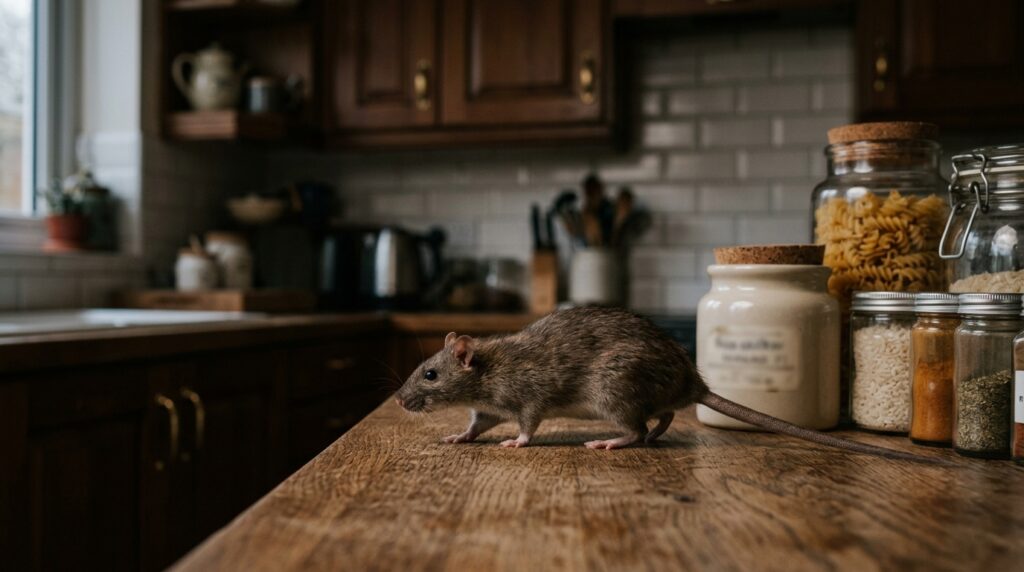
One of its worked examples describes a tenant with young children in a maisonette who reported live rats in the kitchen, droppings in cupboards and gnawed food packaging, with rats getting in through a hole in the wall. The guidance says a reasonable landlord would categorise that as an emergency hazard, because of the risk from rats contaminating food storage and preparation areas.
When is it a significant hazard?
A significant hazard, in the guidance, is one where tenants are likely to have serious health outcomes if the problem is not dealt with within set timescales. Its examples include “ongoing pest presence linked to building defects or inadequate refuse storage which poses a threat to health”.
Another worked example describes a tenant living alone who reported mice in the living areas, causing significant distress and affecting their sleep and mental health. The guidance says a reasonable landlord would treat that as a significant hazard, because of the hygiene risk from droppings, urine and contact with surfaces, and the impact on the tenant’s mental health.
The guidance asks landlords to consider who lives in the home. Its list includes adults aged 65 and over, babies and children under 5, people with reduced mobility, people with long-term health conditions and people with mental health conditions, including phobias.
What are the deadlines?
The Phase 2 guidance for social landlords sets out these timescales:
- Emergency hazards: the investigation and the relevant safety work must both be completed within 24 hours of the landlord becoming aware of the hazard.
- Potential significant hazards: investigate within 10 working days of becoming aware.
- Written summary: usually give the tenant a written summary of the findings within 3 working days of the investigation concluding.
- Safety work: where a significant hazard is found, carry out relevant safety work within 5 working days of the investigation concluding.
- Preventative work: begin, or take steps to begin, work to stop a significant or emergency hazard coming back within 5 working days of the investigation concluding. If that is not possible, it must begin as soon as reasonably practicable and within 12 weeks.
Why is one treatment not enough under Awaab’s Law?
The guidance is direct on this point: “Pest hazards may require both preventative measures to reduce routes of entry and action to address the conditions that allow infestations to persist.” It adds that landlords remain responsible for maintaining the property and carrying out appropriate repairs.
That matches what our technicians see in flats and maisonettes. In our experience, rats and mice that keep coming back usually have a way in, such as a gap around a pipe, a damaged air brick, a broken drain or a hole behind kitchen units, and somewhere nearby to feed, such as a poorly kept bin store. Treating the animals without finding and closing those routes often means the same call a few weeks later. In our view, under the new timetable a problem that keeps coming back is likely to mean another report the landlord has to act on.
In practice, we would expect a good response to a pest report in social housing to include:
- a survey of the home and, in a block, the communal areas, bin stores and voids that connect flats,
- a written record of the evidence found and the likely entry points, which supports the written summary the tenant will usually receive,
- treatment matched to the pest and to who lives there, with extra care where there are young children, older residents or pets,
- proofing or repair of entry points, and clear notes on any building defects the landlord’s repairs team needs to fix,
- a follow-up visit to confirm the activity has stopped.
The guidance itself refers landlords to the British Pest Control Association’s code of best practice on pest surveys for more on managing hygiene hazards.
What should tenants do if they have pests?
If you rent from a council or housing association in England, report the problem to your landlord as soon as you notice it, and keep a record of when you reported it. Under Awaab’s Law, the timescales are triggered when the landlord becomes aware of a potential hazard.
The guidance suggests landlords ask questions such as whether you can use your toilet, washing and food preparation areas, what signs of contamination you have seen (for example droppings or gnawing), and whether anyone in the household has health conditions or support needs. Having those answers ready, along with photos, helps your landlord triage the report properly.
Awaab’s Law applies to social housing. The guidance says it does not apply to long leaseholds, owner-occupied homes or shared ownership. If you own your home, or the problem is in a business, you can book rat and rodent control or mice control directly.
How JG Pest Control works with landlords
We work with councils, housing associations, managing agents and private landlords. We respond within 24 hours, every day except Christmas Day, and we can provide a written report of what we found, where pests were getting in and what needs repairing. Our technicians hold the RSPH (BPCA) Level 2 Award, and trainees work alongside qualified colleagues. For more on how we support housing providers, see our social housing pest control and landlord and letting agent pest control pages. To arrange a visit, call the number at the top of the page.
Frequently asked questions
Yes. A serious infestation that is an emergency hazard has been covered since 27 October 2025. From 30 November 2026, Phase 2 adds domestic hygiene hazards that present a significant risk of harm for social landlords in England, and the government guidance says the domestic hygiene hazard relates to the risk of harm from, among other things, pest infestation.
It can be. The guidance gives “serious pest infestation which poses an immediate threat to health” as an example of an emergency hazard, and describes live rats contaminating a kitchen used by a family with young children as an emergency. Each case still has to be assessed on its own circumstances.
For an emergency hazard, the investigation and the relevant safety work must both be completed within 24 hours of the landlord becoming aware. For a potential significant hazard, the landlord must investigate within 10 working days, usually give the tenant a written summary within 3 working days of the investigation concluding, and carry out relevant safety work within 5 working days of it concluding.
No. The Phase 2 guidance covers social landlords in England. It also says Awaab’s Law does not apply to long leaseholds, owner-occupied homes or shared ownership.
Sources: GOV.UK, “Awaab’s Law Phase 2: Guidance to support triaging of hazards”; GOV.UK, “Awaab’s Law Phase 2: Guidance for social landlords”; Construction Management, “CPD: Awaab’s Law Phase 2, why competence is crucial”, 5 November 2026.