
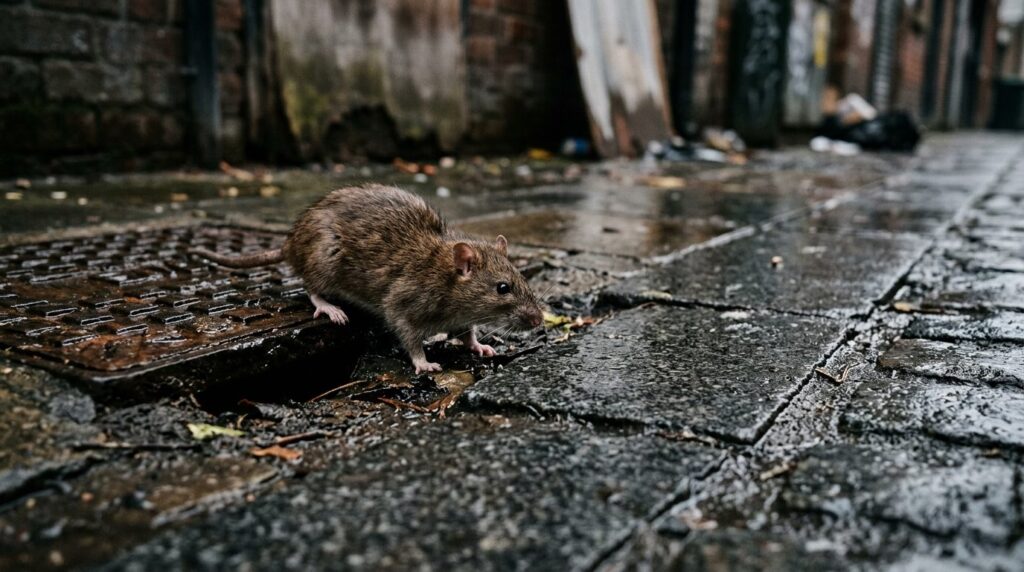
If you live in a Glasgow tenement and you are seeing rats in the back court, you are far from alone, and the fix is rarely one household’s job. Rats in shared buildings are fed and sheltered by shared spaces: bin stores, back courts, closes and drains. In our experience the problem only stays solved when everyone who uses those spaces, and whoever manages the building, deals with the food, the cover and the way in at the same time.

The scale of the problem in the city was put into numbers this week. The Herald reported on 13 October 2026 that a freedom of information (FOI) request showed Glasgow City Council received 10,115 pest control requests between January and August. The Herald describes this as more than 10,000 reports of rat infestations so far this year, around 42 every day.
Key takeaways
- Glasgow City Council received 10,115 pest control requests from January to August, according to an FOI request by The Herald.
- Canal ward had the most reports (874), followed by East Centre (869), which takes in Barlanark, Carntyne and Cranhill, The Herald reports.
- The same FOI showed 30,918 reports of missed bin collections over the same period, and 49,645 for the whole of 2025.
- The council’s pest control team actively treats reported infestations, but containing food waste and cooperation from residents and landlords are essential to long-term control, according to The Herald.
- In our experience, a rat problem in a shared building is rarely solved flat by flat. The bin store, back court and drains need treating as one site.
What did the Glasgow FOI figures show?
According to The Herald, the council received 10,115 pest control requests from January to August. Broken down by ward, Canal had the highest number of reports with 874, followed by East Centre with 869.
The same FOI request covered missed bin collections. The Herald reports that the council received 30,918 reports of missed bin collections from January to August, with the highest numbers in Langside (2,525), Greater Pollok (1,817) and Drumchapel/Anniesland (1,698). For January to December 2025 the council received 49,645 missed bin reports, with East Centre (3,571), Calton (3,284) and Shettleston (3,062) recording the most.
The Herald reports that residents and union representatives have attributed the problem to delayed or missed bin collections, three-week waste cycles and budget or staffing pressures. According to The Herald, Glasgow City Council states that its pest control team actively treats reported infestations, and officials emphasise that proper containment of food waste and cooperation from residents and landlords are essential to long-term control. The Herald said it had contacted the council for comment.
Why do shared buildings struggle more with rats?
In our experience, a rat needs three things to settle: food, water and somewhere sheltered to nest. In a tenement or block of flats, all three are often found in the shared parts of the building rather than inside any one home.
- Bin stores and back courts. In our experience, overflowing bins, split bags left on the ground and bulky waste dumped beside the bins are the single biggest attraction for rats in shared buildings.
- Cover. Stored rubbish, overgrown planting and gaps under sheds or bin shelters give rats somewhere to hide close to the food.
- Drains. Older buildings often have defective or unused drain runs, and in our experience these are a common route from the sewer into a back court or a ground-floor flat.
- Divided responsibility. When several households share a space, it is easy for everyone to assume someone else is dealing with it. Treating one flat while the bin store keeps feeding the colony tends to give a short break, not a fix.
What can tenement residents do now?
You cannot control when the bins are emptied, but in our experience there is a lot residents can do to make a back court less attractive while a problem is being dealt with:
- Keep waste off the ground. Bags go inside bins with lids closed. If the bins are full, hold waste back rather than leaving it beside them.
- Report missed collections. Every missed lift reported is a record of the problem, and it is how a pattern gets noticed.
- Clear cover. Ask whoever manages the building to remove stored junk and cut back overgrowth around the bin area and walls.
- Do not feed wildlife in the back court. Bird food dropped on the ground is food for rats too.
- Look for the signs. Droppings, gnawing, smear marks along walls, burrows at the base of walls or under slabs, and noises in floors or ceilings at night.
- Raise it collectively. If you rent, tell your landlord or letting agent in writing. If you own, speak to your neighbours and your property factor so the shared areas are dealt with as a whole.
When should you call a professional?
According to The Herald, the council’s pest control team treats reported infestations, so reporting to the council is a reasonable first step. In a shared building, the sign that something more is needed is activity that keeps coming back in the back court or the ground-floor flats after treatment. In our experience that usually means a shared entry route, most often a drain defect, has not been found. For the wider question of when a wait for treatment is too long, see our guide on what a long council wait means for a rat problem.
For landlords and property managers, in our experience a building-wide approach is usually less disruptive than repeated call-outs to individual flats. A survey of the whole site, including the bin store, the back court, the drains and the ground-floor voids, is what tends to break the cycle.
Frequently asked questions
According to an FOI request reported by The Herald on 13 October 2026, Glasgow City Council received 10,115 pest control requests from January to August. Canal ward had the most reports (874), followed by East Centre (869).
Rats are drawn to accessible food, and in our experience waste left in or around overfull bins is one of the most common food sources for rats in shared buildings. The Herald reports that residents and union representatives have linked Glasgow’s rat problem to delayed or missed bin collections, while the council says containing food waste and cooperation from residents and landlords are essential to long-term control.
It depends on who owns and manages the building. In practice, shared areas such as back courts and bin stores usually need the owners, their property factor or the landlord to act together. If you rent, report the problem to your landlord or letting agent in writing. If you own your flat, raise it with your neighbours and your factor so the shared areas are treated as one site.
Look for droppings around bin stores and along walls, burrows at the base of walls or under paving slabs, gnawed bin lids or bags, greasy smear marks where rats run along the same route, and scratching in floors or ceilings of ground-floor flats at night. If you see signs in shared areas, tell your neighbours and whoever manages the building, and ask for a survey from a company whose technicians hold the RSPH (BPCA) Level 2 qualification that covers the shared areas and drains, not just one flat.
How JG can help
JG Pest Control treats rats across Glasgow and the rest of Scotland, as well as nationwide through our rat and rodent control service, and we work with landlords and property managers on shared buildings. We respond within 24 hours every day of the year except Christmas Day. To arrange a visit, call the number at the top of the page or use the enquiry form.
If you live outside Glasgow and your council has stopped treating rats, our guide on what to do when council pest control is withdrawn may help.
Source: The Herald, “Glasgow’s most rat infested areas revealed in Herald data”, 13 October 2026.