
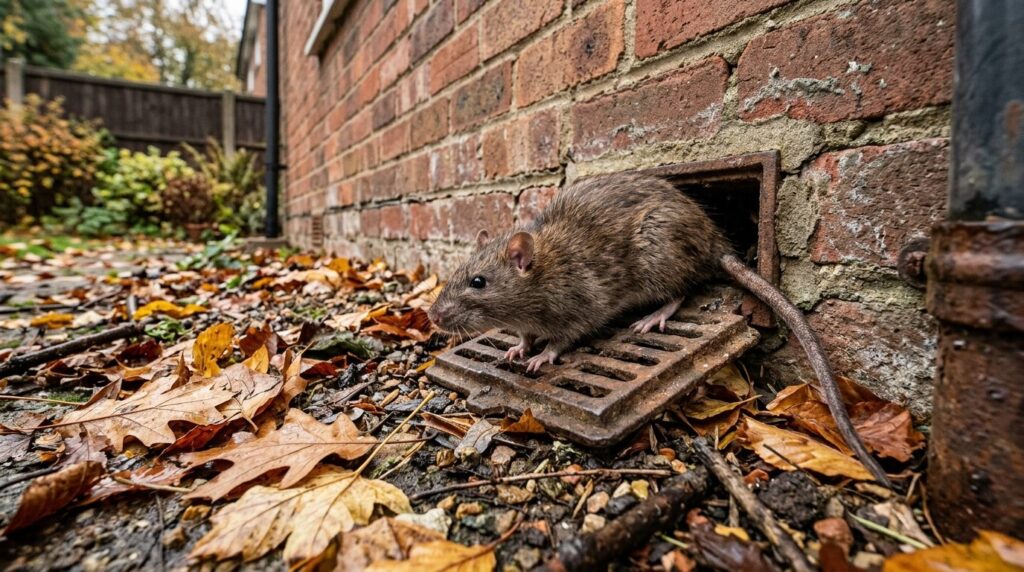
If you have reported rats to your council and been told to wait, the rats will not wait with you. An infestation left for weeks rarely stays the same size or in the same place, and in our experience the gap between the first sighting and the first treatment is where most of the avoidable damage happens. A long council queue does not mean you have to do nothing in the meantime, and it does not mean the council is your only route.

That question is live in Coventry this week. The BBC reported on 23 September 2026 that there were 437 outstanding pest control cases in the city, with residents waiting around 12 weeks on average for treatment. According to the BBC, the issue was raised by a local councillor, who said one of her constituents had been dealing with an infestation for over six months without it being resolved. Hits Radio Coventry reports that the council gave a written answer, and that the councillor followed it up at a full meeting of the city council.
Key takeaways
- Coventry City Council had 437 outstanding pest control cases and an average wait of around 12 weeks for treatment, according to the BBC on 23 September 2026.
- The council’s cabinet member for city services said additional funding had been allocated to the service and recruitment was underway to improve response times, the BBC reports.
- The council said requests typically increase during warmer months, when pest activity is higher, which can lead to longer response times.
- In our experience, rats that are left untreated for weeks tend to spread from the garden or drains into the building, not the other way round.
- While you wait, removing food, water and shelter slows an infestation down. Laying poison yourself usually does not solve it and can create new risks.
- Rats inside the living space, in a loft near wiring, or anywhere food is prepared are situations where, in our view, a 12-week wait is too long.
- You can use a private pest controller at any point. If you do, let the council know so your slot goes to someone else in the queue.
What did Coventry City Council actually say?
According to Hits Radio Coventry, the council’s cabinet member for city services gave a written answer stating that the current number of outstanding cases waiting for treatment was 437 and that the average waiting time to receive a pest control treatment was 12 weeks.
Hits Radio Coventry reports the written answer as saying that waiting times fluctuate significantly through the year due to seasonal variations in demand, that a review of the service had been carried out in the face of increasing demand, and that as a result additional funding had been allocated and recruitment was underway to increase staffing levels and improve response times.
Both outlets report that the council acknowledged a problem with recruitment had meant the waiting list was longer, and that the cabinet member said she thought the council was now on top of that. The cabinet member also agreed to raise concerns with council officers to speed up responses.
Figures published by the council, as reported by the BBC, show it treated 2,054 cases of rat infestations in 2025-26 and 556 cases between April and July this year. That compares with 2,457 rat treatments in 2022-23 and 2,518 in 2023-24. The BBC notes that numbers for 2024-25 are not available because a new data recording system was introduced.
What happens to a rat infestation during a 12-week wait?
Twelve weeks is a long time in the life of a rat problem. We are not able to put a number on how much any particular infestation will grow, because that depends on food, shelter and how established the colony already is. But in our experience three patterns show up again and again when a problem is left untreated:
- It moves closer to the building. Activity that starts at the bottom of the garden, under a shed or around a compost bin tends to work its way towards the house, particularly along fences, walls and drain runs.
- It finds a way in. Gaps around pipework, damaged airbricks, defective drains and openings under decking are common entry points. Once rats are inside a cavity wall, under a floor or in a loft, the job is harder and the risk to wiring and insulation is higher.
- It becomes a neighbour’s problem too. Rats do not respect property boundaries. A burrow on one plot often links to activity on the next, which is why terraces and semi-detached streets tend to see problems in clusters.
The timing matters as well. The council itself said demand typically rises in warmer months. In our experience the autumn is when the other shift happens: as the weather cools, rats that have been living outdoors look for warmth and shelter, and a problem that was confined to the garden in summer is more likely to show up inside in October and November. A case that joins a 12-week queue now could run into December before a first visit.
What can you do while you are waiting?
You cannot usually clear an established infestation on your own, but you can make your home a less attractive place for it to grow. None of these steps replaces treatment. They buy time.
- Take away the food. Bird feeders, fallen fruit, pet food left outside and open compost are the most common food sources we find. Keep bins closed and off the ground if you can.
- Take away the shelter. Clear piles of wood, rubble and garden waste close to the house, and cut back dense vegetation along walls.
- Check the obvious entry points. Look for gnawed gaps around pipes and damaged airbricks. If you think rats are already inside, do not seal them in; get professional advice first, because a trapped rat will gnaw its way out elsewhere or die in a cavity.
- Keep a record. Note where and when you see rats, droppings or burrows. It helps whoever treats the problem, and it helps the council if the source is on land you do not control.
- Think twice before laying poison. Badly placed bait is a real risk to children, pets and wildlife. In our experience, bait laid while you wait can also make sightings drop for a while, which makes it tempting to give up your place in the queue before anyone has found out where the rats are coming from.
If you are unsure what your council is and is not required to do, or who is responsible in a rented home, we cover that in detail in our guide to what happens when councils withdraw pest control.
When is a 12-week wait too long?
Some situations, in our professional opinion, should not sit in a queue at all:
- Rats inside the living space, including kitchens, bedrooms and anywhere children sleep or play.
- Noises in the loft, ceilings or walls, where gnawing on cables creates a fire risk as well as a hygiene one.
- Anywhere food is prepared or stored for other people, including home food businesses, childminders and care settings.
- Rats seen in daylight, which in our experience often points to a larger or disturbed population. We explain why in rats out in daylight: what it means.
- Rats coming up through a toilet, drain or floor gully, which usually means a defect in the drainage that treatment alone will not fix.
Can you use a private pest controller instead of the council?
Yes. Using the council is a choice, not a requirement, and you can go private at any point, including while you are on a council waiting list.
If you do go private, check that the technicians are properly qualified. At JG Pest Control our technicians hold the RSPH (BPCA) Level 2 qualification, and a proper rat treatment should start with a survey that looks for how the rats are getting in and what is sustaining them, not just a visit to put down bait. And if you do book privately, it is worth telling the council so they can close your case and move the next household up the list.
Frequently asked questions
It varies widely between councils and through the year. In Coventry, the BBC reported in September 2026 that the average wait for a pest control treatment was around 12 weeks, with 437 cases outstanding. Some councils have stopped offering domestic rat treatment altogether, so it is worth checking your own council’s current position before you rely on it.
In our experience, rats that are active in a garden are rarely there by accident. There is usually a burrow, a defective drain or a food source nearby, and left untreated the activity tends to move towards the house, particularly as the weather cools in autumn. Removing food and shelter helps, but if you see signs near the walls of the building, get it looked at sooner rather than later.
Avoid sealing up holes if you think rats may already be inside, because they can become trapped in a wall or floor. Avoid leaving food out for birds or pets. And think carefully before laying poison yourself: badly placed bait is a risk to children, pets and wildlife, and a short-lived drop in sightings can hide a problem that is still there when the weather turns colder.
Yes. There is no requirement to wait for the council. If you book a private treatment, choose a company whose technicians hold the RSPH (BPCA) Level 2 qualification, and let the council know so your place in the queue can go to someone else.
How JG can help
JG Pest Control treats rats across Coventry, the wider West Midlands and Warwickshire, as well as nationwide through our rat and rodent control service. We respond within 24 hours every day of the year except Christmas Day, and our surveys look for the drainage and entry points behind a rat problem rather than just treating the animals present. To arrange a visit, call the number at the top of the page or use the enquiry form.
Sources: BBC News, “Months-long wait for rat infestation call outs”, 23 September 2026; Hits Radio Coventry, “Coventry faces backlog of rat infestation cases”.