02031 310 988
Credit Cards
Lines Open: until 8:00pm
enquiries@jgpestcontrol.co.uk
Email or Callback

Enter your details below to request a call back and we will get back in touch as soon as possible.

Get in touch today for a
FREE INSTANT QUOTE...

Expert Pest Control
24 Hour Emergency Response
Get Free Quote
Mon 1st
The Pest Control Professionals.
Professionally Trained

All our employees are professionally trained to industry standards

Value For Money

We provide the best services in the industry at value for money

Customer Protection

All services guaranteed, providing you protection going forwards

Professionally Trained Staff

Best Services in the Industry
All Services 100% Guaranteed

Honeybees are not pests. That is the starting point for every bee call we take in Leeds. From the mature gardens of Headingley, Roundhay, Chapel Allerton, Alwoodley and Adel, to the Victorian terraces of Hyde Park, Burley and Woodhouse, to the cavity-wall housing across Pudsey, Bramley, Beeston, Cross Gates and Seacroft, JG Pest Control responds to bee callouts with a referral-first policy: honeybee swarms go to local Leeds Beekeepers’ Association (Leeds BKA) collectors free of charge, bumblebee nests are almost always left alone to die out naturally in September, and only confirmed wasps or yellow jackets (which the public regularly mistake for bees) are exterminated. JG is open every UK bank holiday except Christmas Day, every weekend, early morning to late evening, and a settled swarm cluster needs a same-day response because the bees will move on within 24 to 48 hours.

Leeds bee and swarm calls: 0113 468 4074

Free phone identification. Honeybee swarm collection referred free of charge to your local Leeds BKA collector. RSPH (BPCA) Level 2 certified and trainee technicians.

Leeds has one of the most mature suburban garden canopies of any northern English city, which is part of why the bee season here can be particularly intense. Headingley, Hyde Park, Burley and Woodhouse are Victorian terrace country with hundreds of cavity-prone soffit boxes, gable-end bird boxes and chimney stacks. Roundhay, Chapel Allerton, Moortown, Alwoodley and Adel are large interwar villa country with mature gardens, ancient lime trees, and the sheer canopy density that produces a steady summer flow of bumblebee nests under decking, in compost heaps and behind sheds. The Roundhay Park surround in particular produces some of our highest seasonal swarm-call density. And the inter-war and post-war cavity-wall housing across Pudsey, Bramley, Wortley, Beeston, Cross Gates, Seacroft, Garforth and Rothwell sees regular tree bumblebee activity in bird boxes and air bricks from late May through August.

The Leeds bee season runs from late April through to September with two clear peaks. The first is the swarm peak in mid May to late June. The second is the summer bumblebee and solitary bee activity peak through July and August. This page sets out exactly how JG handles each of those calls across Leeds, and why our default answer is referral or leave-alone rather than treatment.

Find out if we provide bee and pest control near you:

Honeybees, Bumblebees and the Species That Are Often Mistaken for Bees in Leeds

Almost every Leeds bee callout we take starts with a species question, often answered on the phone from a photograph. The European honeybee (Apis mellifera) is 12 to 15 mm, slim, golden-brown, lightly hairy, and lives in a permanent colony of 20,000 to 80,000 workers. A swarm in May or June is a normal sign of colony division, not a problem. Bumblebees come in around 24 UK species, most commonly the buff-tailed, white-tailed, red-tailed and tree bumblebee, and are 10 to 25 mm, very hairy, with bold yellow, white or red bands. Tree bumblebees (Bombus hypnorum, a relatively recent UK arrival) are the most common loft and bird box visitor in Leeds and rarely need treatment. Solitary bees, particularly red mason bees and leafcutter bees, are small, non-aggressive single-female nesters that use old mortar joints and bare soil and pose no realistic stinging risk.

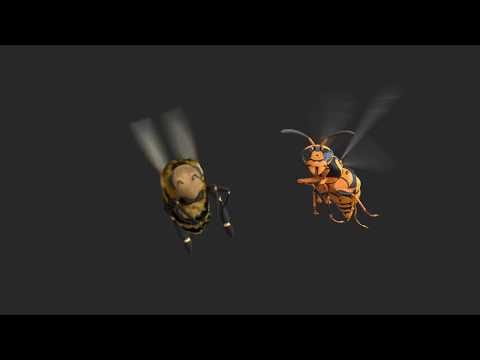
What the public most commonly mistakes for a bee at the back door in July is actually a common wasp (Vespula vulgaris) or a German wasp (Vespula germanica). Wasps are smaller, hairless, with a hard yellow-and-black banded body and a very narrow waist. We treat wasps. We do not treat honeybees or bumblebees as a default position.

Honeybee swarm in your Leeds garden? Call our team on 0113 468 4074 for a free Leeds BKA referral, or contact us here.

What a Honeybee Swarm Looks Like in Leeds

  • A football-sized to rugby-ball-sized cluster of bees on a fence, hedge, lamp post or low branch
  • Often arrives suddenly mid morning, accompanied by loud flight noise for 10 to 20 minutes, then settles quietly
  • Cluster is the queen surrounded by 3,000 to 30,000 worker bees
  • Bees are docile in this state because they have no nest or stored honey to defend
  • Cluster usually moves on to a permanent home within 24 to 48 hours once scout bees confirm a site

Our Leeds Bee Process, Step by Step

1. Free phone identification. Send a photo, we confirm species. In Leeds that usually means honeybee swarm, tree bumblebee in a loft or bird box, or a misidentified wasp. 2. If honeybee swarm: free referral to the local Leeds BKA swarm collector covering your postcode, usually attended within hours. 3. If cavity-living honeybee colony (chimney, soffit box, cavity wall) in a Victorian Headingley terrace or interwar Roundhay villa: site assessment, relocation discussed with a beekeeper where the structure allows it, structural treatment only as a last resort and only with the homeowner in full agreement. 4. Bumblebees: almost always leave alone, colony ends naturally September, then seal the entry. 5. Confirmed wasp or yellow jacket: standard same-day wasp nest removal.

Call us now on 0113 468 4074 or contact us here to book a Leeds bee or swarm callout.

Honeybee-friendly

Honeybees Saved, Wasps Removed. Call our Leeds team on 0113 468 4074 .

When You Actually Do Need Professional Bee Removal in Leeds

Most Leeds bee calls do not result in treatment. There are, however, specific situations where professional removal is the right answer:

  • Aggressive defence behaviour: repeated stinging incidents from a cavity-living honeybee colony, usually triggered by the colony outgrowing the cavity in its third or fourth year
  • Anaphylactic occupant: a confirmed allergic family member, tenant or staff member in the building, particularly where the nest entry is near a doorway, window or fire escape
  • Structural risk: a large established honeybee colony in a chimney where comb is collapsing into the flue, or in a cavity wall where comb is melting and staining interior plaster
  • Failed relocation: a colony where a Leeds BKA beekeeper has visited, attempted a cut-out, and confirmed the colony cannot be saved
  • Public access site: a nest at a school, nursery, restaurant terrace or public entrance where members of the public cannot be reliably kept away

In every case the decision is documented in writing with the property owner or managing agent before any treatment is carried out.

Bee Hot Spots across Leeds

The Leeds bee map is shaped by the city’s mature canopy and the density of its older garden squares. Headingley, Hyde Park, Burley and Woodhouse are Victorian terrace country, with hundreds of cavity-prone soffit boxes and chimney stacks that occasionally host established honeybee colonies. Roundhay, Chapel Allerton, Moortown, Alwoodley, Adel and Far Headingley are large interwar villa country, with the most mature gardens in the city and the steadiest summer flow of bumblebee nests in compost heaps, under decking and behind sheds. The Roundhay Park surround in particular sees the highest swarm-call density of any Leeds postcode in mid May to late June, with clusters regularly landing on garden fences and low trees within a 15-minute walk of the park.

Out across the inter-war and post-war cavity-wall ring (Pudsey, Bramley, Wortley, Armley, Beeston, Holbeck, Cross Gates, Halton, Seacroft, Garforth, Rothwell, Morley) the picture shifts to tree bumblebee colonies in air bricks, soffit corners and bird boxes from late May through August. Honeybee swarm calls in Leeds peak across late May, the first half of June and again briefly in late August when secondary cast swarms occasionally emerge.

Areas We Cover across Leeds for Bee Calls

Our RSPH (BPCA) Level 2 certified and trainee technicians provide bee identification, honeybee swarm referrals and (only where necessary) bee removal across Leeds and the wider West Yorkshire area, including:

  • City Centre and Briggate
  • Headingley
  • Far Headingley
  • Hyde Park
  • Burley
  • Woodhouse
  • Meanwood
  • Chapel Allerton
  • Roundhay
  • Moortown
  • Alwoodley
  • Adel
  • Cookridge
  • Horsforth
  • Pudsey
  • Bramley
  • Armley
  • Wortley
  • Beeston
  • Holbeck
  • Hunslet
  • Cross Gates
  • Halton
  • Seacroft
  • Garforth
  • Rothwell
  • Morley
  • Otley (border)
  • Yeadon and Guiseley
  • Wetherby (border)

If your area is not listed, we still cover it. Call 0113 468 4074 for bee identification and (where needed) bee removal anywhere in Leeds. For the city service overview see Leeds pest control, the county picture West Yorkshire pest control, and species detail in our bees and hornets hub.

Frequently Asked Questions: Bee Removal and Swarm Collection in Leeds

I have a swarm of bees in my Leeds garden. How quickly can you help?

Same day in nearly every case. Send a photo to confirm honeybee, and we will put you in touch with your local Leeds Beekeepers’ Association swarm collector free of charge. Settled swarms are docile but tend to move on naturally within 24 to 48 hours, so we treat them as priority calls.

Do you kill bees?

Not as a default. We do not destroy honeybee swarms (these go to a local Leeds BKA collector free of charge), we almost never treat bumblebees (colonies die out naturally in September), and we do not treat solitary bees. We do treat common wasps and yellow jackets, which are regularly mistaken for bees in Leeds in July and August.

Do you charge for the call out?

Phone identification and beekeeper referral are free. If a site visit is needed (cavity-living honeybee colony assessment, confirmed wasp nest treatment), the call out is quoted up front before we visit. We do not quote treatment work without seeing photographs or confirming the species first.

Are bumblebees protected in the UK?

Bumblebees are not strictly legally protected as a species in the same way that, for example, all British wild birds are protected, but they are a critical pollinator and JG will not treat a bumblebee nest without a clear welfare reason (anaphylactic occupant, nest blocking a fire escape, etc.). The default position on every Leeds bumblebee call is to leave the colony alone and let it die out naturally in September.

How do I tell a wasp from a bee?

Wasps are smaller (around 12 mm worker), hairless, with a hard glossy yellow-and-black banded body and a very obvious narrow waist. Honeybees are similar in size but lightly hairy, golden brown rather than bright yellow, and have a more rounded body. Bumblebees are much larger, very fuzzy, and obviously bee-shaped. A clear photo on the phone is usually enough to tell.

I have bees in the bird box in my Roundhay garden. What are they?

Almost certainly tree bumblebees (Bombus hypnorum). They are the most common bird box bee colony in Leeds and have colonised the city since the species arrived in the UK in the early 2000s. They are non-aggressive, the colony dies out naturally in September, and the right answer is to leave them alone and clean out the box in the autumn.

Are you open at weekends and bank holidays in Leeds?

Yes. We are open every weekend and every UK bank holiday with one honest exception: Christmas Day. The phone line is staffed early in the morning through to late in the evening. Honeybee swarms are particularly common on May and June bank holiday weekends and we handle the beekeeper referral on the same call.


Honeybee swarm or bee nest in Leeds? Call 0113 468 4074 for free phone identification and a same-day Leeds BKA referral where needed.

Please see below many of the pest control services we provide:

Most Common Pests

MICE

Have mice in your house?
read more »

Mice

RATS

Problems with rats?
read more »

Rats

BED BUGS

Specialist bed bug eradication by JG,
read more »

Bed Bugs

WASPS

Wasp Nest Removal Service by JG,
read more »

Wasps and Bees

FLEAS

Flea fumigation services,
read more »

Fleas

SPIDERS

Pest Control for Spiders,
read more »

Spiders

Other Common Pests

ANTS

Ants cause a huge problem in summer months,
read more »

Ants

BEES

Bee removal and bee eradication services,
read more »

Bees

BIRDS

Bird and pigeon control by JG Pest Control,
read more »

Birds

COCKROACHES

Cockroach fumigation and eradication by JG,
read more »

Cockroaches

FOXES

Worried about a fox encroaching your property? Have a fox den in your garden? read more »

Foxes

GLIS GLIS

The glis glis are becoming a growing concern,
read more »

Glis Glis

LADYBIRDS

Pest Control for harlequin ladybirds,
read more »

Ladybirds

MOLES

Garden Mole Eradication,
read more »

Moles

MOTHS

Moth Fumigation services,
read more »

Moths

SILVERFISH

Silverfish will usually not cause any harm but are a growing nuisance, read more »

Silverfish

SQUIRRELS

Squirrel in your loft or squirrels scratching in the attic? read more »

Squirrels

WOODWORM

Suffering with a woodworm infestation?
Read more »

Woodworm

Can't find your Pest? Click here to find out more about our services

What to do next

Contact one of our specialists today

Get in Touch >>

Enter your postcode below to see if we cover your area.

JG is a leading provider of commercial pest control

Commercial Pest Control >>

For a free quote
CALL NOW 0330 053 9002
(Open 7 days a week)
Get Free Quote Now

Get In Touch

We'll get back to you as soon as possible.

No obligation. Your details are kept confidential.

Message Sent

Thanks! Your quote request is in. We'll be in touch shortly to confirm details. For urgent issues, please call us.

Good availability today & tomorrow in your area

You contacted the right company! We're here to help.

Did you know? We're the highest rated pest control company on Trustpilot, with over 23,000 reviews.

4.8 / 5 · See for yourself
Get Free Quote Now