
Smart trapping replaces the monthly guess with a live picture of what is actually happening. A connected trap tells you the moment it detects activity, so a rodent problem is dealt with in hours rather than discovered at the next scheduled visit.
Smart trapping is JG’s own service. We survey the site, fit the traps, watch them and send the technician who turns out, so there is one company accountable from start to finish, rather than a trap bought from one company and a response contracted from another.
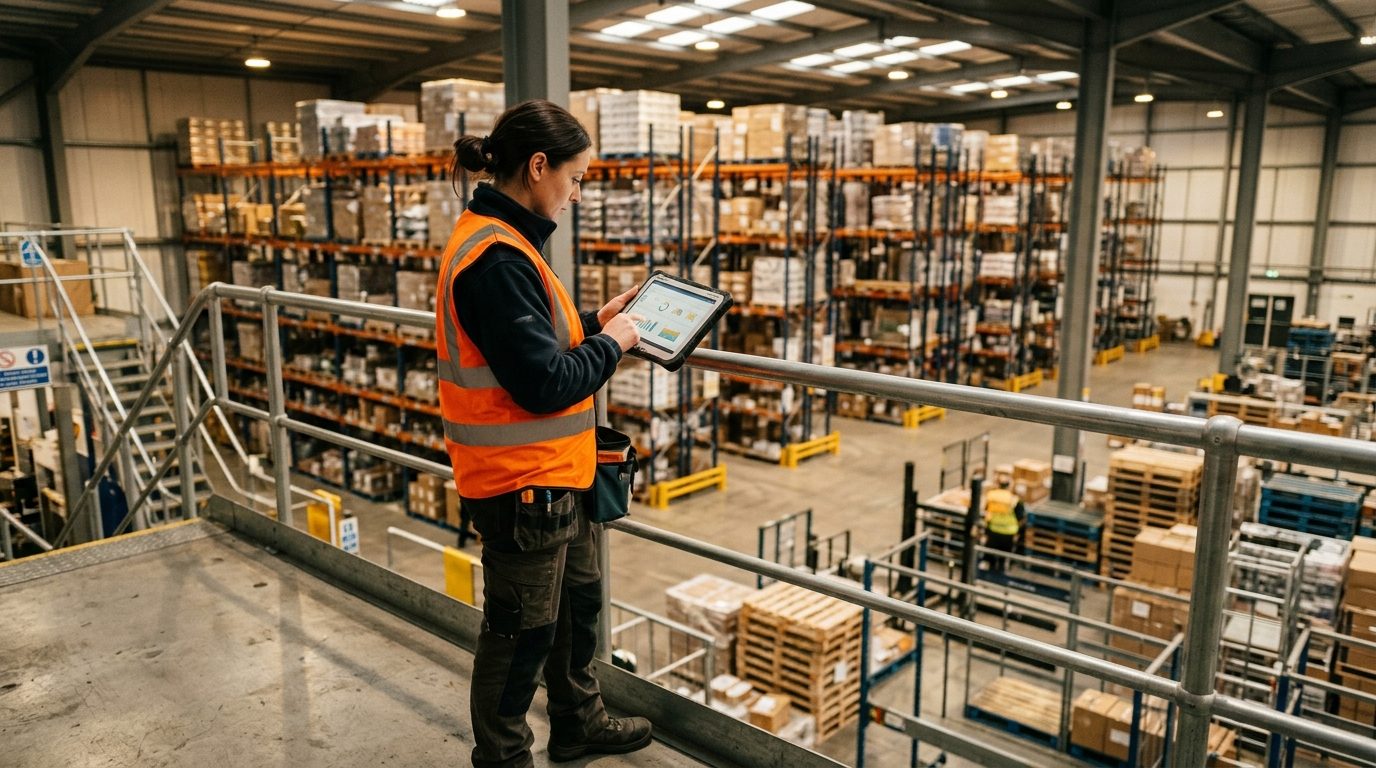
The same monitored trapping works for homes and businesses, all part of JG PestSmartCover.
Smart trapping for homes
Rats in the loft or mice in the kitchen, dealt with by traps not poison, and without you checking them yourself.
Smart trapping for businesses
Food businesses, warehouses, schools and out-of-hours sites, with a timestamped record for your audit file.
You are here
What smart trapping changes
Traditional rodent control runs on a visit schedule. A technician attends, checks the stations and comes back next month. Everything in between is invisible, and the record is only ever as current as the last inspection.
You find out when it happens
A catch at 2am on a Sunday is an alert, not a discovery on Tuesday week.
Activity is measured
Where and when catches happen shows where the pressure comes from, which is what fixes the cause.
Empty stations stop costing
Effort goes to units that are actually catching, not a full circuit of boxes quiet for months.
There is a record
Timestamped data is a far stronger answer to an auditor than a sheet signed once a month.
The systems we install
Smart trap stations
A trap station whose sensors detect rodent activity and send a real-time notification, so the unit is watched around the clock rather than at each visit.
Camera detection
A camera system that uses AI to identify activity and send real-time alerts with video footage. Where a trap tells you something was caught, the camera shows you what is moving and where.
Connected snap traps
A rat or mouse snap trap with a built-in sensor. It tells us the moment it shuts, and whether it caught anything, over the mobile network with no hub on your site.
Which system goes in, and how many, is settled at survey. The right choice depends on the species, the layout, and whether the run is a roof void, a bin store or an open yard.
How a connected snap trap works
The trap itself is a conventional rat or mouse snap trap, with a strong kill bar and springs, and teeth that hold a catch in place. It fits inside the standard bait stations already used on commercial sites. The difference is a small sensor that reports what the trap is doing, so nobody has to open a station to find out.
Three states, reported automatically
Every trap reports one of three states, and we are alerted the moment a trap shuts.
Ready
The trap is set and waiting. It checks in on a schedule, so a quiet trap is confirmed working rather than assumed to be.
Catch
The trap has shut on a rodent. We are alerted straight away, and the catch is cleared on a visit arranged for it rather than found at the next routine check.
No catch
The trap has gone off without catching anything. It needs resetting, and we know that without anyone having to look.
What that means on your site
No hub, no Wi-Fi
Each trap connects over the mobile network on its own (NB-IoT and LTE-M, with a 2G fallback). Nothing to install on your network and nothing for your IT team to approve.
Batteries last years
Battery life is rated at more than three years, and a trap tells us when its battery is low or it has lost connection, so a trap that has stopped reporting is flagged rather than mistaken for a quiet one.
Indoors and out
The traps can go wherever a bait station can, in a store room, a roof void or an external run, and can be moved as the activity moves.
A record of every event
Every trap event is logged with a time, which gives your audit file an event history rather than a monthly tick.
The case for trapping over poison
No hub, no Wi-Fi
Each trap connects over the mobile network on its own (NB-IoT and LTE-M, with a 2G fallback). Nothing to install on your network and nothing for your IT team to approve.
Batteries last years
Battery life is rated at more than three years, and a trap tells us when its battery is low or it has lost connection, so a trap that has stopped reporting is flagged rather than mistaken for a quiet one.
Indoors and out
The traps can go wherever a bait station can, in a store room, a roof void or an external run, and can be moved as the activity moves.
A record of every event
Every trap event is logged with a time, which gives your audit file an event history rather than a monthly tick.
Rodenticide use has tightened steadily, and permanent baiting as a default is no longer good practice. A monitored trapping approach avoids most of what poison brings with it, and it fits an integrated pest management programme rather than sitting outside one.
No secondary poisoning
Nothing for owls, foxes, farm cats or working dogs to pick up from an affected rodent.
No carcass in a cavity
A poisoned rodent dies where it chooses. A trapped one is where the trap is.
Works where poison cannot
Open food areas, sensitive production, schools, and sites with a no-rodenticide policy.
Less chemical on site
Increasingly what auditors and customers expect to see.
Trapping is not the right tool in every situation, and we will say so where it is not.
Where it earns its place
Food production and storage
Where the audit trail matters as much as the catch.
Hospitality and retail
Where a sighting in front of a customer is the real cost.
Healthcare and education
Where poison is often ruled out on principle.
Warehousing and logistics
Large floorplates where walking every station is slow and mostly pointless.
Farms and rural sites
Where non-target wildlife makes rodenticide a genuine risk.
Empty and out-of-hours sites
Where nobody is there to notice anything between visits.
The honest limitations
A connected trap needs a signal to report over, so a deep basement or thick-walled void needs the placement thought through rather than assumed. Units need servicing. And a trap only catches what comes to it, so it does not replace proofing: if rodents are getting in through a gap, the answer is closing the gap, and we would rather do that than sell you more traps.
What JG does
Survey
Where the activity is, what species, how they are getting in, and what the site does.
Install
Placement against the runs that actually exist, not a standard grid around the perimeter.
Monitor
We watch the alerts, so you do not have to.
Respond and report
A catch, or a pattern of them, triggers a visit that deals with the cause. The record is yours.
Arranging a survey
Smart trapping is specified from a survey, because the number of units, where they go and which system to use all depend on the building.
Get in touch or send us the details and the team will come back to you. Our wider commercial work is on the commercial pest control page.