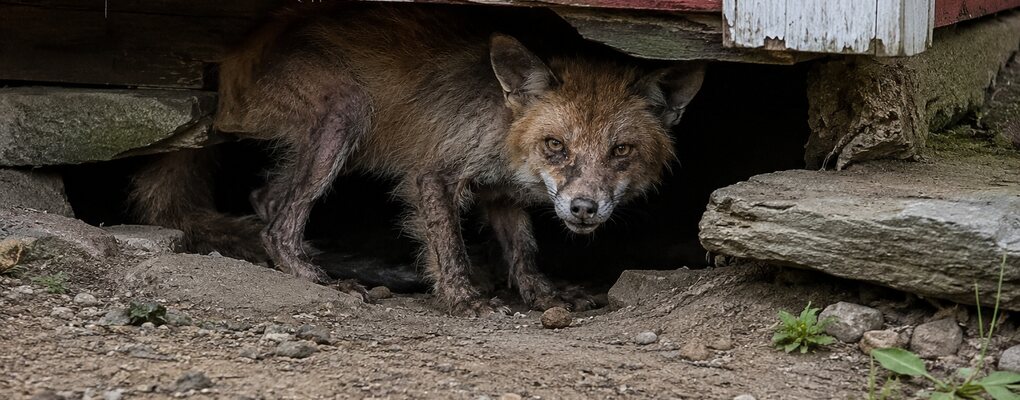
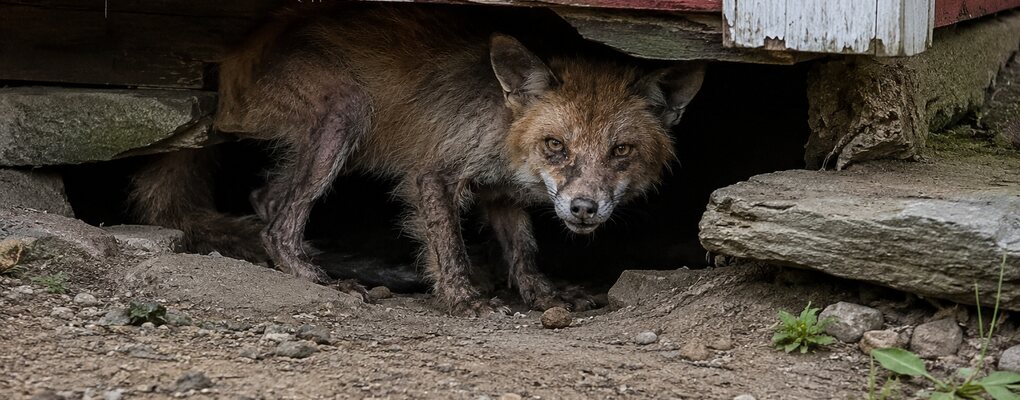
Urban foxes are now established in every major UK city, with national populations of 150,000 to 240,000 adults and densities in some London boroughs above 30 foxes per square kilometre. JG Pest Control deliver fox deterrence, exclusion and (where strictly justified and legal) lethal control across the whole of the UK, every job carried out by a BPCA Level 2 Certified Technician.
This is the JG hub for fox problems in the UK. It covers identification, behaviour, why exclusion and habitat modification are almost always the right answer, the (very limited) circumstances where lethal control is appropriate, and exactly what we do. For a free phone quote, call 0330 053 9002 .

HUMANE, LEGAL FOX CONTROL, GUARANTEED.
About Urban Foxes in the UK
The red fox (Vulpes vulpes) is the UK’s only wild canid and the species behind every UK fox call. Adults are 60 to 90 cm body length, with a brush of 35 to 50 cm, weighing 5 to 8 kg (males slightly larger than females). Coats are the familiar russet on the back with a white throat, lower body and tail tip.
Foxes are crepuscular and nocturnal, ranging over a territory of 25 to 50 hectares in urban areas (much smaller than rural foxes, who range over hundreds of hectares). They are highly intelligent, very adaptable, omnivorous (rats, pigeons, earthworms, fruit, bin food, food left out for cats), and they readily dig out earths under sheds, decking, sub-floor voids and overgrown garden corners.
The UK fox population is largely stable, with urban densities significantly higher than rural. Mange outbreaks (sarcoptic mange) periodically reduce local populations but they recover within a few years. UK fox activity peaks in winter (December to February) as the mating season drives noisy nocturnal behaviour (the famous “fox screams”), then again in spring as cubs disperse.
Fox Quick Facts
- 5 to 8 kg, 60 to 90 cm body, russet coat
- Nocturnal and crepuscular
- Urban territory just 25 to 50 hectares
- Highly intelligent and adaptable
- Mating season: late December to February
- Not protected as a species, but welfare laws apply
For BPCA Level 2 Certified fox control and a free phone quote, call 0330 053 9002
Why Foxes Become a Problem
Most urban foxes cause no problem and most JG fox calls turn out to be habitat-related, not animal-related. The genuine problem cases break down into a small number of recurring scenarios.
Earths under structures: foxes dig out under sheds, decking, conservatories and sub-floor voids to make a den, particularly in late winter and early spring when cubs are due. The result is undermining of the structure, persistent strong odour, and a litter of cubs that will return to the same earth the following year.
Bin and garden damage: persistent visits to insecure bin areas, lifted lids, scattered waste, dug-up flowerbeds, and droppings on lawns and decking.
Noise: the breeding season (late December to February) is loud. Fox screams (mainly the vixen) are unsettling and frequently disturb sleep across whole streets.
Risk to pets and small animals: foxes will take pet rabbits, guinea pigs and chickens given access. They do not typically attack cats and the well-publicised “fox attack on baby” cases are vanishingly rare, but with sleeping cats or unsupervised small dogs on a regular fox route there is some risk.
Livestock and smallholding: foxes are a serious problem for unsecured poultry and small livestock, and night-time predation is a recurring smallholder issue.
Disease: foxes can carry sarcoptic mange (transmissible to domestic dogs), Toxocara canis (a parasitic roundworm), Echinococcus (rare in the UK), and a range of bacteria. Rabies has not been present in UK wildlife since 1922.
Signs of Fox Activity
- Droppings (5 to 12 cm, twisted, with hair and bone) on lawns
- Holes dug under sheds, decking, conservatories
- Strong musky odour around suspected earth
- Paw prints (4 toes, oval pad, claws visible)
- Chewed footwear, plastic toys or garden hose
- Loud screams or barking at night, mainly January
- Bins repeatedly tipped or pulled open
Professional vs DIY: Why Exclusion and Habitat Change Almost Always Solve It
The single most important thing to understand about urban foxes is that lethal control on its own does not work. If you remove a fox from an established territory, another fox will move in to fill the vacancy within weeks, because the food and shelter that attracted the first fox are still there. Permanent fox control in an urban setting is about removing the attractants and physically excluding the animal from the problem location.
Exclusion is the heart of the work. Sheds and decking get properly skirted with welded mesh dug into the ground 30 cm deep, sub-floor airbricks get mesh-grilled, fences get a top-rail tilted outwards (foxes climb 2 m fences without difficulty so simply making the fence higher rarely works), and known weak points are sealed.
Habitat modification is the other half. Secure bin storage, no food left out for cats, no exposed compost, removal of overgrown garden corners that act as cover, and (in smallholding cases) a properly designed predator-proof poultry house.
Lethal control is sometimes appropriate. Where a fox is genuinely aggressive (extremely rare), where a fox is repeatedly killing livestock and exclusion has been exhausted, or where a sick fox poses a welfare or disease concern, professional dispatch may be the right answer. JG operate strictly within the Animal Welfare Act 2006 and any relevant local conditions, and lethal control is always a last option after exclusion and habitat work have been considered. We do not snare and we do not poison.
What JG Will Do
- Site survey: identify earths, runs, attractants
- Recommend and quote exclusion and proofing
- Welded mesh skirting to sheds, decking, sub-floors
- Bin secure recommendations
- Smallholding predator-proofing advice
- Lethal control only where strictly justified, never poison or snare
- Written report and guarantee
For BPCA Level 2 Certified fox control, call JG Pest Control on 0330 053 9002
Our Fox Control Process
- Phone call. A free 5 to 10 minute call to understand the situation (earth under shed, livestock predation, bin nuisance, persistent noise) and book a survey.
- Site survey. A BPCA Level 2 Certified Technician inspects the property, identifies earths, runs and attractants, and recommends the right combination of exclusion and habitat modification. A written quote follows.
- Exclusion works. Welded mesh skirting to sheds, decking and sub-floor voids, sub-floor airbrick mesh, fence top-rail adjustments, and any other physical exclusion required. All work to a 5-year guarantee on materials.
- Habitat advice. Written recommendations on bins, compost, garden cover, pet feed and (for smallholders) poultry housing.
- Earth clearance. Where an active earth has been confirmed, the earth is cleared (after cubs have dispersed where applicable) and the entry sealed under our exclusion programme.
- Lethal control (last resort only). Only where strictly justified, only humane methods, never poison or snare. Where lethal control is appropriate we will explain the legal framework and the alternatives in writing.
- Guarantee. Every exclusion installation is fully guaranteed in writing.
Related Services and Local Coverage
JG run fox exclusion and control across the entire UK, with site surveys booked nationwide.
Related services:
City coverage examples:
- Pest control in London
- Pest control in Essex
- Pest control in Manchester
- Pest control in Sheffield
- Pest control in Newcastle
- Pest control in Bristol
Not listed? Call 0330 053 9002 . We cover mainland UK and book free site surveys nationwide.

Trusted by 23,000+ Trustpilot reviewers, rated 4.8 out of 5. BPCA Level 2 Certified Technicians on every job.
Open early, late, every weekend, every bank holiday (except Christmas Day). Call 0330 053 9002
Recent Fox Work
- Earths under residential sheds and decking
- London garden bin and lawn fouling cases
- Sub-floor void exclusion in Victorian terraces
- Smallholding poultry predation
- School and nursery site clearance
- Industrial and commercial yard exclusion
Why Choose JG Pest Control
- BPCA Level 2 Certified Technicians on every job
- Open every weekend and every bank holiday except Christmas Day
- Exclusion-first, humane, legal practice
- 5-year guarantee on installed exclusion fabric
- Never use poison or snare
- Trusted by 23,000+ Trustpilot reviewers, rated 4.8 out of 5
- Founded in 2010, 15+ years of UK fox work
- Written guarantee on every installation
Frequently Asked Questions: Foxes
How quickly can you survey?
Free site surveys are usually booked within a week of the call, faster for urgent cases (active earth with cubs imminent, livestock predation in progress). Out of hours our national line on 0330 053 9002 rolls 24/7.
Are you available weekends and bank holidays?
Yes. JG Pest Control is open every weekend, every bank holiday except Christmas Day, with the phone line staffed early in the morning through to late in the evening. Fox calls often come in on weekends when residents finally have time to look under the shed.
Will you just kill the fox?
No, and we would not recommend it even if you asked. Killing a single urban fox does not solve the problem because another fox moves into the vacant territory within weeks. Permanent control is about removing the attractants and physically excluding the animal from the problem location. We explain this on every fox call.
Is fox control legal?
Yes, foxes are not a protected species in the UK. However all control must comply with the Animal Welfare Act 2006 and other relevant law. JG operate strictly within that framework, do not use poison or snare, and lethal control is always a last resort after exclusion options have been considered.
Do I need to leave the property?
No. Fox exclusion work is carried out around the house and garden, with no need for occupants to vacate.
How much does fox control cost?
Most fox jobs are exclusion and proofing, priced after a free site survey because shed skirting, sub-floor mesh and fence work all depend on linear or square metres of cover. Call 0330 053 9002 for a free quote.
Will the fox come back after the earth is sealed?
Once an earth is sealed and the attractants are addressed, the fox typically loses interest within days and shifts to another suitable site in its territory. Where vixens have already given birth, we will advise on the right timing to seal the earth (waiting until cubs have dispersed unless welfare requires otherwise).
The fox is screaming every night and keeping the street awake. What can you do?
Mating season noise (December to February) is loud, normal, and resolves itself in a few weeks. There is little a pest controller can do about general territorial noise across a neighbourhood. Where the noise is coming from an active earth on your property, sealing the earth (after cubs have dispersed) will move the activity elsewhere.
Are your technicians qualified?
Every job is carried out by a BPCA Level 2 Certified Technician, the recognised UK industry qualification for pest management. JG Pest Control was founded in 2010 and has been delivering fox control across the UK for more than 15 years.
For humane, legal fox control and a free site survey, call JG Pest Control on 0330 053 9002