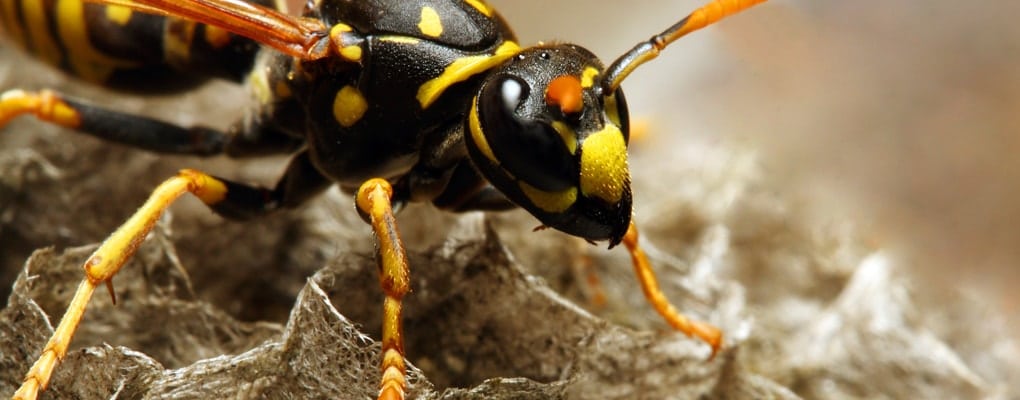
Hornets are part of the wasp family and are one of the more dangerous stinging pests in the UK. Their biology and behaviour are similar to the common wasp, and they often nest in loft spaces, sheds and other dark, hidden areas.
Although hornets tend to nest in smaller numbers than wasps, the sheer size of a hornet makes them a real health threat, as their stings can cause significant pain and, for some people, a serious reaction. If you suspect a nest on your property in your area, professional removal is the safest option.
Hornets are often described as wasps on steroids, and their nests should never be approached without protection.
Safe Hornet Nest Removal
Hornets are part of the wasp family and are one of the more dangerous stinging pests in the UK. See how our RSPH (BPCA) Level 2 certified and trained technicians safely remove a nest.
Disturbing a hornets' nest provokes the whole colony, so professional removal is always the safest option.
How to Identify a Hornets' Nest
Large Wasp-Like InsectsHornets look like oversized, angry wasps and are noticeably bigger than common wasps
Increased ActivityA rise in hornet sightings, especially when you are eating or drinking outside on a hot day
A Steady Stream In and OutHornets repeatedly entering a hole near guttering, roof tiles or gaps in brickwork
Nesting in CavitiesActivity around lofts, sheds, wall cavities and other dark, sheltered spaces
European or Asian HornetMost UK nests are European hornets; the invasive Asian hornet should always be reported, so let our team confirm the species
Audible BuzzingA persistent deep buzzing coming from a roof void, cavity or outbuilding
Why Not to DIY
Hornet stings are painful and can trigger serious allergic reactions
Disturbing a nest provokes the whole colony to defend it
Nests are often in awkward, high or enclosed spaces
Shop-bought sprays rarely reach or destroy the full nest
Our Removal Process
Survey to locate and confirm the nest and species
Technicians attend in specialist protective clothing
Targeted treatment applied directly to the nest
Safe removal where access allows, then advice on proofing
Safe and Guaranteed
RSPH (BPCA) Level 2 certified and trained technicians
Same-day response available across your area
Fully equipped for high and hard-to-reach nests
Every treatment backed by our guarantee
How to Remove a Hornets' Nest
We strongly advise against attempting home remedies for removing hornets, mainly due to the physical health and safety risks involved. A disturbed nest can lead to multiple stings in seconds.
The team at JG Pest Control are trained and equipped with specialist safety clothing to deal with any hornet problem. Our service represents value for money, is completely safe and, as always, comes fully guaranteed. For more information or to arrange a visit anywhere in your area, speak to our friendly team today.
Deter Hornets From Your Property
Once a nest is treated, sealing likely entry points around guttering, roof tiles and brickwork helps deter hornets from returning. Our technicians will advise on simple, practical proofing measures suited to your property in your area.
Roy Couch is the Technician Manager at JG Pest Control, leading the technician team across the UK. He holds the BPCA Diploma and the RSPH Level 2 Award in the Safe Use of Aluminium Phosphide, and is qualified in the Safe Use of Rodenticides.
Peter Bowers-Davis is a board volunteer at the British Pest Control Association (BPCA), the UK trade body for professional pest management. He works across the Tyro UK group of companies, including JG, setting technical standards, treatment protocols and training programmes.
Real reviews left on Trustpilot by JG Pest Control customers who mention wasp nest removal.
★★★★★
Very prompt and pleasant service. They were very quick in giving a date they could come and spray three large wasps nests situated in various locations behind the wood cladding on the outside of our house.
We know that there is a guarantee should the nests be still active in 7 days.
★★★★★
Very quick and answered all my questions. Lovely guy who knew what he was doing. Kieron realised we are near a lane with lots of trees and gave us the advice to prevent the hornets coming back. Although we have no nest he thoroughly checked the house & garage, giving me the peace of mind I needed especially with 2 young kids - thank you!! 100% recommend ☺️
★★★★★
Great service
Good service. Came very quickly. Dealt with a complex wasp nest in our house. Very pleased.
★★★★★
Wasp removal
Very professional and explained what they were going to do
Contains information related to marketing campaigns of the user. These are shared with Google AdWords / Google Ads when the Google Ads and Google Analytics accounts are linked together.
90 days
__utma
ID used to identify users and sessions
2 years after last activity
__utmt
Used to monitor number of Google Analytics server requests
10 minutes
__utmb
Used to distinguish new sessions and visits. This cookie is set when the GA.js javascript library is loaded and there is no existing __utmb cookie. The cookie is updated every time data is sent to the Google Analytics server.
30 minutes after last activity
__utmc
Used only with old Urchin versions of Google Analytics and not with GA.js. Was used to distinguish between new sessions and visits at the end of a session.
End of session (browser)
__utmz
Contains information about the traffic source or campaign that directed user to the website. The cookie is set when the GA.js javascript is loaded and updated when data is sent to the Google Anaytics server
6 months after last activity
__utmv
Contains custom information set by the web developer via the _setCustomVar method in Google Analytics. This cookie is updated every time new data is sent to the Google Analytics server.
2 years after last activity
__utmx
Used to determine whether a user is included in an A / B or Multivariate test.
18 months
_ga
ID used to identify users
2 years
_gali
Used by Google Analytics to determine which links on a page are being clicked
30 seconds
_ga_
ID used to identify users
2 years
_gid
ID used to identify users for 24 hours after last activity
24 hours
_gat
Used to monitor number of Google Analytics server requests when using Google Tag Manager