
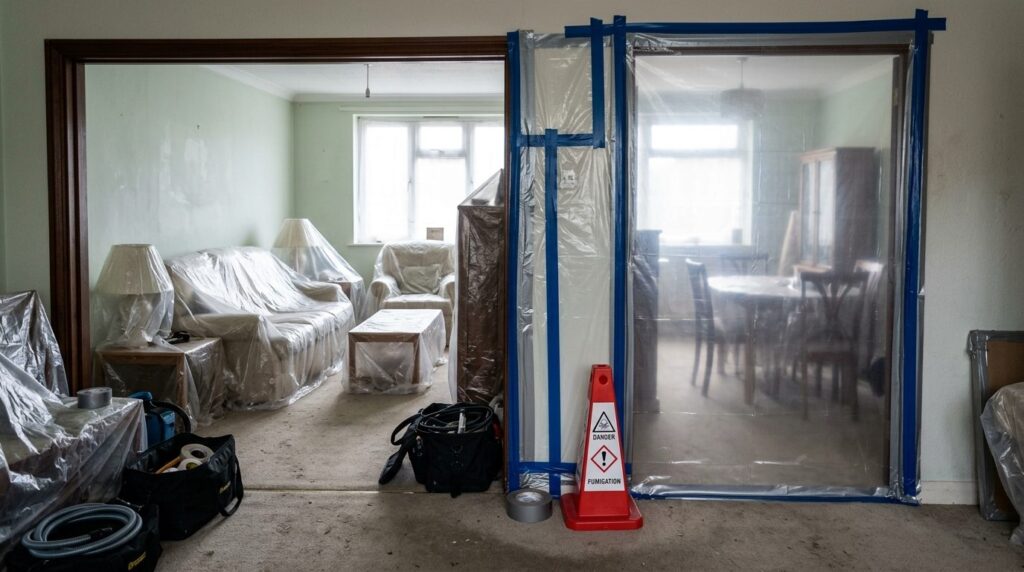
For bed bugs, fleas and most insect infestations, heat treatment beats fumigation for one decisive reason: heat kills every life stage - eggs, nymphs and adults - in a single visit, while chemical treatments routinely miss eggs and rely on insects surviving long enough to contact the residue. Fumigation still has its place, and this guide explains honestly where each method wins, what “fumigation” actually means in UK practice, and how to choose for your infestation.
Key takeaways
- What most UK companies sell as “fumigation” is actually insecticide spray or fogging - true gas fumigation is rare and heavily regulated.
- Insect eggs are the failure point of chemical treatments: sprays that kill adults often leave eggs to hatch a fresh infestation two weeks later.
- Whole-property heat treatment raises every room past the temperature no insect life stage survives, in one visit and without chemical residues.
- Resistance is real: UK bed bug populations increasingly shrug off the insecticides available for domestic use.
- Chemical treatment still makes sense for some infestations - cockroach gel baiting, ant colony treatment and wasp nests are not heat jobs.
What “fumigation” really means
Strictly, fumigation means sealing a space and filling it with a penetrating gas. In UK domestic pest control it is rarely done - the gases involved are tightly controlled and the process is expensive and disruptive. What is usually sold as fumigation is insecticide treatment: residual sprays applied to surfaces, or fogging that disperses a fine mist through a room. That distinction matters, because the shortcomings people blame on “fumigation failing” are really the known limits of spray and fog treatments.
Why chemical treatments fail against bed bugs
Two reasons come up on callout after callout. First, eggs: most insecticides do little against them, so a treatment that kills every visible bug can still be followed by a new generation hatching ten to fourteen days later - which is why chemical bed bug programmes need repeat visits, and why infestations “come back” after a single spray. Second, resistance: UK bed bug populations have been exposed to domestic insecticides for decades, and studies consistently find populations that survive direct contact with them. The bugs that survive breed, and the next generation is harder to kill.
How heat treatment solves both problems
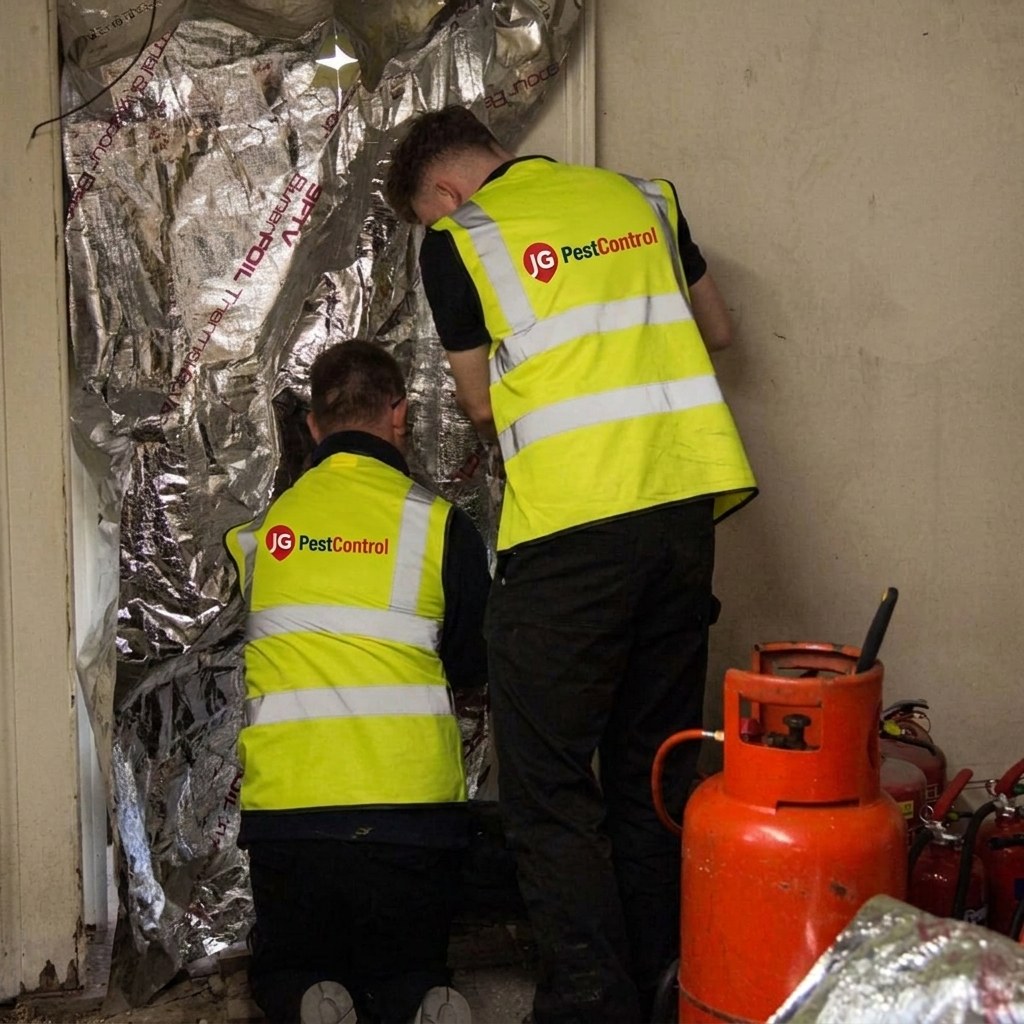
Heat has no resistance problem and no egg problem. Raising a property past the lethal threshold - sustained and monitored room by room - kills eggs, nymphs and adult insects in the same visit, including the ones hidden deep in furniture, skirting voids and mattress seams that no spray reaches. There is no chemical residue, nothing to air out, and for households with children, pets or health concerns that is often the deciding factor. It is why our whole-property heat treatment is the standard we recommend for bed bugs, and why JG carries out more bed bug heat treatments than any other UK company.
Where chemical treatment still wins
Honesty matters here: heat is not the answer to everything. Cockroaches are controlled far more effectively with gel baits that workers carry back to the harbourage. Ant infestations need the colony treated, not the room heated. Wasp nests are a targeted injection job. Fleas respond well to combined treatment - and a residual insecticide’s staying power is genuinely useful where re-infestation pressure continues, such as flats with shared voids. A good surveyor recommends the method that fits the infestation, not the one on special this month.
How to choose for your infestation
For confirmed bed bugs, choose heat first - especially if a previous spray treatment has already failed, which is itself evidence of a resistant population. For fleas, either works; severe or recurring cases justify heat. For cockroaches, ants and wasps, chemical methods executed properly are the professional standard. Whatever you are quoted, ask two questions: does this kill the eggs, and what happens if the infestation returns? Our treatments carry guarantees with free follow-ups where needed, and every job starts with a free survey so the method matches the problem - see bed bug removal for how we approach the UK’s most stubborn insect.
Frequently asked questions
Heat treatment. It kills all life stages including eggs in a single visit and is unaffected by the insecticide resistance now common in UK bed bug populations. Chemical treatments typically need multiple visits and still fail against resistant infestations.
Spray and fog treatments sold as fumigation generally do not kill bed bug eggs reliably, which is why infestations rebound ten to fourteen days after a single chemical treatment as the next generation hatches. Heat kills eggs along with every other life stage.
Yes, when run by trained technicians with monitored equipment. Heat-sensitive items are identified and removed during preparation, temperatures are tracked room by room, and there are no chemical residues afterwards - the property is usable the same day.
Cockroach gel baiting, ant colony treatment and wasp nest treatment are all chemical jobs where heat offers no advantage. Residual insecticides also help where ongoing re-infestation pressure exists. The right answer follows a proper survey, not a one-size-fits-all pitch.