
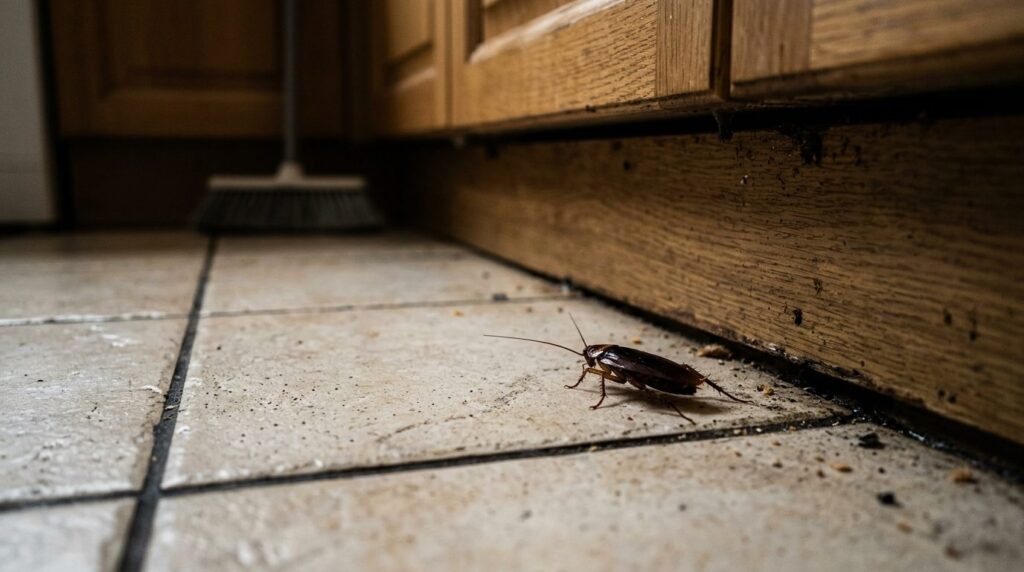
Cockroaches are among the most resilient household pests in the UK. They can thrive in hidden spaces, multiply quickly, and spread bacteria that pose serious health risks to humans. Spotting the early signs of an infestation is essential for protecting your property and family. Our cockroach callouts are up 32% year on year, highlighting just how common this problem has become across homes and businesses.

JG Pest Control is the highest rated pest control company on Trustpilot, 4.7 out of 5 from more than 28,000 reviews. We know that discovering these insects in your building can be distressing, but understanding how to identify and deal with them will help you regain control quickly and effectively.
Common signs of a cockroach infestation
Because cockroaches are nocturnal and tend to hide during daylight, you may not see the insects themselves immediately. Instead, look out for key indicators that signal their presence around your property:
- Droppings: Small, dark droppings that resemble black pepper or ground coffee, usually found in cupboards or behind kitchen appliances.
- Smear marks: Dark, irregular smear marks along walls, baseboards, or surfaces where cockroaches travel in wet environments.
- Shed skins and egg cases: Cockroach nymphs shed their skins as they mature, leaving behind light brown exoskeletons. You may also find oval-shaped egg capsules known as oothecae.
- Unusual odour: An established infestation produces an unpleasant, musty odour that lingers in enclosed spaces.
- Physical sightings: Seeing live or dead cockroaches during the day often indicates a large population forced out of overcrowded harbourage sites.
Where do cockroaches hide in the home?
Cockroaches require moisture, warmth, and a steady food source. The most common species found in the UK seek out specific harbourage spots inside residential and commercial buildings. Kitchens and bathrooms are primary targets due to high humidity levels and accessible water sources.
Check behind refrigerators, under sinks, inside hollow cabinet doors, around boiler cupboards, and near leaking pipes. Electrical appliances like microwave ovens, televisions, and motor housings also attract them because of the warmth generated by internal components. Cracks in plasterwork, gaps behind loose tiles, and crevices behind skirtings offer ideal hiding places where populations can grow undisturbed.
Steps to stop a cockroach problem
Preventing an infestation from worsening requires immediate action focused on hygiene, water reduction, and structural exclusion:
First, eliminate food sources by storing dry food in airtight plastic or glass containers. Wipe down kitchen counters daily, clean thoroughly under heavy appliances, and clear away crumbs or grease spills immediately. Ensure rubbish is placed in sealed bags and disposed of in secure outdoor bins.
Second, remove water sources by fixing dripping taps, sealing leaking pipework, and drying out sinks overnight. Cockroaches can survive without food for long periods, but they rely heavily on regular access to moisture.
Finally, seal potential entry points using suitable sealant to close gaps around pipework, repair cracks in walls, and fit draught excluders beneath external doors.
Why professional treatment is required
While basic sanitation helps limit cockroach activity, DIY treatments rarely eliminate an entire infestation. Cockroaches lay eggs in hidden locations that off-the-shelf sprays cannot reach, and attempting to deal with an infestation without specialist equipment often scatters the insects deeper into wall cavities and neighbouring rooms.
Our professional pest control technicians hold RSPH (BPCA) Level 2 qualifications, ensuring they possess the technical knowledge to carry out safe, thorough, and targeted treatments. We utilise professional grade gel baits and insect growth regulators that eliminate the entire harbourage, including eggs and nymphs, breaking the breeding cycle completely.
Book your professional cockroach treatment
If you suspect a cockroach infestation in your home or business, do not wait for the problem to spread. Contact JG Pest Control today to receive expert advice or book your treatment online through our website.