

Squirrel removal across the UK
Thumping and scratching in the loft in the early morning, shredded insulation, or a squirrel going in and out under the roof line usually mean grey squirrels have moved in. JG Pest Control removes squirrels from lofts, roof spaces and buildings in every mainland county of England, Scotland, Wales and Northern Ireland, with technicians who are RSPH (BPCA) Level 2 certified and trained.
Grey squirrels look for warm, dry lofts to nest in, particularly from autumn into spring, and once inside they can do real damage. Our phone lines are open 24 hours a day, every day. Technicians attend from early until late, every day except Christmas Day, and you can book online or on web chat any time.
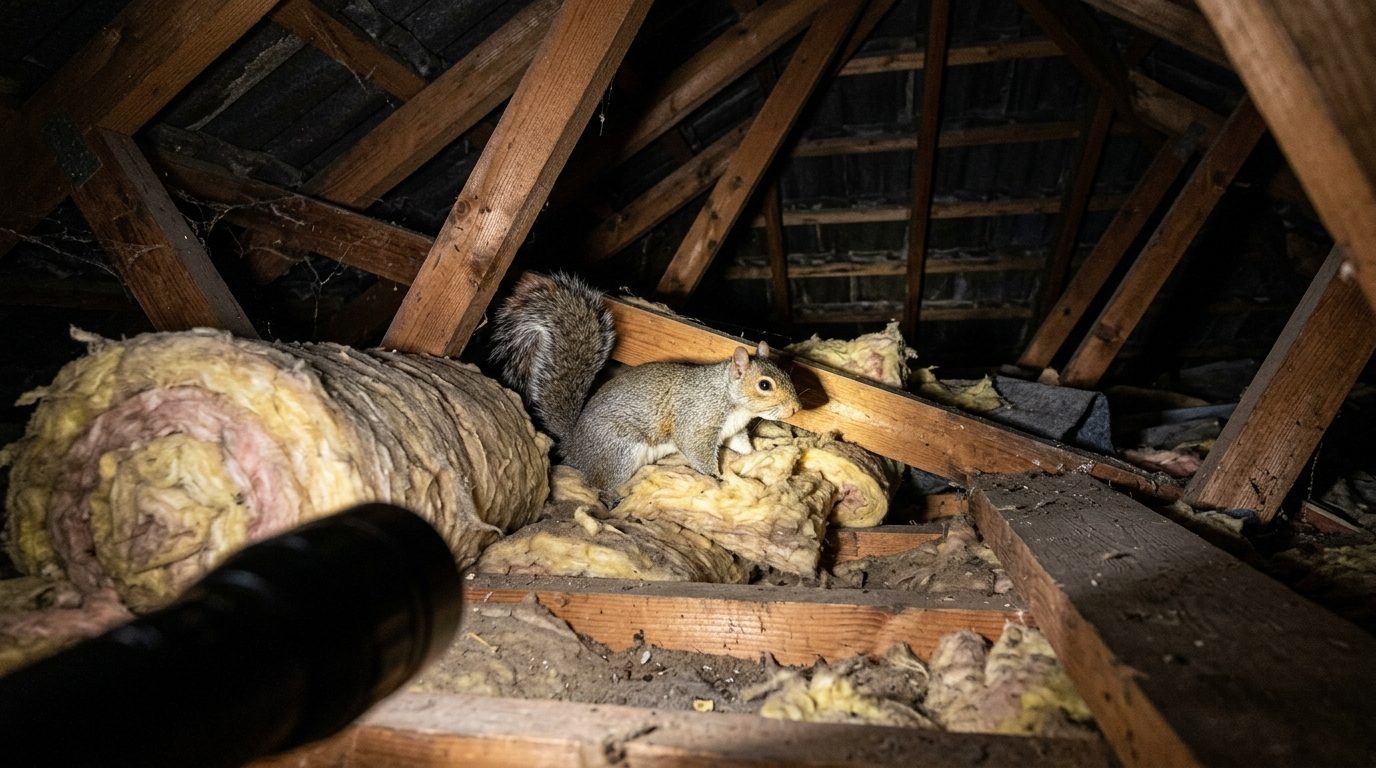
Signs you have squirrels in the loft
How we remove squirrels
Your technician surveys the loft and the outside of the building to find the nest and every way in. We then carry out a trapping programme of up to three visits to remove the squirrels from the property.
Grey squirrels are a non-native species, and the law does not allow a grey squirrel to be released once it has been caught. Red squirrels are protected, and we do not trap them.
Proofing: stopping them getting back in
Once the squirrels have gone, the entry points need to be closed, or more squirrels will move into the same loft. Proofing can be a small repair or a bigger job depending on the damage and access, so we quote for it after the survey. Proofing is done once the squirrels have been removed, never before.
Do not block the hole yourself
Blocking the entry hole while squirrels are still inside traps them, and often their young, in your loft. Squirrels will chew through the repair or into another part of the roof to get out, causing more damage. Have the squirrels removed first, then close the gaps.
What squirrel removal costs
Squirrel removal starts from £409.99 + VAT for a trapping programme of up to three visits. Proofing is quoted separately once we have seen how they are getting in. Every job is priced for the property, so your exact price depends on your postcode. See how much squirrel removal costs.
More on squirrels and roof pests
Frequently asked questions
Squirrels are active by day, so noise in the loft around dawn and dusk usually means squirrels. Rats and mice are mostly active at night. Squirrel droppings are also rounder and more barrel-shaped.
No. Grey squirrels are a non-native species, and the law does not allow a grey squirrel to be released once it has been caught.
Removal is a trapping programme of up to three visits. Once the squirrels have gone, the entry points should be proofed promptly so others do not move in.
They can. Squirrels shred insulation for nesting, gnaw timber and fascia boards, and chew electrical cables, which can be a fire risk.
Squirrel removal starts from £409.99 + VAT for a trapping programme of up to three visits. Proofing is quoted separately after the survey.
Guides & Advice

Roy Couch is the Technician Manager at JG Pest Control, leading the technician team across the UK. He holds the BPCA Diploma and the RSPH Level 2 Award in the Safe Use of Aluminium Phosphide, and is qualified in the Safe Use of Rodenticides.

Peter Bowers-Davis is a board volunteer at the British Pest Control Association (BPCA), the UK trade body for professional pest management. He works across the Tyro UK group of companies, including JG, setting technical standards, treatment protocols and training programmes.