
Rats that keep coming back to a house often have one thing in common: they are coming up from the drains. A cracked pipe, an old connection that was never sealed or a gap where a pipe runs into the house is all a rat needs to get from the sewer into your walls, under your floors or into your kitchen.
Treatment clears the rats that are already inside. But if the drain is the way in, more can follow. A rat drain blocker is a one-way valve that goes inside the drain pipe, so waste flows out as normal and rats cannot come back up.
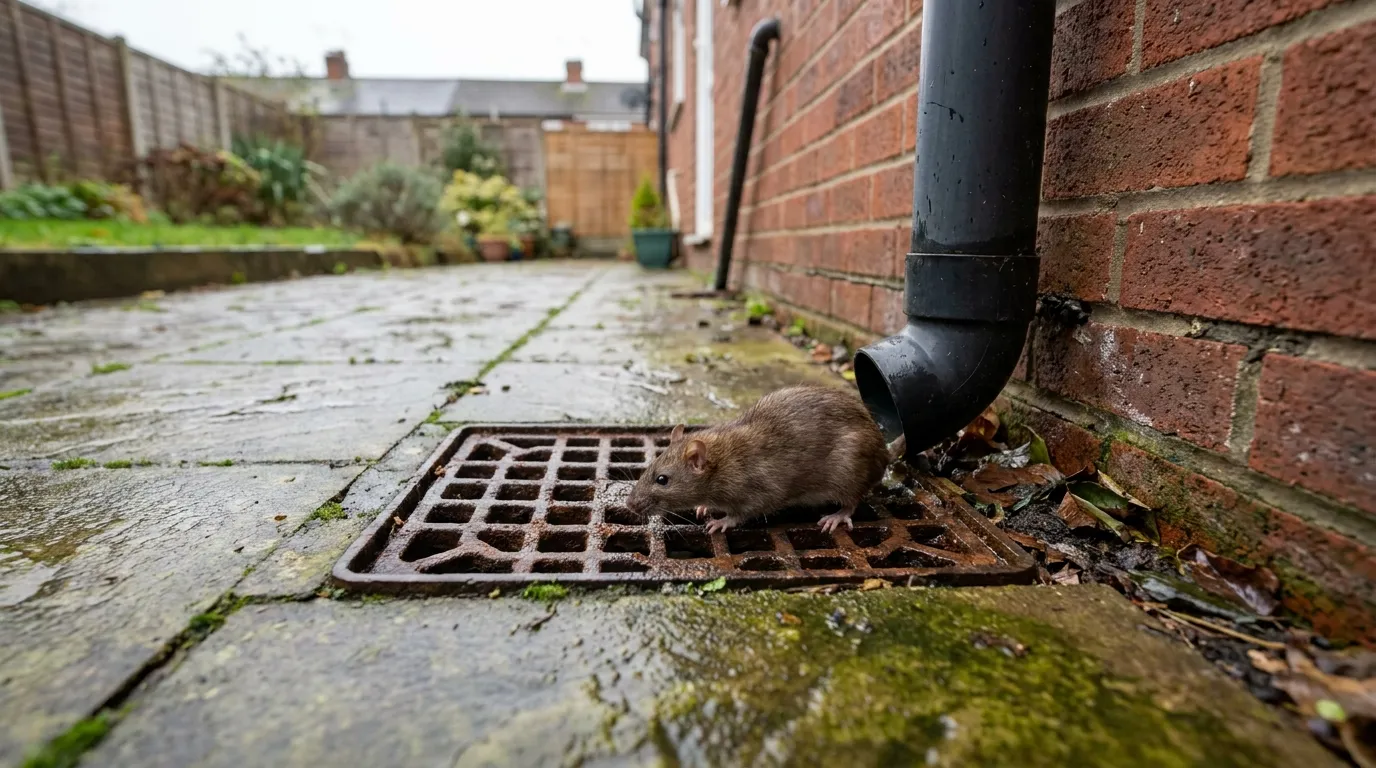
How rats get in through the drains
Sewer rats live in the pipes under our streets. They move through drains easily and climb up inside pipes, so any weak point between the sewer and your home can become a way in.
Broken or displaced pipes
Old clay pipes crack and joints shift over time. A gap in the pipe lets rats out into the ground under or beside your house.
Disused connections
A toilet, sink or washing machine that was moved or removed, with the old pipe left open under the floor or behind a wall.
Gaps around pipes
Where soil pipes and waste pipes pass through walls and floors, an unsealed gap gives rats a route into voids and cupboards.
Up through the toilet
It is less common, but rats can swim through the water in a toilet bend and come up into the bowl.
Ask your technician about the drains
If you have booked us for rats or mice, ask your technician to look at the drains on the day. They will check for the signs that point to the drains rather than another way in, such as:
- rats coming back after an earlier treatment
- activity close to kitchens, bathrooms or boxed-in pipework
- scratching in walls or ceilings near soil pipes
- droppings or gnawing under the bath panel or behind kitchen plinths
If the drains look like the way in, your technician will tell you and recommend a rat drain blocker. If they are not, you will not be sold one.
What a rat drain blocker does
A rat drain blocker is a one-way valve fitted inside your drain pipe. The flap opens with the flow, so everything leaves the house as normal, and it closes behind it, so rats coming up the pipe from the sewer are stopped before they reach your home.

Fits standard pipes
Blockers fit standard 4 inch and 6 inch drain pipes, in the private drain that serves your home.
Fitted on a follow-up visit
We fit the blocker on a later visit rather than on the day, once your technician has confirmed the drain is the way in.
Out of sight
It sits inside the pipe, usually reached through an inspection chamber, so there is nothing to see in your garden or home.
A blocker and treatment work together
A blocker stops new rats coming up the drain. It does not deal with rats that are already inside, so it works alongside our rat control treatment rather than replacing it. Treat the rats that are in, then close the way they came in.
Who is responsible for the drains?
In England and Wales, the drain pipes within your property boundary that serve only your home are normally your responsibility. Pipes shared with neighbours and the public sewer are normally looked after by your water company. Your technician will tell you where the problem sits, so you know whether it is yours to fix.
Common questions
They are designed to stop rats coming up the drain, so they work when that is how the rats are getting in. They will not help if rats are coming in another way, such as a gap in a wall or under a door, which is why your technician checks first.
No. It opens with the flow, so waste leaves as normal. As with any drain, fat, oil and wipes can cause a build-up, so keep them out of the drain.
Yes, although it is less common than rats getting in through a broken pipe or an unsealed gap. A blocker in the drain stops rats reaching the toilet from the sewer side.
No. Your technician checks the drains on the day, and the blocker is fitted on a follow-up visit.
Book a rat or mouse visit and ask your technician about the drains. If a blocker is the right fix, they will quote for it before anything is fitted.