
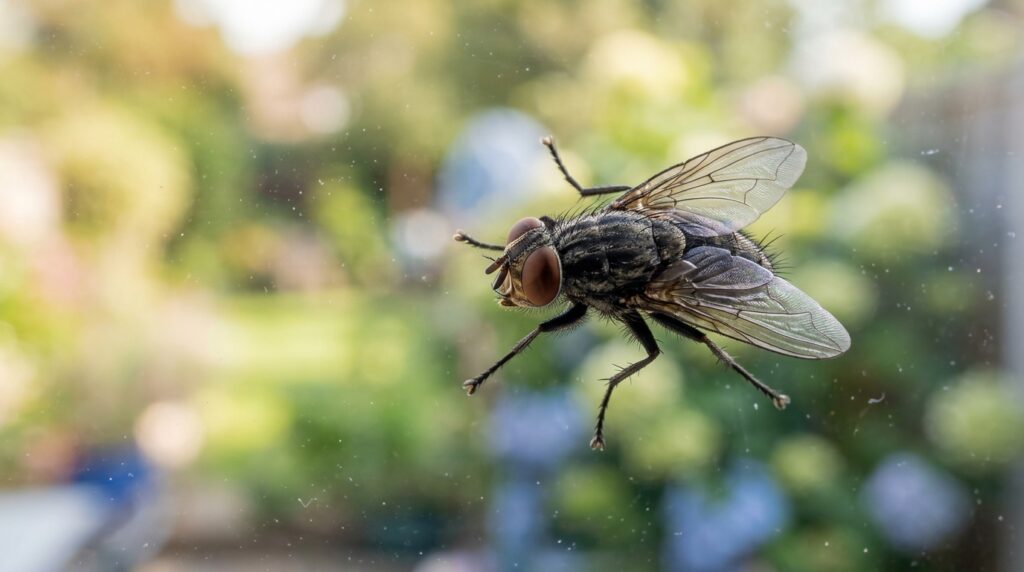
Villages in north Essex are living through what residents describe as a “relentless” fly infestation, according to reporting this week by the Colchester Gazette. A community Facebook group set up around the problem, the Great Bromley Fly Action group, has gained more than 1,200 members in just a month and a half, and residents told the paper they are keeping windows and doors shut, losing sleep to flies at night, and buying deterrent after deterrent without relief. Campaigners say they are in contact with at least ten other fly action groups around the UK, including one in Wales, which they believe points to a wider national picture. In our experience a fly problem on this scale is not a housekeeping failure by the people living through it - it is what happens when a large breeding source and a long spell of warm weather line up. Here is what is being reported, why we find hot summers produce fly surges, and what we advise when flies are getting into your home faster than you can deal with them.

Key takeaways
- The Colchester Gazette reports that a “relentless” fly infestation is affecting daily life in north Essex villages, with Great Bromley described by residents as the centre of the problem and elderly and vulnerable residents struggling most.
- The Great Bromley Fly Action Facebook group has grown to more than 1,200 members in a month and a half, and campaigners say they are in touch with at least ten other fly action groups around the UK, including one in Wales.
- The Gazette reports that residents are pressing the district council and environmental health over the issue, and that the area’s MP is lobbying the environment secretary. The article does not identify a confirmed source of the flies.
- In our experience, sustained warm weather compresses the fly breeding cycle, so a local population that would build slowly in a cool month can turn into a swarm in days when there is a substantial breeding site nearby.
- In our experience, individual households cannot remove a community-wide source, but they can make their own home a much harder target: physical exclusion, strict waste discipline and quick action on any indoor breeding all help, and professional treatment deals with the infestations that DIY products cannot.
What is happening in north Essex?
According to the Colchester Gazette, villages in north Essex have spent this summer dealing with fly numbers far beyond the usual seasonal nuisance. Residents carrying out weekly surveys say Great Bromley is at the centre of the problem. One resident told the paper the flies can be “relentless” for people living in a hotspot area: windows and doors stay closed, homes feel cooped up, and the flies that do get in keep people awake at night. The report says elderly and vulnerable residents are finding it hardest, with some saying the constant pressure is affecting their mental health.
The Gazette reports that campaigners are continuing to press Tendring Council and environmental health over the issue, that residents have received a written response from the council, and that the area’s MP is lobbying the environment secretary. The council had been contacted for comment at the time of the article. We would add one professional observation: the report does not identify a confirmed source of the flies, and we would not speculate on one. In our experience, establishing where a community-scale fly problem is coming from needs systematic investigation across the whole area, with access to land and premises that only environmental health officers have.
Why do fly numbers explode in hot weather?
In our experience, summer fly surges are a numbers game driven by temperature. Flies lay their eggs in decaying organic matter - food waste, manure, drains, anything moist and fermenting - and we find that warmth accelerates every stage of the cycle: eggs hatch sooner, larvae develop faster, and new adults emerge and start laying sooner themselves. In a cool month that cycle is slow enough that numbers stay in check. In a prolonged warm spell, each generation arrives faster than the last one dies off, and the population compounds. That is why, in our experience, a hot summer does not just mean “a few more flies” - it can mean an abrupt jump from background nuisance to swarms, especially anywhere with a substantial breeding site nearby.
In our experience the same pattern shows up across the pest world in warm years - we saw it earlier this summer with flying ant day 2026. We find that warm weather shortens breeding cycles, extends active seasons and keeps pests moving, and flies respond to it faster than almost anything else we deal with.
Why can’t you just swat or trap your way out of a fly surge?
Our advice during a surge is to keep using sticky papers, hanging traps and sprays - they help reduce the flies already indoors. What they cannot do, in our experience, is change the arithmetic outside your walls. Where a breeding source in the wider area keeps producing flies, we would expect every fly killed indoors to be replaced by another finding its way in - which matches what residents describe in the Gazette’s report: buying product after product while the problem carries on. In our experience the honest way to think about it is in two halves: the community-scale source, which only investigation by the authorities can resolve, and your own home, which you can genuinely make a much harder target in the meantime.
In our professional view there is also a hygiene reason not to shrug flies off as a mere annoyance. In our line of work house flies are treated as a genuine hygiene risk rather than a cosmetic one, because they feed and breed in decaying matter and then land on kitchen surfaces and uncovered food - it is why fly control is taken so seriously in the food businesses we work with. We set out how waste and flies feed each other in our guide to why rubbish attracts rats and flies.
How do you keep flies out of your home during a surge?
In our experience, the measures that actually move the needle in a heavy fly period are physical and unglamorous. Fit fly screens to the windows you most need to open, especially kitchen and bedroom windows, so you can ventilate without inviting flies in. Keep bins lidded and sealed, move them away from doors and windows, and get bagged food waste out of the house frequently - we find that waste that would be fine for a week in winter becomes a breeding site in days of hot weather. Cover food, clear up spills promptly, rinse recycling, and keep drains and gullies clean, because in our experience a neglected drain is a fly nursery hiding in plain sight. Check the forgotten spots: a missed bag of potatoes, a pet food bowl, an outside compost caddy with a loose lid.
In our experience, flies that keep appearing indoors with the windows shut, or maggots anywhere in the house, point to breeding inside the property rather than pressure from outside - our approach is to find and remove that material rather than spray over it. We also find that different species behave differently - the small flies that hover around sinks and plants are not the same problem as house flies, and autumn brings its own visitor, which we cover in our guide to cluster flies.
When should you call in professional fly control?
Our advice is to call a professional when flies are appearing faster than basic hygiene and exclusion can explain, when you suspect breeding inside the property, or when a vulnerable person’s living conditions are being made miserable - a situation the Gazette’s reporting describes in north Essex right now. Our treatments identify the species, find and remove breeding material, treat the areas flies rest on with the right insecticides, and advise on proofing so the problem does not simply restart. In our experience food businesses cannot treat fly control as optional: environmental health officers expect to see it in place, and an infestation can close a kitchen.
Our technicians are qualified to RSPH (BPCA) Level 2 and carry out fly control nationwide, including a local team covering Essex, with a 24-hour response available every day of the year except Christmas Day. JG Pest Control is rated 4.7 on Trustpilot with 28,000+ reviews. If flies have taken over your home or business, call the number at the top of this page and we will get a technician to you fast.
The Essex fly surge: your questions answered
The Colchester Gazette reports that north Essex villages, with Great Bromley described by residents as the centre, are experiencing an unusually severe fly infestation this summer, and that residents are pressing the council and environmental health over it. The report does not identify a confirmed source. In our experience, prolonged warm weather accelerates fly breeding, so any substantial breeding site produces far larger swarms in a hot summer than it would in a cool one.
In our line of work we treat them as one. House flies feed and breed in decaying organic matter such as waste and drains, then land on food preparation surfaces and uncovered food, so in our experience they can transfer contamination from one to the other. That is why fly control is a standing requirement in the food businesses we work with, and why our advice is to deal with heavy fly activity in a home rather than put up with it.
Our advice is to deny them entry and remove what attracts them: fit fly screens on the windows you open, keep bins lidded and away from doors, get food waste out of the house frequently in hot weather, cover food and keep drains clean. In our experience traps and sprays reduce the flies already indoors but will not stop replacements arriving. If flies keep appearing with windows closed, or you find maggots, we would expect breeding inside the property - and that is the point to bring in professional help.
In our experience, tracing and resolving a community-wide source is a job for the local council and its environmental health officers, who have the investigative powers and access it needs - in north Essex the Gazette reports that residents are pressing the district council and that the area’s MP has raised the issue nationally. In our experience, households and businesses still need to look after their own premises, and a professional pest controller can treat infestations and harden a property against flies while the wider source is investigated.