
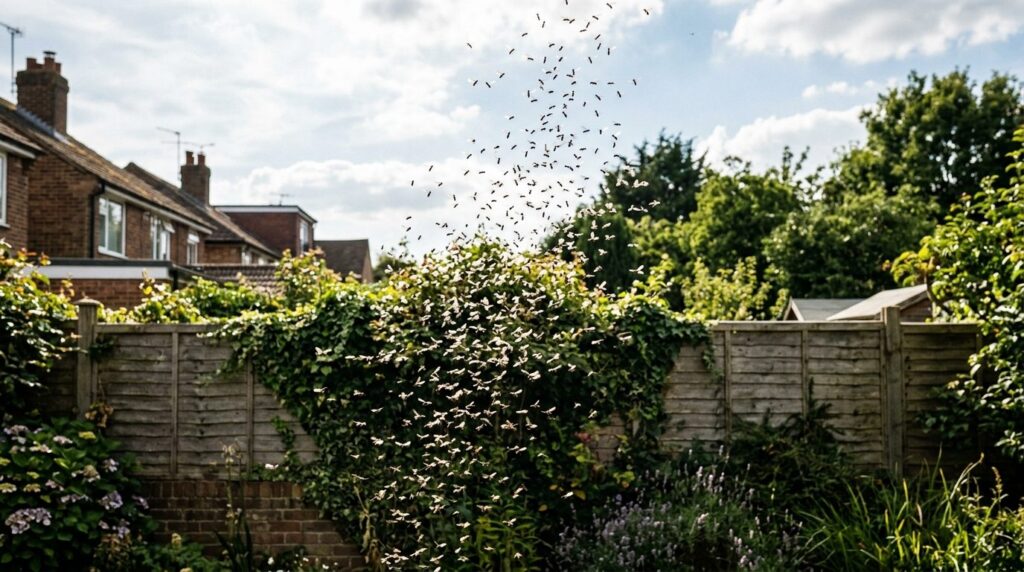
Flying Ant Day 2026 did not just arrive - it detonated. On Friday 26 June, the day the Met Office confirmed as the hottest June day on record in the UK (37.7C at Lingwood in Norfolk), our ant callouts spiked to 32 bookings in a single day. That is around 3.4 times our normal summer average of roughly 9.5 ant jobs a day, and it landed four days earlier than last year’s peak, dragged forward by the record heat.

Why the heat brought the swarm
“Flying Ant Day” is not really a single day at all. It is the point each summer when winged queens and males from countless nests take to the air at once to mate. Ants time these nuptial flights to hot, humid, still conditions, which is why a spell of record heat can compress weeks of swarming into a single afternoon. When the temperature hit its highest June level ever recorded, huge numbers of colonies got the same signal on the same day, and the phones lit up.
A record spike on top of a record year
It is worth being clear about the context: last year was already our busiest year on record, with each summer month setting a record of its own. So this year’s flying ant surge is a spike on top of an exceptional baseline, not a bounce back from a quiet spell. Interestingly, our total ant work across the whole year is actually slightly down - the story here is the intensity of the peak, not the annual volume. When the conditions align, demand concentrates hard and fast.
Are flying ants actually a problem?
For most households, a flying ant swarm is a short-lived nuisance rather than a danger. The ants are not interested in your home so much as the sky. The issue comes when a nest is established in or under your property - in cavity walls, under patios and driveways, or beneath floors - because that is when you get repeat swarms year after year and, occasionally, structural nuisance from large colonies.
What to do when they swarm
- Keep doors and windows closed during a swarm, or fit fly screens if you want them open in the heat.
- Clear food and sugary spills quickly, indoors and out, as these draw foragers to the nest site.
- Seal gaps around door frames, air bricks and skirting where ants are getting in.
- Resist the urge to keep spraying visible ants - it rarely reaches the nest and the queen, so the colony simply rebuilds.
If you are getting swarms from the same spot each year, the nest needs treating at source rather than the ants you can see. That is a job for a professional who can locate and treat the colony properly.
Get ahead of next year’s swarm
JG Pest Control is one of the UK’s largest pest control firms and the highest rated on Trustpilot, with a 4.7 out of 5 rating from more than 28,000 reviews. Our RSPH (BPCA) Level 2 qualified technicians can find and treat the nest behind a recurring flying ant problem, with same-day availability across the country. If flying ants keep coming back, get in touch and we will sort the source, not just the swarm.