
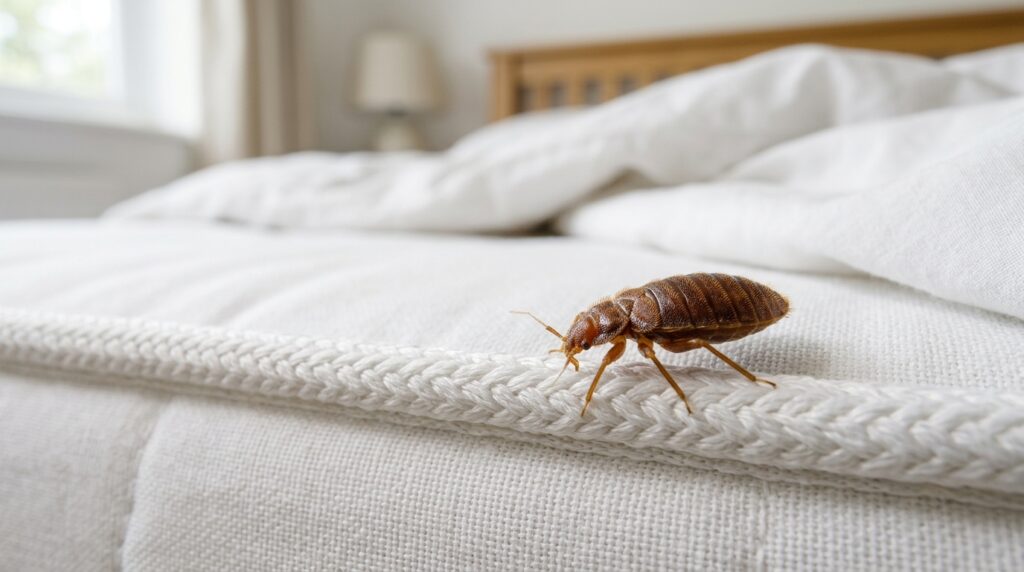
Confirmed bed bug activity in the UK rose by an average of 44 per cent year-on-year between 2023 and 2025, according to new Rentokil figures reported by Pest Control Technology this week. The data lands in the middle of the summer holiday season - exactly the time of year when bed bugs are most likely to hitch a lift home in your luggage, and when their bites are most easily mistaken for mosquito bites. Here is what the new figures actually show, why the numbers keep climbing, and how to stop your suitcase bringing back the one souvenir nobody wants.

Key takeaways
- Rentokil reports that confirmed bed bug activity in the UK increased by an average of 44 per cent year-on-year between 2023 and 2025 - and these are infestations confirmed by a technician visit, not just sightings.
- With mosquitoes and biting midges also active in summer, Rentokil warns that bed bug bites are easily mistaken for other insect bites, so infestations can be well established before anyone realises.
- Bed bugs are expert hitchhikers, and peak travel season is exactly when they spread - moving home in luggage and clothing.
- A few minutes checking your room when you arrive, and some simple luggage habits, sharply reduce the risk of bringing bed bugs home.
- If they do get in, shop-bought sprays rarely finish the job - professional treatment, especially whole-room heat treatment, is the reliable way to clear an infestation.
What do Rentokil’s new figures show?
According to the Pest Control Technology report, Rentokil’s data shows confirmed bed bug activity in the UK rising by an average of 44 per cent year-on-year across 2023 to 2025. Importantly, Rentokil counts only “confirmed pest activity following a visit from a frontline colleague” - in other words, infestations verified by a technician on site, not phone enquiries or suspected sightings. That makes the trend hard to dismiss as media-driven anxiety: these are real infestations, found in real UK homes and businesses, year after year.
Paul Blackhurst, head of Technical Academy at Rentokil Pest Control, said in the report that bed bugs are “often described as silent assassins, emerging under cover of darkness, moving quickly, feeding at night, and hiding in the smallest cracks and crevices near where people sleep”. By the time most people work out what is biting them, he noted, an infestation may already be well established.
Why are bed bug numbers still rising?
The Rentokil report does not give a single cause, and in our experience there is not one - there are three factors working together. First, travel: bed bugs move by hitchhiking in luggage, and busy international and domestic travel seasons give them a steady supply of journeys to ride along on. Second, resistance: bed bug populations across the UK have developed strong resistance to many over-the-counter insecticides, so DIY attempts increasingly fail and infestations get more time to spread. Third, detection lag: because bites are so easily blamed on other insects in summer, infestations often grow quietly for weeks before anyone investigates the mattress.
Our own figures point the same way. As we reported in July, JG bed bug callouts were up 22 per cent year on year, with heat treatments up 36 per cent. Rentokil’s national data confirms this is an industry-wide trend, not a blip.
Why are bed bug bites mistaken for mosquito bites in summer?
Rentokil highlights a seasonal trap: with mosquitoes and biting midges active through the summer months, bed bug bites are easily put down to something you picked up in the garden or on an evening walk, meaning people may not realise they have brought a pest hitchhiker home until the infestation has taken hold. The pattern of the bites is the clue. Bed bug bites typically appear in lines or small clusters on skin that is exposed while you sleep - arms, shoulders, neck and face - and they appear overnight rather than after time outdoors. Mosquito bites tend to be more random and singular. If you are waking up with new bites, our guide to telling bed bug bites apart from flea bites covers the differences in detail, and the bedroom checks below will usually settle the question.
How do you check a hotel room for bed bugs?
Blackhurst’s advice in the report is worth taking seriously: “Knowing what signs to look for when you arrive at your accommodation, and taking a few simple precautions with your luggage, can help prevent bed bugs from being brought home and reduce the risk of an infestation taking hold.” In practice, that means a two-minute inspection before you unpack. Pull back the sheets and check the mattress seams and piping, the headboard and the bed frame for live insects, dark ink-like spots, tiny blood marks or shed skins. Keep your suitcase on the luggage rack or a hard surface - never on the bed or the carpet - and keep it closed when you are not using it. When you get home, unpack over a hard floor rather than a bed, and give clothes a hot wash and a hot tumble dry. We wrote a full walkthrough in how to spot bed bugs in your hotel room.
What should you do if you think bed bugs have come home with you?
Act early and resist the urge to reach for a spray. Shop-bought insecticides rarely clear an infestation: resistance is widespread, and sprays cannot reach the eggs tucked deep into mattress seams, bed frames and wall voids, so the problem appears to improve and then comes back. Moving to another bedroom makes things worse, as the bugs simply follow you and spread through the house. Our guide to how professionals get rid of bed bugs explains what actually works, and why whole-room heat treatment - which kills every life stage including the eggs in a single visit - has become the gold standard.
Our bed bug removal technicians are qualified to RSPH (BPCA) Level 2 and treat bed bugs nationwide, with same-day appointments available across the UK every day of the year except Christmas Day. JG Pest Control is rated 4.7 on Trustpilot with 27,000+ reviews. If you are seeing the signs, call the number at the top of this page and we will get a technician to you fast.
Bed bugs in 2026: your questions answered
Rentokil reports that confirmed bed bug activity in the UK rose by an average of 44 per cent year-on-year between 2023 and 2025. The figure covers activity confirmed by a technician visit rather than reported sightings, which makes it one of the more reliable indicators of the national trend.
Bites in lines or clusters on skin exposed during sleep, small blood spots on your sheets, dark ink-like marks along mattress seams and bed frames, shed skins, and in heavier infestations a sweet, musty smell. Live bed bugs are about the size of an apple pip and hide in cracks and seams close to where people sleep.
It is very difficult. UK bed bugs are widely resistant to shop-bought insecticides, and no spray reliably reaches the eggs hidden deep in seams and crevices, so DIY treatments usually knock numbers down briefly before the infestation rebounds. Professional treatment - particularly whole-room heat treatment, which kills adults, nymphs and eggs in one visit - is the dependable route.
Check the mattress seams, headboard and bed frame for live insects, dark spots or shed skins before you unpack. Keep luggage on a rack or hard surface rather than the bed or floor, and keep it closed between uses. At home, unpack over a hard floor, then give your clothes a hot wash followed by a hot tumble dry.