
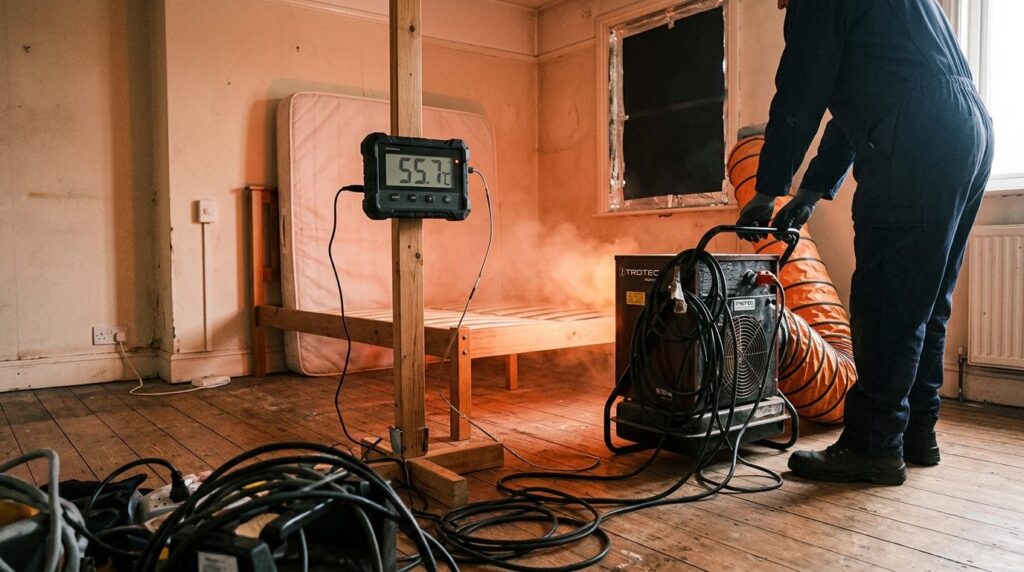
Bed bug work is surging, and the way the professionals are dealing with it is changing fast. Our latest figures show bed bug callouts up 22 per cent year on year (4,559 against 3,730), but the more telling number is the method: bed bug heat treatments are up 36 per cent (2,085 against 1,534) and now account for 46 per cent of our bed bug work, up from 41 per cent a year ago. Heat has become the gold standard, and demand for it is rising fastest of all.

JG is a national bed bug heat-treatment specialist
Heat treatment is our specialism. We have carried out more than 5,600 bed bug heat treatments in under three years, logging 44,834 room-by-room temperature records in the process - a level of dedicated heat-treatment experience that few can match. It is the kind of volume that turns heat treatment from an occasional add-on into a core, everyday competence.
Why heat beats sprays for bed bugs
Bed bugs are one of the hardest pests to eradicate, and traditional insecticide sprays increasingly struggle with them for two reasons. First, bed bugs have grown widely resistant to many common chemicals. Second, sprays cannot reliably reach the eggs, which sit tucked deep into mattress seams, bed frames, skirting and wall voids - so an infestation that looks treated comes roaring back a couple of weeks later as those eggs hatch.
Heat sidesteps both problems. We raise the whole room to a temperature that is lethal to bed bugs and hold it long enough for the heat to penetrate everywhere the bugs hide, killing every life stage including the eggs. The result is usually a single-visit treatment with no chemical residue left in the room you sleep in, and no furniture to throw away.
Finding them early with detection dogs
Bed bugs are experts at hiding, and by the time bites appear an infestation is often well established. Our canine bed bug detection dogs can pinpoint live bugs and viable eggs with a speed and accuracy no visual check can match, which means we treat exactly where the problem is and can verify afterwards that a property is clear. In hotels and multi-room buildings, that early, precise detection stops an infestation before it spreads between rooms.
How to spot bed bugs
- Small, itchy bites, often in lines or clusters on skin exposed while sleeping.
- Tiny dark spots (droppings) on the mattress, sheets or headboard.
- Small blood smears on bedding.
- Shed skins or a sweet, musty smell around the bed in a heavier infestation.
If you find any of these, avoid moving items between rooms, which spreads the problem, and get a professional inspection rather than reaching for a spray.
Book a bed bug specialist
JG Pest Control is the highest rated pest control company on Trustpilot, with a 4.7 out of 5 rating from more than 28,000 reviews, and a national bed bug heat-treatment specialist. Our RSPH (BPCA) Level 2 qualified technicians offer heat treatment, canine detection and discreet, same-day visits across the country. If you think you have bed bugs, get in touch and we will deal with them properly, first time.