
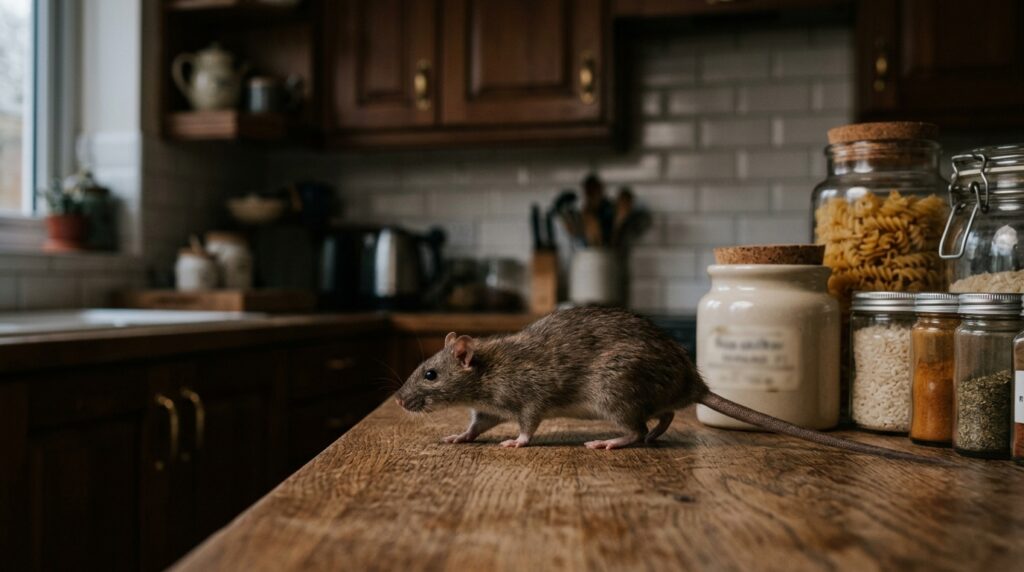
UK news outlets are reporting a sharp rise in rat activity during the current heatwave, with pest controllers warning that numbers have climbed over the past month. If you are suddenly seeing or hearing rats you did not have before, you are not imagining it - hot, dry weather genuinely pushes rats towards homes and businesses. Here is why it happens, and what to do about it.

Key takeaways
- Hot, dry spells drive rats indoors in search of water and food, so infestations spike during a heatwave.
- Warmth speeds up rat breeding - a single pair can produce a large colony quickly in good conditions.
- The early signs are droppings, gnaw marks, a musky smell and scratching noises at night.
- Block entry points and remove food and water sources first - rats need only a gap the width of a thumb.
- An established infestation needs professional treatment; DIY poison alone rarely clears it and carries risks to pets and wildlife.
Why a heatwave brings rats indoors
Two things happen when the weather turns hot and dry. First, the puddles, ponds and damp ground rats normally drink from dry up, so they range further and closer to buildings looking for water - dripping taps, pet bowls, air-conditioning run-off and drains all become attractions. Second, warm conditions combined with easy access to food and water support rapid population growth, so a small problem can build up far more quickly than you might expect. Add the food that summer brings - overflowing bins, barbecues, garden fruit - and the result is the surge outlets are reporting.
The signs to watch for
Rats are mostly nocturnal, so you often hear them before you see them: scratching or scurrying in walls, lofts and under floors after dark. Look for dark, tapered droppings along skirting and in cupboards, gnaw marks on packaging, cables and woodwork, smear marks where greasy fur brushes walls, and a distinctive musky smell. In the garden, watch for burrows near sheds, decking and compost, and runs worn through undergrowth.
What to do now
Prevention beats treatment, and most of it is straightforward. Remove the water and food that draw them in: fix dripping outdoor taps, bring pet bowls in overnight, secure bins with closing lids and clear barbecue and fallen-fruit debris. Then proof the building - seal gaps around pipes, airbricks and door thresholds with rodent-proof materials, because a rat needs only a gap the width of a thumb to get inside. Keep grass and vegetation cut back from walls so there is no cover. Our guide to why rats move indoors covers the proofing steps in more detail.
When to call a professional
If rats are already established - daytime sightings, droppings appearing daily, activity in more than one area - proofing alone will not clear them, and shop-bought poison used incorrectly can harm pets and wildlife or simply move the problem. Our rat and rodent control teams survey the property, treat the infestation safely and proof the entry points so it does not return, with same-day appointments across the UK and a free survey first. Call the number at the top of this page and we will get someone to you quickly.
Heatwave rats: your questions answered
Hot, dry weather dries up the water sources rats normally use, pushing them towards homes and businesses where water, food and shelter are available. Warmth also speeds up breeding, so numbers rise quickly during a prolonged hot spell - which is why UK pest controllers are reporting a surge.
Remove water and food sources (dripping taps, pet bowls, unsecured bins, fallen fruit), then seal entry points - rats need only a thumb-width gap. Keep vegetation cut back from the walls. If they are already inside, get a professional survey rather than relying on DIY poison.
Rats can carry disease, contaminate food and gnaw through cables and pipework, which is a genuine fire and flood risk, so an infestation should be dealt with promptly rather than left.
JG offers same-day appointments across the UK with a free survey first, so an active rat problem can usually be assessed and treated fast - important in a heatwave when numbers are climbing.