
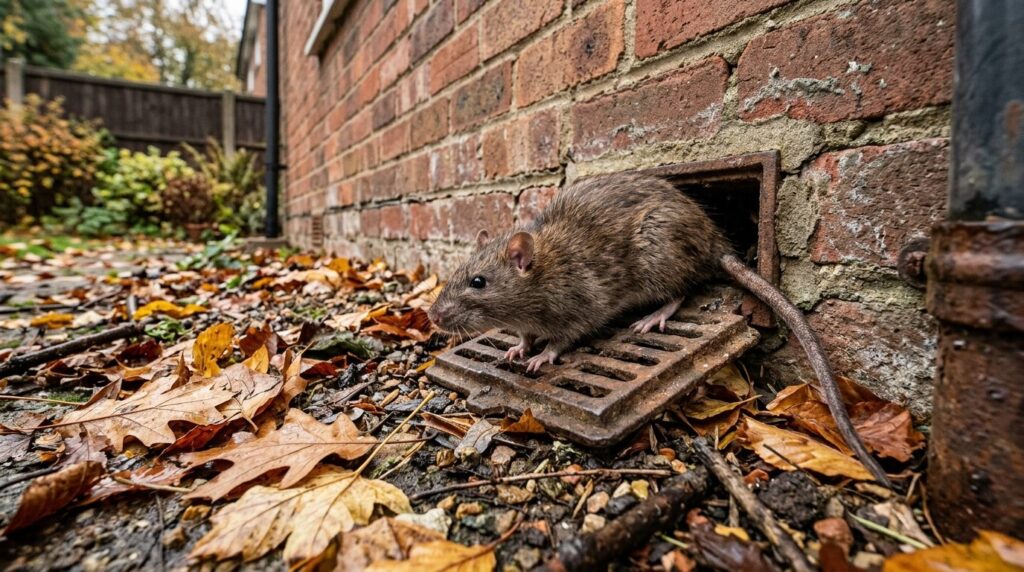
As the autumn leaves fall and the British weather becomes colder, we naturally start spending more time indoors, seeking warmth and comfort. Unfortunately, we are not the only ones looking for shelter. Autumn brings a noticeable shift in rodent behaviour in the UK, as rats begin their annual migration from fields and gardens into our homes and businesses. Rat callouts are up 43% year on year and rats are now our most called-out pest, overtaking wasps. Understanding why this shift happens and how to prevent it is key to keeping your property pest-free this winter.

Why Rats Head Indoors in Autumn
During the warmer spring and summer months, rats are content to live outdoors. Fields, hedgerows, and garden undergrowth provide plenty of natural food sources, such as seeds, berries, and insects. However, as autumn arrives, these food sources rapidly disappear. At the same time, dropping temperatures and heavy autumn rain make outdoor nesting sites cold and damp.
Rats are highly adaptable survivors. To survive the winter, they require essential elements: warmth, shelter, and a reliable food supply. Your home offers all of these. A tiny gap in a brickwork vent or a space under a door is all a rat needs to gain entry. Once inside, they will quickly settle into quiet, undisturbed areas like lofts, cavity walls, and under floorboards.
How to Stop Rats Entering Your Property
Preventing rats from entering your property is far easier than dealing with an established infestation. Rodents can squeeze through surprisingly small gaps, as anything larger than a small coin is enough for a young pest to get through. Here are some practical steps you can take to secure your home this autumn:
- Seal external gaps: Inspect your property for any holes in external walls, around pipes, or near utility entry points. Use durable materials like wire wool and quick-setting cement to block these entry points.
- Check your air vents: Air bricks are essential for ventilation but can be an easy doorway for pests. Fit them with specialised rodent-proof mesh covers that do not block airflow.
- Manage garden waste: Keep your garden tidy by clearing away fallen leaves, overgrown weeds, and piles of wood. These provide excellent cover for rats approaching your house.
- Secure your bins: Ensure all outdoor rubbish bins have tight-fitting lids. Avoid leaving bin bags sitting outside next to the bins, as rats can easily chew through plastic bags.
- Remove bird feeders: While feeding garden birds is popular, spilled seeds and nuts on the ground are a major attraction for rodents. Use mess-free feeders or suspend them away from fences and trees.
Professional Support from JG Pest Control
If you suspect that rats have already made their way into your home, it is important to act quickly. Rodents can cause significant damage to your property by gnawing through wooden joists, plasterboard, and even live electrical wiring, which presents a serious fire hazard.
At JG Pest Control, our team of experienced technicians holds RSPH (BPCA) Level 2 qualifications, ensuring that all treatments are carried out safely, humanely, and effectively. We do not just lay traps; we look for the root cause of the problem, identifying entry points and offering advice on long-term proofing.
JG Pest Control is the highest rated pest control company on Trustpilot, 4.7 out of 5 from more than 28,000 reviews, so you can trust that your home is in safe hands.
Do not let rodents share your home this autumn. For fast, reliable assistance, please get in touch with our friendly team or book your appointment online today.