

A bed bug infestation is never just the bugs you can see. It is made up of adults, nymphs and eggs all at once. The adults are the ones doing the biting, while the eggs sit out of sight until they hatch and become biting adults in their own right. That hidden generation is what makes bed bugs so hard to shift.
Why bed bugs are so difficult to clear
When you set out to get rid of a bed bug infestation, two problems trip up most homeowners:
- Bed bugs are excellent at hiding.
- Bed bugs have grown resistant to many of the chemicals sold in shops.
Put those two together and an infestation can turn into a genuine nightmare. It is a tough job even for pest controllers, particularly any who are not properly experienced with bed bugs.
Where traps and chemicals fall short
Some companies place traps around a property hoping to catch the lot. Traps will kill plenty of bed bugs, but they never get them all, and they do nothing about the eggs. A few weeks later those eggs hatch and you are back to square one with biting adults.
Others rely on chemicals. Some of these work, but bed bugs have often adapted to them and simply survive. Chemicals are also hard to get into every part of a home, so bugs hold out in cluttered corners and rooms that see little use, then slowly spread back through the house.
How heat treatment works
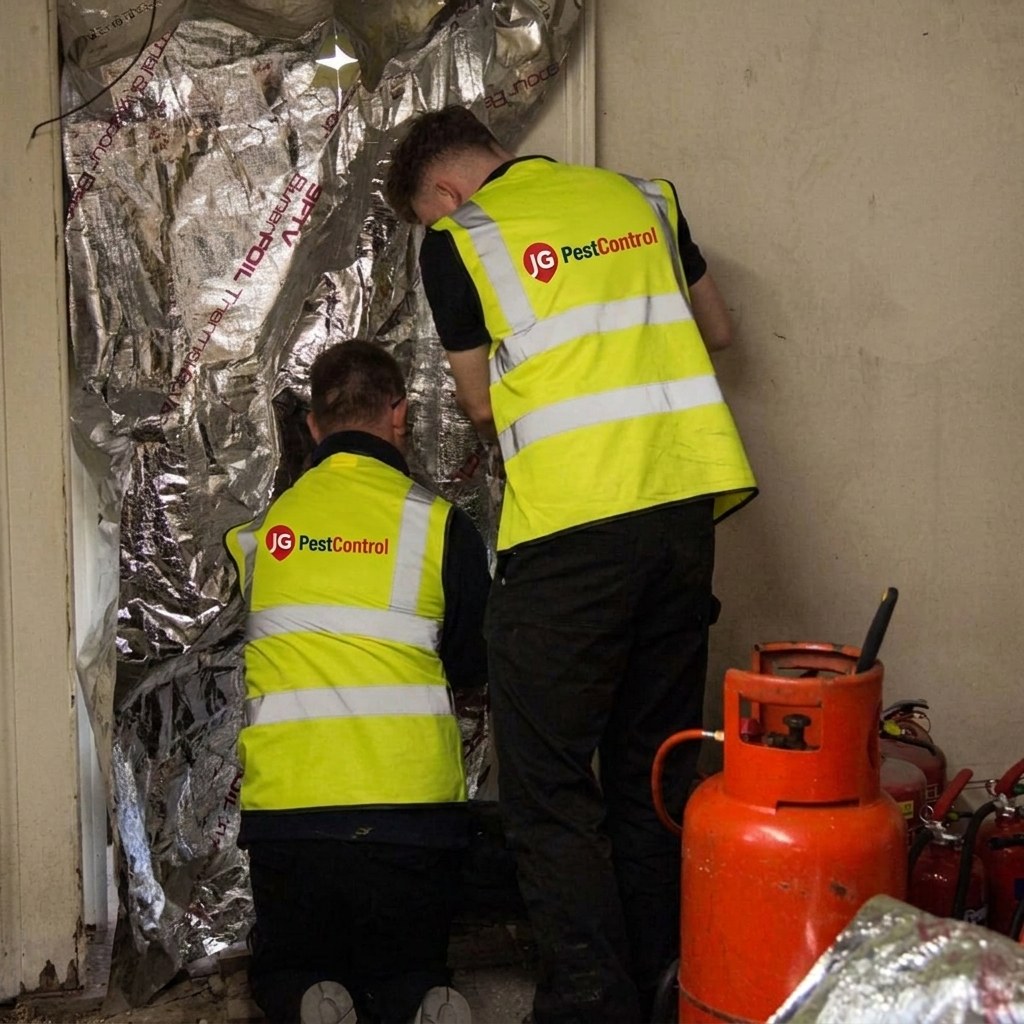
Heat treatment is one of the most effective ways to clear every bed bug in a home, but it depends on good preparation so the heaters can move through the property freely. The treatment runs at 49 degrees Celsius, which is hot enough to kill a bed bug on contact. The heaters are carried through the home so the heat penetrates walls and ceilings, reaching the bugs and their eggs wherever they are hiding. Because the pests cannot survive that temperature, the treatment kills them all.
If you would like to book a heat treatment, call our team and we will talk you through exactly how to prepare so that every bed bug, and every egg, is dealt with. We are open every day except Christmas Day, from early until late.