

About Spiders
For many people, spiders are the worst possible insect that could infest their home. Considering the way they move and the (largely unfounded) possibility that their bite could be venomous, this is understandable. However, though all UK spiders are essentially harmless to humans, their bites can be nasty and it is important to be able to both identify the different species and recognise the cases that need professional removal.
Types of Spider

False Widow Spider
Sightings of the false widow are on the rise - often mistaken for a black widow, which is far more dangerous. False widows look threatening and their bite can cause significant pain and irritation (though generally non-fatal). Up to 14mm long, dark brown with abdomen markings resembling those on the black widow.

Giant House Spider
Commonly found throughout the UK, they prefer to run rather than bite - often spotted running across the floor at about 1.7 feet per second. Venom is harmless to humans. Dark brown with visibly hairy legs, females can reach around 18mm.

Missing Sector Orb Weaver
Relatively small and unthreatening. Yellowish-brown with a bulbous abdomen bearing a distinctive leaf-like marking. Most often found sitting in its web, so easily removed.

Zebra Jumping Spider
Has the same black and white stripes as zebras and is distinguishable by its eight large eyes (visible to the naked eye). Only grows up to 9mm but has been known to attack prey three times larger. Does not spin webs.

Daddy Longlegs Spider
Not to be confused with crane flies or the harvestman. Small body with legs up to 50mm long. Non-aggressive and easy to remove if required.

Cupboard Spider
Closely related to false widows - about the same size but with deeper black colouring and a rounder body. Like false widows, they are harmless, though their bite may be slightly painful for a while.
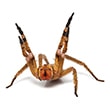
Brazilian Wandering Spider
Not native to the UK and one of the most venomous spiders in the world. Occasionally arrives as a stowaway on banana shipments and other imported fruit. Do not attempt to deal with it yourself - contact a professional immediately.
When Do Spiders Enter Homes?
Spiders can enter the home throughout the year, but the most common time to find them indoors is in the autumn. As the temperatures begin to cool, they seek warm shelter, which buildings provide. Males die with the onset of winter, which means that they increase their efforts to mate during this time - the giant house spiders you see running across the floor are usually males looking for females.
Signs of Spiders
Daddy Longlegs, Crane Flies and Spiders
One of the most common confusions is the misidentification of the daddy longlegs or harvestman, which is a member of the opiliones order, not the arachnid order. Though it has eight legs, it also has a fused body and only two eyes which are visible to us - so it can be ruled out as a true spider.
Crane flies (also sometimes called daddy longlegs) are also mistaken for spiders, but as they usually have wings this mistake is easily rectified - though spiders can do much to scare humans, no species we know of has the ability to fly.
Find Out More

Roy Couch is the Technician Manager at JG Pest Control, leading the technician team across the UK. He holds the BPCA Diploma and the RSPH Level 2 Award in the Safe Use of Aluminium Phosphide, and is qualified in the Safe Use of Rodenticides.

Peter Bowers-Davis is a board volunteer at the British Pest Control Association (BPCA), the UK trade body for professional pest management. He works across the Tyro UK group of companies, including JG, setting technical standards, treatment protocols and training programmes.