
A House of Lords committee has called for over-the-counter pet flea treatments to be banned from sale in pet shops and online, after finding the insecticides they contain are washing into UK rivers and harming wildlife. The report, published on 5 August 2026 by the Lords Environment and Climate Change Committee and covered by the Guardian, does not mean flea treatment is going away - prescribed treatment through a vet would continue. But it does signal a shift away from routine preventive dosing, and that has real implications for how UK households manage fleas. Here is what the report actually says, and what it means for your pets and your home.

Key takeaways
- The Lords Environment and Climate Change Committee has recommended banning pet-shop and online sales of “spot on” flea treatments - vets would still be able to prescribe them.
- The concern is environmental: two of the most-used ingredients, imidacloprid and fipronil, are already banned for use in pesticides in the UK and EU because of their toxicity to bees, fish and other invertebrates.
- Nothing has been banned yet - this is a recommendation to government, and the committee is calling for risk-based use guided by vets, not for pets to go untreated.
- Do not stop treating your pet without speaking to your vet first.
- Our view as pest control professionals: if routine preventive treatment declines, we would expect home flea infestations to become more common - knowing the early signs and acting quickly will matter more than ever.
What has the Lords committee recommended?
The committee’s report, published on Wednesday, concludes that the intensive routine use of pet flea and tick treatments is transferring insecticides into the natural environment, potentially causing widespread damage to ecosystems. It calls on the government to reduce routine use of these chemicals and to ensure pet owners get individualised advice that takes into account each animal’s lifestyle, location and risk factors. The committee recommends a ban on sales of topical “spot on” treatments in pet shops and online - pet owners would still be able to get preventive treatment prescribed by a vet. The committee’s chair, Baroness Sheehan, described the current overuse of these medicines as the “equivalent of using a sledgehammer to crack a nut”. A government spokesperson said the treatments play a vital role in public and pet health against fleas and ticks, but that it is right to assess their availability to ensure correct usage by owners. The full inquiry is on the UK Parliament website.
Why are flea treatments under scrutiny?
The two ingredients at the centre of the report, imidacloprid and fipronil, are designed to kill insects at very low doses - that is what makes them effective against fleas, and it is also what makes them a problem once they leave the animal. Both are already banned for use in pesticides in the UK and EU because of their severe toxicity to fish, invertebrates, bees and pollinators. According to the report, researchers at Cardiff University found imidacloprid and fipronil in almost half of all samples taken across nine Welsh rivers, and the Environment Agency told the committee that even very small amounts can cause environmental harm. Guy Woodward, a professor of ecology at Imperial College London, told the committee that two sugar cubes of the concentrated active ingredient imidacloprid would be enough to exceed the predicted no-effect concentration - the level below which environmental harm is not expected - in about 400 Olympic-sized swimming pools. A separate study reported by the Guardian found songbirds lining their nests with pet fur containing these chemicals, with more unhatched eggs and dead chicks in the most contaminated nests.
Should you stop treating your pet for fleas?
No - at least, not on your own initiative. The committee is not telling owners to abandon flea treatment; it is recommending a move from routine blanket dosing to risk-based treatment guided by a vet. Fleas are not just an itch: they feed on blood, can transmit tapeworm to pets and can bite people, so an untreated infestation is genuinely unpleasant. The British Veterinary Association, which welcomed the findings, made the same point - owners should have access to professional, tailored veterinary advice on using these products appropriately, responsibly and safely. If you are unsure whether your pet still needs routine treatment, that is a conversation for your vet, not a reason to quietly stop.
What this means for fleas in your home
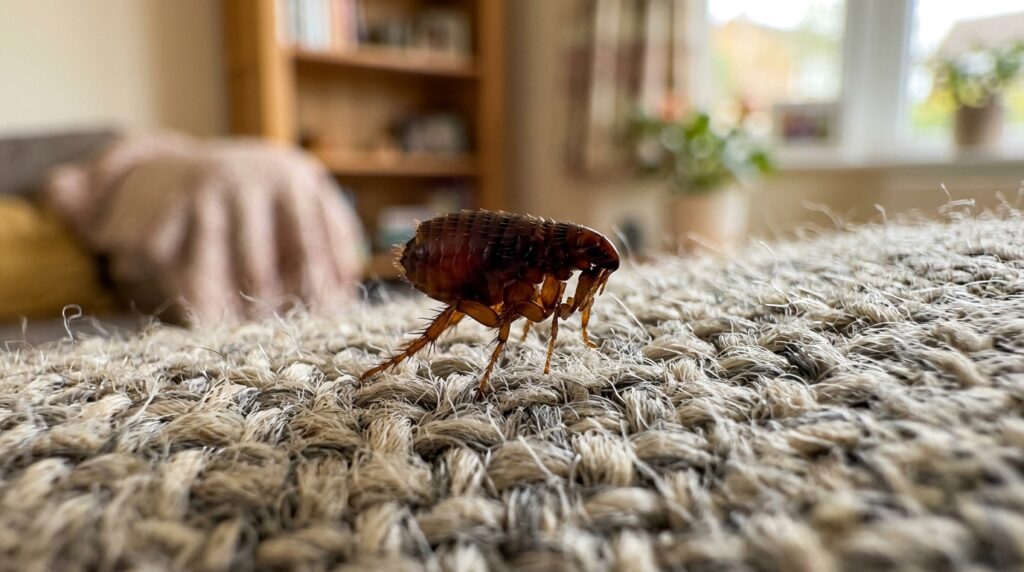
Here is our professional take on the practical consequence most of the coverage has missed: routine preventive treatment is one of the reasons household flea infestations stay relatively uncommon. If the UK moves to treating fewer animals, less often, we would expect more pets to pick up fleas that would previously have been killed before they established - and once fleas are breeding in a home, the pet is only a small part of the problem. Adult fleas on the animal are the visible tip: the eggs, larvae and pupae develop in carpets, pet bedding, sofas and floor gaps, which is why treating the pet alone so often fails to clear an established infestation. The early signs to watch for are pets scratching more than usual, small dark specks of “flea dirt” in their coat or bedding, bites around your ankles and lower legs, and fleas visibly jumping on carpets or furniture. If you are not sure what has been biting, our guide to telling bed bug bites from flea bites can help.
How to keep your home flea-free
Prevention starts with the basics: check your pet’s coat regularly with a fine-toothed flea comb, wash pet bedding on the hottest wash the fabric allows, and vacuum carpets, upholstery and floor edges frequently - emptying the vacuum outside so eggs and larvae do not crawl back out. Keep up whatever treatment plan your vet recommends for the animal itself. If fleas have already established - you are being bitten, or you can see fleas jumping - the home itself needs treating, and this is where professional help earns its keep. Our RSPH (BPCA) Level 2 certified technicians treat the whole environment in a targeted, regulated way, reaching the egg and larval stages that shop-bought sprays typically miss, and our flea control teams offer a 24-hour response every day except Christmas Day. Call the number at the top of this page and we will get someone to you quickly. You can read more about why infestations take hold in our guide to the dangers of a flea infestation.
The flea treatment ban: your questions answered
Not yet. A House of Lords committee has recommended that the government ban pet-shop and online sales of “spot on” flea and tick treatments containing insecticides such as imidacloprid and fipronil, because of the harm they cause to rivers and wildlife. Treatment prescribed by a vet would continue. The government says it is right to assess the availability of these treatments to ensure correct usage by owners, but no ban is in place today.
No - do not stop without speaking to your vet. The committee is recommending risk-based treatment tailored to each animal by a veterinary professional, not an end to flea treatment. Stopping abruptly without advice risks your pet picking up fleas and bringing an infestation into your home.
The most-used active ingredients, imidacloprid and fipronil, are severely toxic to fish, invertebrates, bees and pollinators and are already banned for use in pesticides in the UK and EU. Cardiff University researchers found them in almost half of all samples across nine Welsh rivers, and the Environment Agency told the committee that even very small amounts can cause environmental harm.
Treat the pet under your vet’s guidance, wash pet bedding on a hot wash, and vacuum carpets and furniture daily. If fleas are established, treat the property itself - most of the infestation lives as eggs, larvae and pupae in carpets and soft furnishings rather than on the pet, which is why professional whole-home treatment clears infestations that DIY sprays do not.