
Scratching, scurrying or scrabbling in the loft or ceiling at night almost always means an animal has moved in - and the sound itself is the best clue to which one. Quick light scurrying points to mice, heavier dragging and gnawing to rats, daytime thundering to squirrels, and loud autumn activity in some areas to glis glis. JG Pest Control identifies and removes them all, with surveys available every day except Christmas Day, early until late.
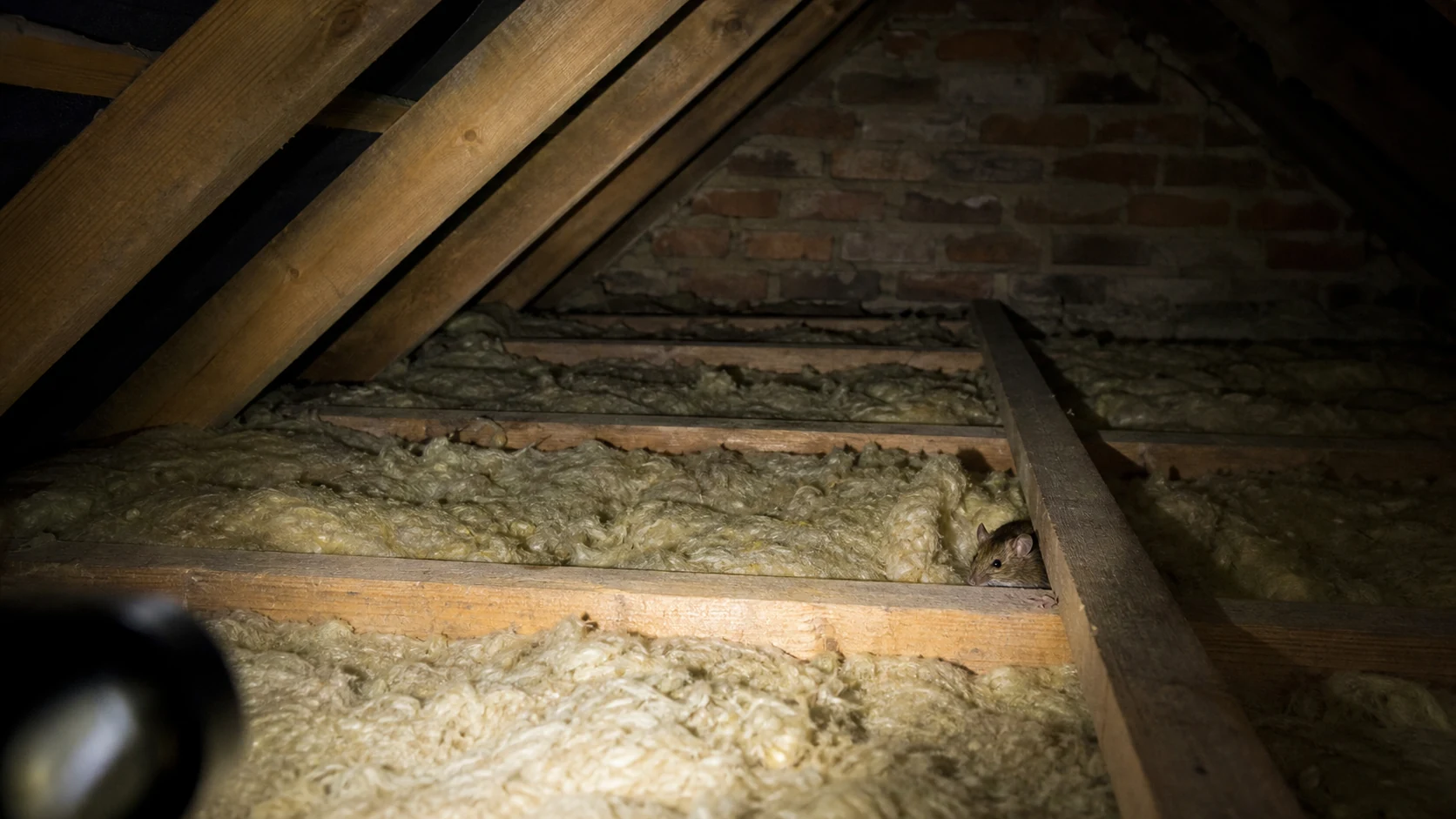
What is scratching in my loft? Match the sound
-
Mice
light, fast scurrying and pattering, mostly at night, often in short bursts. May be in the ceiling voids and wall cavities as well as the loft itself. Droppings the size of rice grains confirm it.
-
Rats
heavier, slower movement, persistent gnawing (they chew joists, pipes and cables), dragging sounds, and activity concentrated at night. Droppings are olive-stone sized.
-
Grey squirrels
the loudest of all - rolling, thumping and “someone is up there” noises, typically around dawn and during the day. Shredded insulation nests and chewed roof timbers are classic signs.
-
Glis glis (edible dormice)
in the Chilterns and surrounding counties, very loud nighttime scampering and gnawing, especially from late summer into autumn before hibernation. A protected species needing licensed removal.
-
Birds
flapping, cooing or chirping concentrated in the morning, usually near the eaves - often nesting pigeons or starlings rather than anything in the loft proper.
-
Wasps and bees
not scratching but a steady hum or crackle, strongest on warm afternoons - a nest in the roof void.
Why you should not just ignore it
Rodents in roof spaces gnaw constantly to wear their teeth down, and electrical cables are a favourite target - a real fire risk, and the most expensive kind of “I will deal with it later”. Squirrels and glis glis shred insulation for bedding, urine and droppings contaminate stored belongings and insulation, and an unaddressed entry hole invites the next occupant even if the current one leaves. Noises that stop for a week often just mean the animal changed routes.
How JG finds and fixes it
Our technician inspects the loft, voids and roofline for droppings, gnaw marks, nests, smear marks and entry points, confirms the species, and agrees the treatment: traps or treatment for mice and rats, humane trapping for squirrels, licensed removal for glis glis, and nest removal plus proofing for birds. Crucially, we proof the entry points - because removal without proofing is a subscription, not a solution. Every visit is by an RSPH (BPCA) Level 2 certified and trained technician and the work is guaranteed.
Frequently asked questions
Most often mice (light, fast scurrying) or rats (heavier movement with gnawing). Squirrels are usually louder and active around dawn and daytime. The timing and weight of the sound is the best first clue, and an inspection confirms it from droppings and other evidence.
Rodents follow routes and food sources, so activity shifts around the building. A quiet week rarely means they have gone - check for fresh droppings or new gnawing before relaxing.
DIY baits regularly lead to animals dying in inaccessible voids (and a smell problem for weeks), do nothing about entry points, and are illegal to use on protected species like glis glis. Identification first, then the right treatment, then proofing.
Same-day and next-day visits are usually available, and we are open every day except Christmas Day, early until late.
Yes - proofing the entry points (gaps at the eaves, broken vents, holes around pipework, overhanging branches for squirrels) is part of the job, and it is what makes the fix permanent.
What is left behind in the loft
Whatever has been living up there - squirrels, rats, mice or birds - the insulation usually takes the worst of it. Soiled insulation holds odour, attracts insects and loses much of its thermal value. We can deal with that in the same visit chain as the pest work: see loft insulation removal and replacement.