We are the local specialist for wasp nest removal and hornet extermination. Our technicians are qualified to BPCA/RSPH Level 2, or actively working towards it, and fully insured.
There is no wasp problem we cannot help with. Call us to speak to one of our helpful team today.
Increased Wasp ActivityLarge numbers of wasps flying to and from a specific point on your property
High Levels IndoorsWasps repeatedly appearing inside your home, especially upstairs rooms
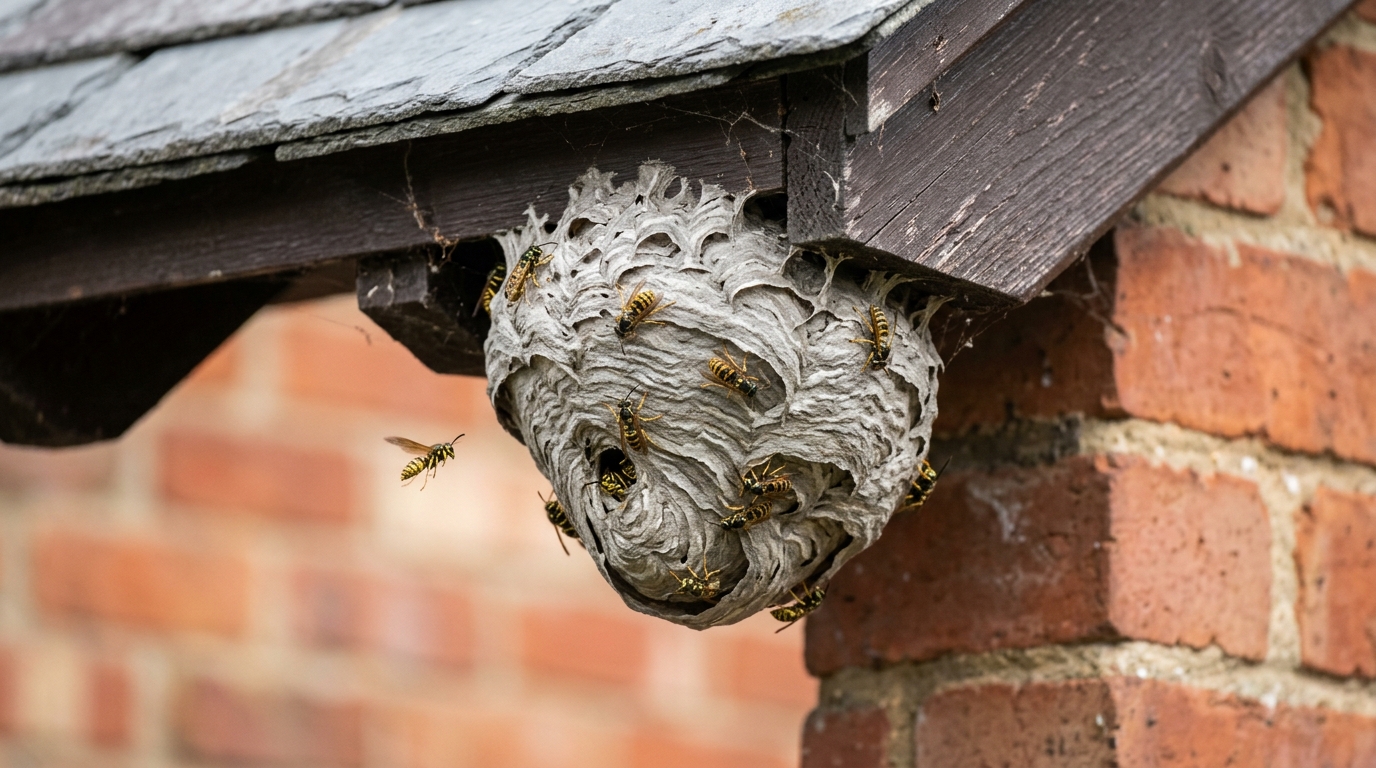
Visible NestA papery, grey-brown structure under eaves, in sheds, lofts or wall cavities
Buzzing SoundAudible buzzing from a wall cavity, loft space or roof area
Wasps Around FoodThey eat protein as well as sugars - removing sweets from the picnic is not enough
Chewed WoodScrape marks on wooden fences or furniture where wasps gather nest material
Wasps Everywhere, but No Nest You Can Find?
Sometimes the nest is in a neighbour's garden, underground or somewhere that cannot be reached. We will look for it first, and where it cannot be found or removed, wasp pots give you cover through the rest of the summer.
Emergency Response
Professional with you within 60-90 minutes
Same-day treatment, seven days a week
Full protective equipment
Never Ignore a Nest
Each surviving nest produces 8-20 new queens nearby
Nests grow from golf ball to beach ball size in months
Wasps chew through plasterboard and wood to expand
About Wasps
They nest in sheds, ground holes, compost heaps and wall cavities
They eat protein and sugars - attracted to most food
Always call a professional rather than attempt DIY removal
About Wasp Nests
A wasp nest can contain up to 20,000 wasps at its peak. Nests are made from chewed wood and saliva, forming a paper mache material that is surprisingly strong. They are commonly found in lofts, sheds, and cavity walls, but can appear almost anywhere on your property.
Unlike bees, a single wasp can sting continuously without losing its stinger, making nests near people a serious concern. We have access equipment for hard-to-reach nests in high or awkward locations, and provide specialist removal for schools, nurseries, and other sensitive areas where safety is the top priority.
Wasps, Bees or Hornets?
Not sure what you are dealing with? Wasps, bees and hornets all need a different approach, and we always look to relocate bees wherever we can rather than destroy them.
If you are unsure which stinging insect has nested on your property, call our team and we will help you identify it.
Our Treatment
We apply a professional powder or spray directly to the nest, or use a space spray if the nest is less accessible. Results are very quick - often all activity will be gone within 24-48 hours.
If the problem persists beyond 7 days, we come back to re-treat free of charge as part of our guarantee.
Wasps are all we do at our sister site Waspsremoval.co.uk, part of the same group as JG. Same technicians, same cover, a site devoted to wasps and hornets alone.
Roy Couch is the Technician Manager at JG Pest Control, leading the technician team across the UK. He holds the BPCA Diploma and the RSPH Level 2 Award in the Safe Use of Aluminium Phosphide, and is qualified in the Safe Use of Rodenticides.
Peter Bowers-Davis is a board volunteer at the British Pest Control Association (BPCA), the UK trade body for professional pest management. He works across the Tyro UK group of companies, including JG, setting technical standards, treatment protocols and training programmes.
Real reviews left on Trustpilot by JG Pest Control customers who mention wasp nest removal.
★★★★★
Wasp nest at dormer
Ryan was after listening to the history of the previous visit efficient & thorough in dealing with the wasp nest
Chris Pilgrim
★★★★★
Really quick and efficient service, the wasp's nest in my garden was destroyed on the same day as I made contact. Everyone involved was polite and helpful. Would recommend!
★★★★★
Return visit
Christopher came to check a wasp nest in my roof today. It had been dealt with previously but there was still a lot of wasp activity so the company sent him for a second visit. Christopher was very helpful and considerate. I was very happy with the visit.
★★★★★
Wasp nest removal over front door
Kieran was punctual, efficient and explained the process of dealing with a wasp nest over the front door. Enlightened me on their habits and aggression at this stage. He said the work was under guarantee and that if there were further issues in the coming days there would be another visit. Meanwhile advised to keep the door closed whilst the treatment takes effect. Am pleased that I contacted the professionals!
Contains information related to marketing campaigns of the user. These are shared with Google AdWords / Google Ads when the Google Ads and Google Analytics accounts are linked together.
90 days
__utma
ID used to identify users and sessions
2 years after last activity
__utmt
Used to monitor number of Google Analytics server requests
10 minutes
__utmb
Used to distinguish new sessions and visits. This cookie is set when the GA.js javascript library is loaded and there is no existing __utmb cookie. The cookie is updated every time data is sent to the Google Analytics server.
30 minutes after last activity
__utmc
Used only with old Urchin versions of Google Analytics and not with GA.js. Was used to distinguish between new sessions and visits at the end of a session.
End of session (browser)
__utmz
Contains information about the traffic source or campaign that directed user to the website. The cookie is set when the GA.js javascript is loaded and updated when data is sent to the Google Anaytics server
6 months after last activity
__utmv
Contains custom information set by the web developer via the _setCustomVar method in Google Analytics. This cookie is updated every time new data is sent to the Google Analytics server.
2 years after last activity
__utmx
Used to determine whether a user is included in an A / B or Multivariate test.
18 months
_ga
ID used to identify users
2 years
_gali
Used by Google Analytics to determine which links on a page are being clicked
30 seconds
_ga_
ID used to identify users
2 years
_gid
ID used to identify users for 24 hours after last activity
24 hours
_gat
Used to monitor number of Google Analytics server requests when using Google Tag Manager