
The big brown beetle crashing into your windows and lampshades on May and June evenings is a cockchafer - better known as the May bug - and despite the size and the noise, it is completely harmless. This page explains what they are, why they appear in droves for a few weeks, and when beetle activity around your home is worth a closer look. JG Pest Control is open every day except Christmas Day, early until late.
What is a May bug?
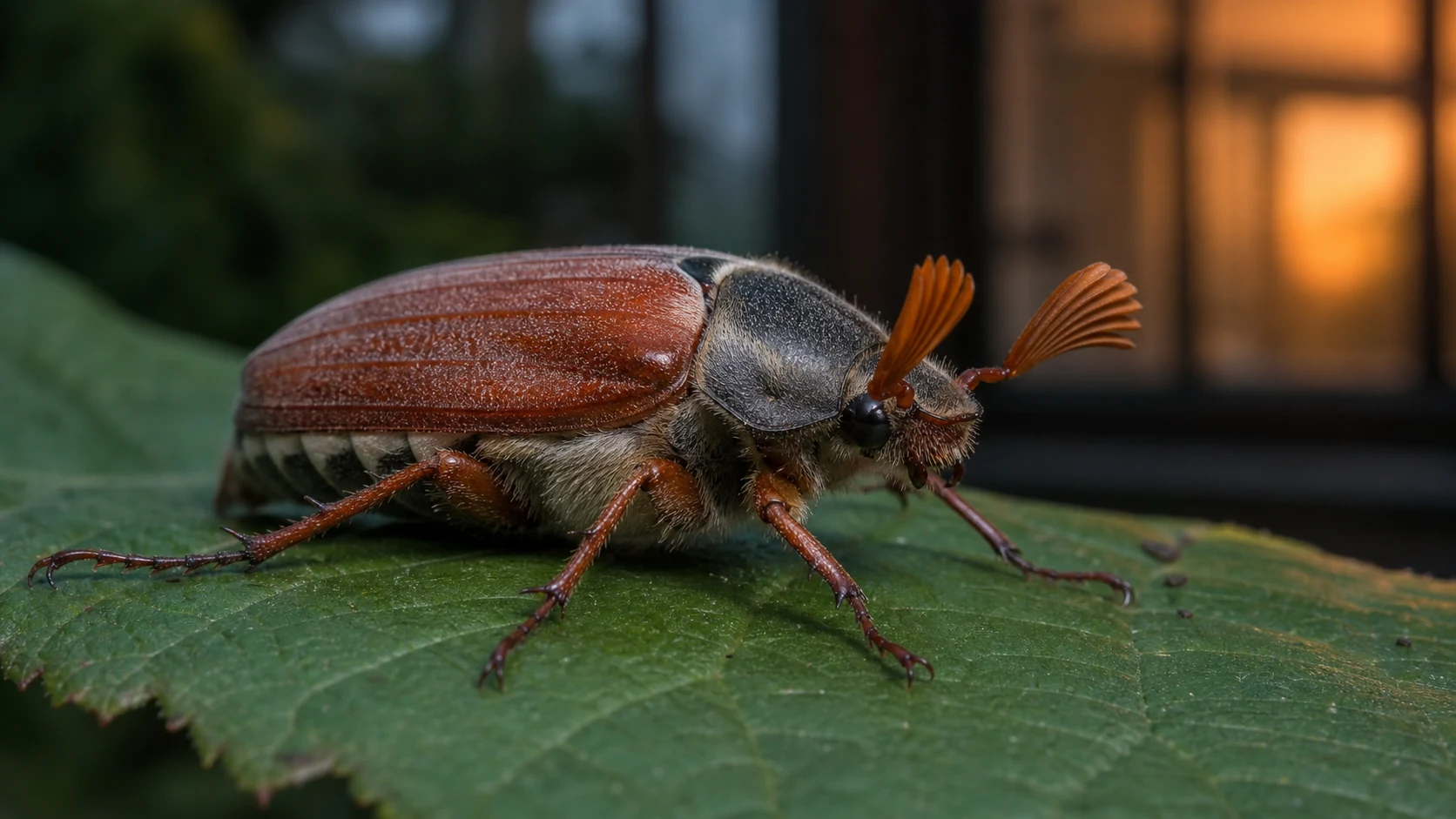
The May bug (or maybug) is the common cockchafer, one of the UK’s largest beetles at around 3cm. It has a rusty-brown body, a black head and thorax, distinctive fan-shaped antennae, and white triangular flashes along its sides. Some people call them June bugs, doodlebugs or billy witches depending on where in the country you grew up - all the same insect.
Adults emerge from the soil in late April and May and fly on warm evenings for five or six weeks, after which they die off as quickly as they appeared. They are clumsy, noisy flyers, strongly attracted to light - hence the trademark thudding against windows and buzzing around porch lights.
Are May bugs dangerous?
No. They do not sting, they do not bite people or pets, and they carry no diseases. The spiky-looking rear end (the pygidium) is not a stinger. The worst a May bug will do indoors is fly at the ceiling light and crash-land somewhere annoying - put a glass over it, slide a card underneath, and pop it outside.
Why so many, all at once?
Cockchafer larvae spend several years underground before emerging, so favourable years produce big synchronised emergences. Gardens near grassland, parks, golf courses and field edges see the most adults. Numbers vary noticeably from year to year - a loud May does not mean an infestation in your home, because cockchafers cannot breed indoors.
The grubs are a different story
The larval stage - a fat, white, C-shaped grub up to 4cm long - lives in soil eating roots, and a heavy population can damage lawns. If your lawn develops yellow dying patches that lift like loose carpet, or birds, badgers and foxes start digging it up at night, you may have chafer grubs (or the similar leatherjackets). See our leatherjackets and chafer grubs page for identification and what can be done.
Frequently asked questions
In May and June in the UK, almost certainly a cockchafer (May bug) - a large, harmless beetle attracted to lit windows on warm evenings. The season lasts only a few weeks.
No. The pointed tail is egg-laying anatomy, not a stinger, and they have no interest in biting. They are harmless to people and pets.
Close windows at dusk or fit fly screens during the few flying weeks, and reduce outside lighting near open windows. Any that get in can simply be caught and released.
The adults are not. The grubs can damage lawns in heavy years, and that is the one situation worth professional attention - especially when foxes and badgers start excavating the lawn to eat them.
Large numbers of beetles indoors year-round point to something else - carpet beetles, larder beetles or a woodboring species. Send us a photo and we will identify it for free.