
A lawn that yellows in patches, lifts like loose carpet, and gets dug over at night by foxes, badgers and crows has grubs under it - leatherjackets (crane fly larvae) or chafer grubs - and the digging animals usually do far more damage than the grubs themselves. JG Pest Control surveys lawns, confirms which grub you have, and advises on the realistic treatment options. We are open every day except Christmas Day, early until late.
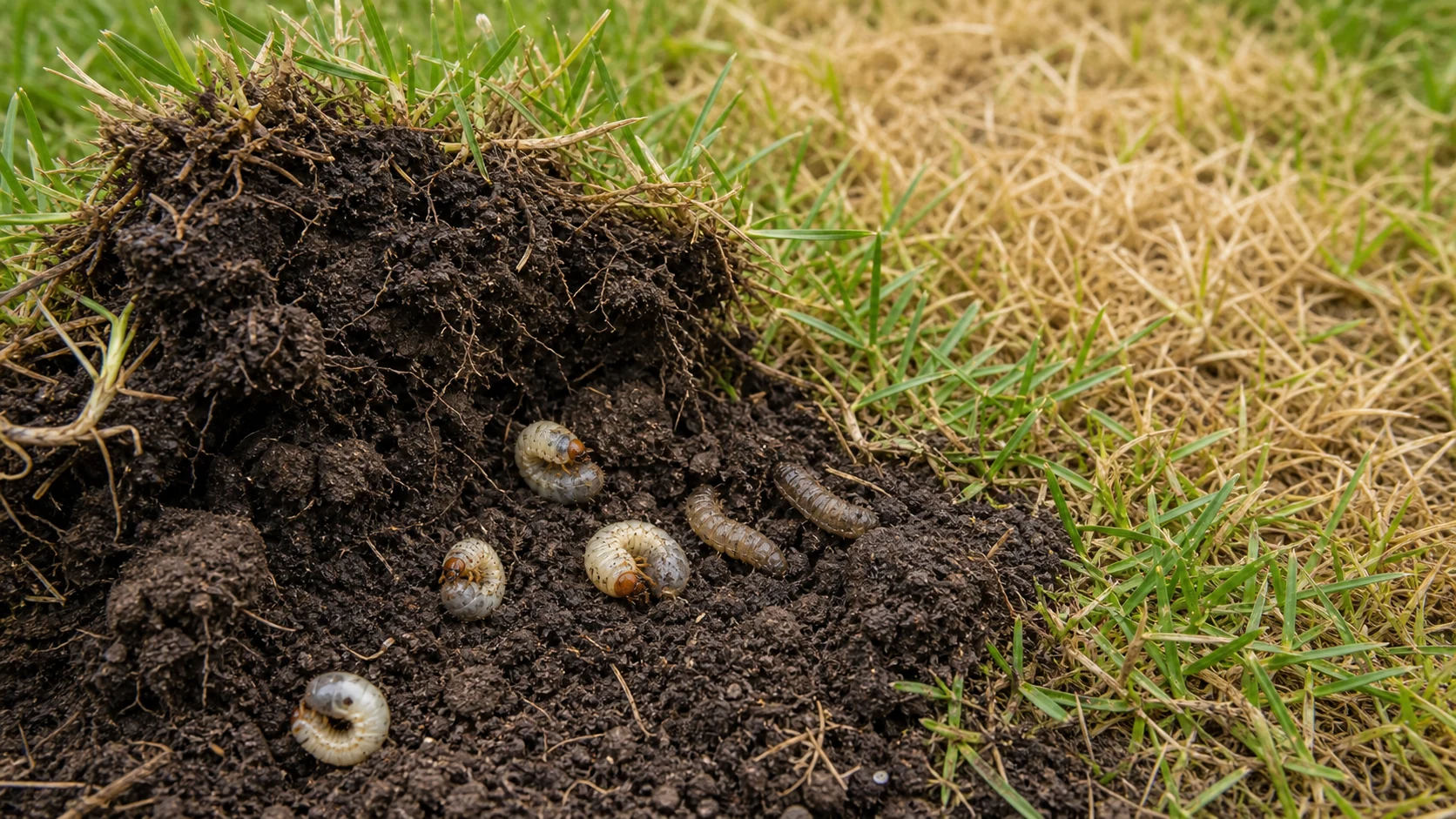
Leatherjacket or chafer grub?
- Leatherjackets are crane fly (daddy long legs) larvae: grey-brown, legless, leathery tubes up to 4cm, with no obvious head. Eggs are laid in lawns in late summer; the grubs eat grass roots through autumn and again in spring.
- Chafer grubs are the larvae of chafer beetles (including the May bug): plump, C-shaped, creamy white with a tan head and three pairs of legs. They can spend more than one year in the soil eating roots.
-
The quick test
lift a square of failing turf. If it peels back easily with few roots and you can count multiple grubs in a spade-square, you have an active problem - a couple of grubs is normal and harmless.
Signs of a grub problem
- Yellowing, straw-like patches that spread through autumn or spring, even with watering.
- Turf that lifts or rolls back with almost no resistance - the roots are gone.
- Foxes and badgers excavating the lawn at night, and crows, magpies, jackdaws or starlings working it over by day - they are eating the grubs.
- Big crane fly emergences from the lawn in late summer (next year’s leatherjackets being laid), or cockchafers in May - see our May bugs and daddy long legs pages for the adults.
What can actually be done
Straight talking helps here, because the old chemical lawn drenches are no longer available to anyone. The effective modern options are biological and cultural. Pathogenic nematodes - microscopic worms watered into warm, moist soil at the right time of year (late summer to early autumn for both grub types) - infect and kill the larvae, and timing them right is most of the battle. Alongside that: scarifying and overseeding damaged areas, keeping the lawn well fed and unstressed so it tolerates low grub numbers, and netting or deterring the diggers while the turf recovers. Where foxes have moved from grub-digging to a wider nuisance, our fox control team can help; our mole guide covers the other big lawn excavator.
Our technicians confirm the species and density before anything else - because a lawn with two grubs per spade-square needs feeding, not treating, and we will tell you so. Every visit is by an RSPH (BPCA) Level 2 certified and trained technician.
Frequently asked questions
Foxes or badgers, almost always - and they are digging because the lawn is full of leatherjackets or chafer grubs. Deal with the grubs and the buffet closes.
Lift a square of yellowing turf: leathery grey-brown grubs and rootless turf that peels like carpet confirm it. Several grubs per spade-square is treatable; one or two is normal background.
Nematode treatments work best against young grubs in warm, moist soil - typically late summer into early autumn. Spring applications against mature grubs are far less effective, which is why timing the visit matters.
Usually, yes. Once the grubs are controlled and digging stops, scarify, top-dress and overseed the bare patches - most lawns look right again within a season.
The chemical drenches that used to be sold for lawn grubs have been withdrawn - nobody can legally apply them. Biological control plus good lawn care is the honest, effective route now.