
A honey bee swarm on your wall, fence or chimney looks alarming but is usually calm, temporary and completely manageable - and the right answer is relocation, not extermination. JG Pest Control takes an ethical, bee-first approach to swarms and established colonies, working with relocation wherever it is possible. We are open every day except Christmas Day, early until late, so you can get advice the moment a swarm appears.
Why honey bees swarm
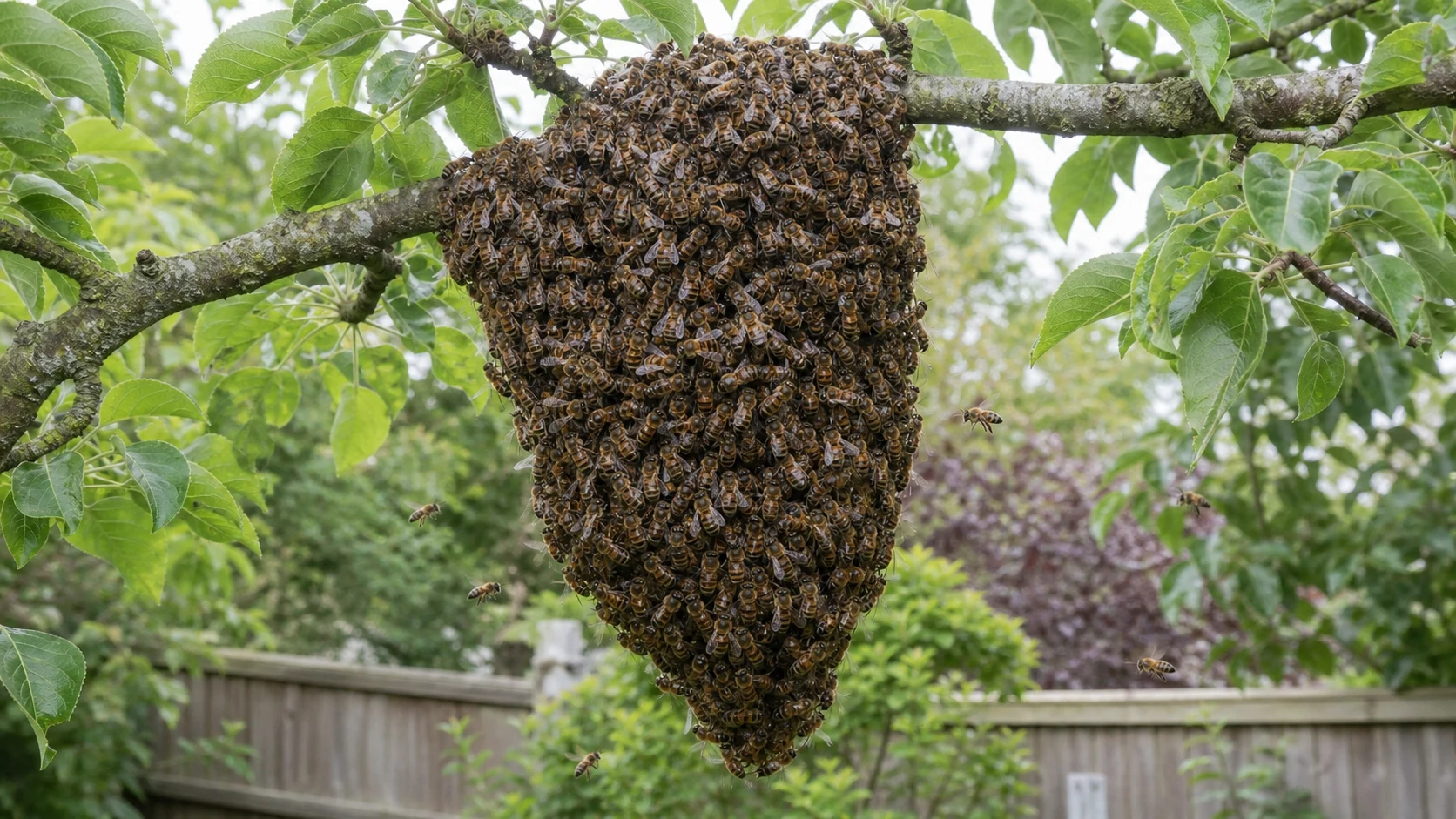
Swarming is how honey bee colonies reproduce. In late spring and early summer - typically May to July - a queen leaves the hive with thousands of workers to found a new colony. The swarm clusters somewhere convenient (a branch, fence post, wall or chimney pot) for a few hours to a few days while scout bees search for a permanent home. Bees in a swarm have no nest to defend and a stomach full of honey, which is why swarms are usually remarkably docile.
What to do if a swarm lands on your property
- Keep your distance and keep pets and children inside - docile is not the same as guaranteed harmless.
- Do not spray it, smoke it or poke it. A disturbed swarm can become defensive, and killing honey bees is both a last resort and usually unnecessary.
- Act while it is clustered. A clustered swarm is easy to collect; once the bees move into a chimney or cavity wall it becomes a much bigger job.
- Get it identified. Send us a photo - honey bee swarms, bumblebee nests and wasp activity get mixed up constantly.
Swarm collection and relocation
A clustered honey bee swarm can often be collected alive and rehomed - local beekeepers frequently collect accessible swarms, and we are always happy to point you that way when it is the quickest, kindest option. Where a swarm is high up, awkward, or already moving into the fabric of a building, our technicians can carry out a safe, ethical removal with relocation as the goal.
Established colonies in chimneys and walls
Once bees establish in a chimney, soffit or cavity wall they build comb, store honey and raise brood - and that changes the job completely. Simply blocking the entrance or killing the colony leaves comb and honey in the void, which melts, leaks, attracts robbing insects and rodents, and can bring the problem straight back. Proper resolution means removing the colony and the comb, then proofing the entrance so it cannot happen again. It is specialist work at height, and exactly what our teams are equipped for. See our bee nest removal service for the full picture, or our bees and hornets guide to tell species apart.
Frequently asked questions
Accessible clustered swarms are often collected by local beekeepers. For awkward, high or partly-established swarms, JG carries out ethical removal with relocation as the goal - and we will tell you honestly which option fits your situation.
Usually not - swarming bees have no nest to defend and are at their most docile. Keep a sensible distance, keep pets indoors and never spray or disturb the cluster.
Anything from a few hours to a few days. If it disappears on its own, the scouts found a home elsewhere. If it moves into your chimney or wall, get help promptly - established colonies are a much bigger job.
We treat honey bee colonies as a genuine last resort, and destroying a colony without removing the comb usually backfires - melting honey, staining, and new pests follow. Removal and proofing fixes it properly and ethically.
Honey bees are slim, brown and fuzzy; wasps are bright yellow and black with a sharp waist. Send us a photo and we will identify it - if it is a wasp nest we can usually treat it the same day.