
Small moths fluttering out of the kitchen cupboard, webbing in the flour, and clumped or “sticky” cereal are the signature of the pantry moth - usually the Indian meal moth - and the infestation is in your stored food, not your carpets. JG Pest Control clears kitchen moth infestations for homes and food businesses. We are open every day except Christmas Day, early until late.
What are pantry moths?
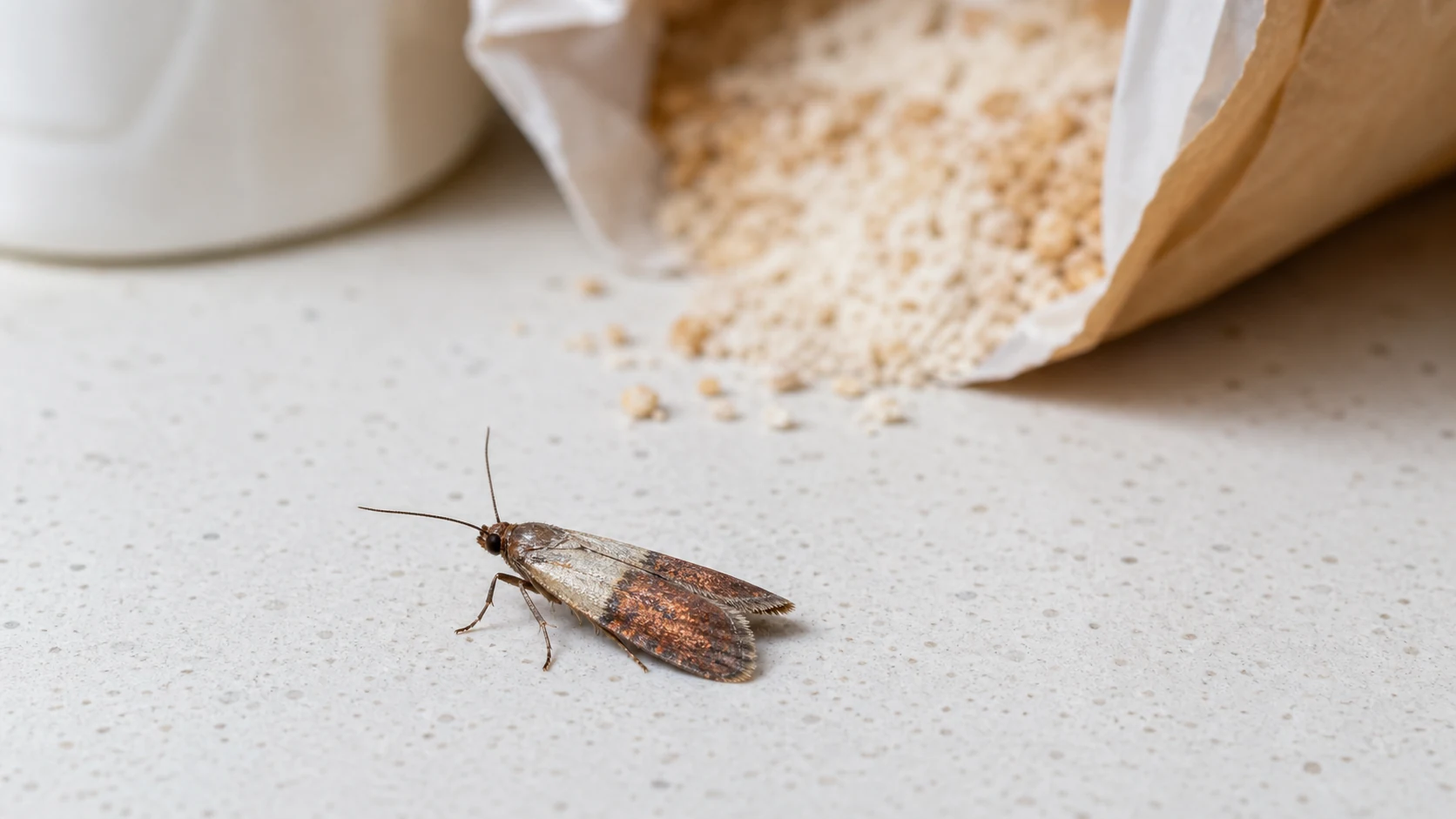
Pantry moth is the everyday name for the stored-product moths that breed in dried food - most often the Indian meal moth, recognisable at rest by its two-tone wings: pale grey-cream near the head, coppery bronze at the tips, around 8-10mm long. The mill moth (Mediterranean flour moth) and warehouse moth turn up too. The adults do not eat your food; the caterpillars do, spinning silk webbing through flour, cereals, rice, nuts, dried fruit, pet food and bird seed as they feed.
Signs of a pantry moth infestation
- Webbing or silky threads in dry goods - flour or cereal that clumps and lifts in chunks is the classic giveaway.
- Small pale caterpillars in packets, or crawling up cupboard walls and across the ceiling looking for somewhere to pupate.
- Cocoons in the cupboard corners, under shelves, in the gap where shelf meets wall, and around jar lids.
- Zig-zag flying moths in the kitchen, especially at dusk.
- An infestation that keeps returning weeks after you cleaned - usually one missed packet (bird seed and pet food are the most-missed culprits).
Where to check in your cupboards
- Open packets of flour, cereal, rice, pasta, oats, nuts and dried fruit, including the ones at the back.
- Bird seed, pet food and anything kept in a garage or utility room.
- The corners and back edges of every shelf, and the gap where the shelf meets the wall.
- Under jar lids and in the screw threads of storage containers.
- Cupboard hinges, door frames and the ceiling above the cupboards, where caterpillars go to spin cocoons.
Pantry moths or clothes moths?
They are different insects with different targets. Pantry moths breed in food and live around the kitchen; clothes and carpet moths eat wool and natural fibres in quiet rooms and wardrobes. The two-tone bronze wing says pantry moth; small uniformly dull-gold moths near wardrobes say clothes moth - in which case see our carpet moth page or the full moth control service.
Getting rid of pantry moths properly
The core of the job is breaking the breeding cycle in the food. Every opened packet of dry goods needs checking, infested food bagged and binned outside, survivors decanted into airtight glass or hard plastic containers, and the cupboards deep-cleaned - including the shelf-peg holes and seams where cocoons hide. Our technicians then treat the cracks, crevices and harbourages with professional products and use pheromone monitoring to confirm the population is actually gone, not just quiet. For food businesses, stored-product insects are an audit-critical issue, and we deal with them within structured commercial pest programmes. Every visit is by an RSPH (BPCA) Level 2 certified and trained technician.
Frequently asked questions
They usually arrive as eggs or tiny caterpillars in a packet of dry food, too small to see. Nothing shows for a few weeks, then adult moths appear once the first generation has developed, which is why an infestation can seem to come from nowhere. Warm kitchens speed the cycle up.
They do not bite and are not known to spread disease, but the caterpillars contaminate food with webbing and droppings, so anything affected should be thrown away. The real cost is wasted food and an infestation that spreads from cupboard to cupboard if the source is not found.
Indoors they can breed all year round, because kitchens stay warm. Activity and sightings usually rise through the warmer months, when the life cycle runs faster.
Almost always carried in with dry goods - an infested bag of flour, rice, nuts, bird seed or pet food. Once in, they spread cupboard to cupboard via the caterpillars wandering to pupate.
One missed breeding source restarts the cycle every time - the open bird seed in the garage and the big bag of pet food are the most common misses. Pheromone monitors tell us when the cycle is truly broken.
Bin it. Webbed or clumped food contains eggs, larvae, droppings and silk. Unopened tins and jars are fine; anything in paper, card or thin plastic should be checked carefully.
No - they are stored-food breeders. Holes in clothing point to clothes or carpet moths, which are a separate treatment.
Yes - stored-product insects are one of our core commercial services, with discreet treatment and the documentation your audits need.