
“Daddy long legs” is one name for three different creatures in the UK - the crane fly bouncing around your lights in autumn, the spindly cellar spider in the corner of the ceiling, and (occasionally) the harvestman in the garden. None of them is dangerous, and the famous “most venomous spider but can’t bite you” story is a myth. Here is how to tell them apart, and when each one is worth doing something about. JG Pest Control is open every day except Christmas Day, early until late.
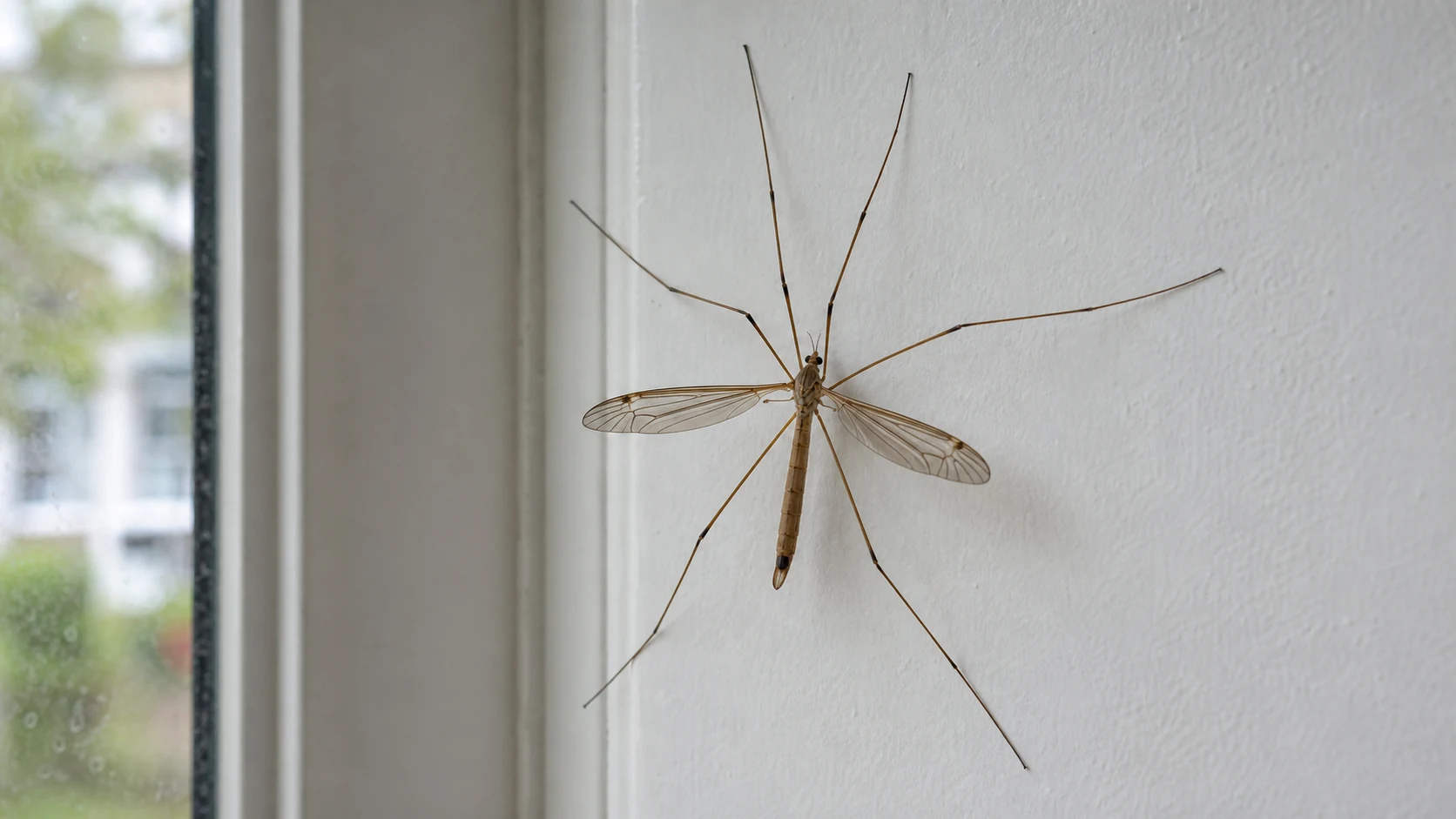
The three daddy long legs
- Crane fly. The classic autumn daddy long legs: a gangly, slow, fluttery fly with one pair of wings and legs that fall off alarmingly easily. Completely harmless - no sting, no bite, most adults barely feed at all. They blunder indoors towards light in late August and September.
- Cellar spider. The pale, extremely long-legged spider that hangs upside down in a loose web in ceiling corners, garages and cellars, and vibrates rapidly when disturbed. Harmless to people - and genuinely useful, because it preys on other spiders and on flies.
- Harvestman. Not technically a spider at all: a single oval body with eight thread-like legs, no silk, no venom, mostly outdoors among plants and walls.
The venom myth, settled
The story that daddy long legs are “the most venomous animal in the world but their fangs cannot pierce skin” is folklore. Crane flies and harvestmen have no venom whatsoever. Cellar spiders have ordinary, mild spider venom and can in fact give a tiny, inconsequential nip if thoroughly provoked - it is nothing like a notable bite, let alone the world’s worst. Wherever the legend came from, you can relax.
When daddy long legs ARE worth attention
-
Lots of crane flies, every year
the adults come from leatherjackets - their larvae - in lawns and grassland nearby. Big annual emergences plus a deteriorating lawn point to a leatherjacket population worth addressing: see our leatherjackets and chafer grubs page.
-
Webs everywhere indoors
a cellar spider boom is usually riding an abundance of other insect prey. The fix is dealing with the prey species and a tidy-up of webs, not panic. For wider spider problems, see spider pest control - and if you suspect false widows, that page covers identification.
-
Neither needs chemicals in normal numbers
a glass-and-card relocation or a vacuum pass deals with the individuals.
Frequently asked questions
The autumn flying one is a crane fly - an insect, not a spider. The ceiling-corner one is the cellar spider, a true spider. The garden one with the single oval body is a harvestman, an arachnid but not a spider. All three share the nickname.
Crane flies and harvestmen have no venom at all. Cellar spiders have mild, ordinary spider venom and are harmless to people. The “deadliest venom but cannot bite” story is a myth.
Crane flies emerge en masse from lawns and grassland in late summer and are drawn to lit windows. The invasion lasts a few weeks. Closing windows at dusk and reducing lighting helps; the individuals indoors can just be released.
There is no need - they are harmless and they eat flies, mosquitoes and other spiders. If webs bother you, vacuum them; the spiders rebuild elsewhere.
The adults do not, but their larvae (leatherjackets) eat grass roots and can ruin lawns in heavy years - that is the one part of the family worth professional attention.