
The false widow is the UK’s most talked-about spider: shiny, bulbous, capable of a bite - and the subject of far more fear than it deserves. If you are seeing them regularly indoors, in the garage or around windows, JG Pest Control can confirm the species and treat the infestation properly. We are open every day except Christmas Day, early until late, with same-day visits often available.
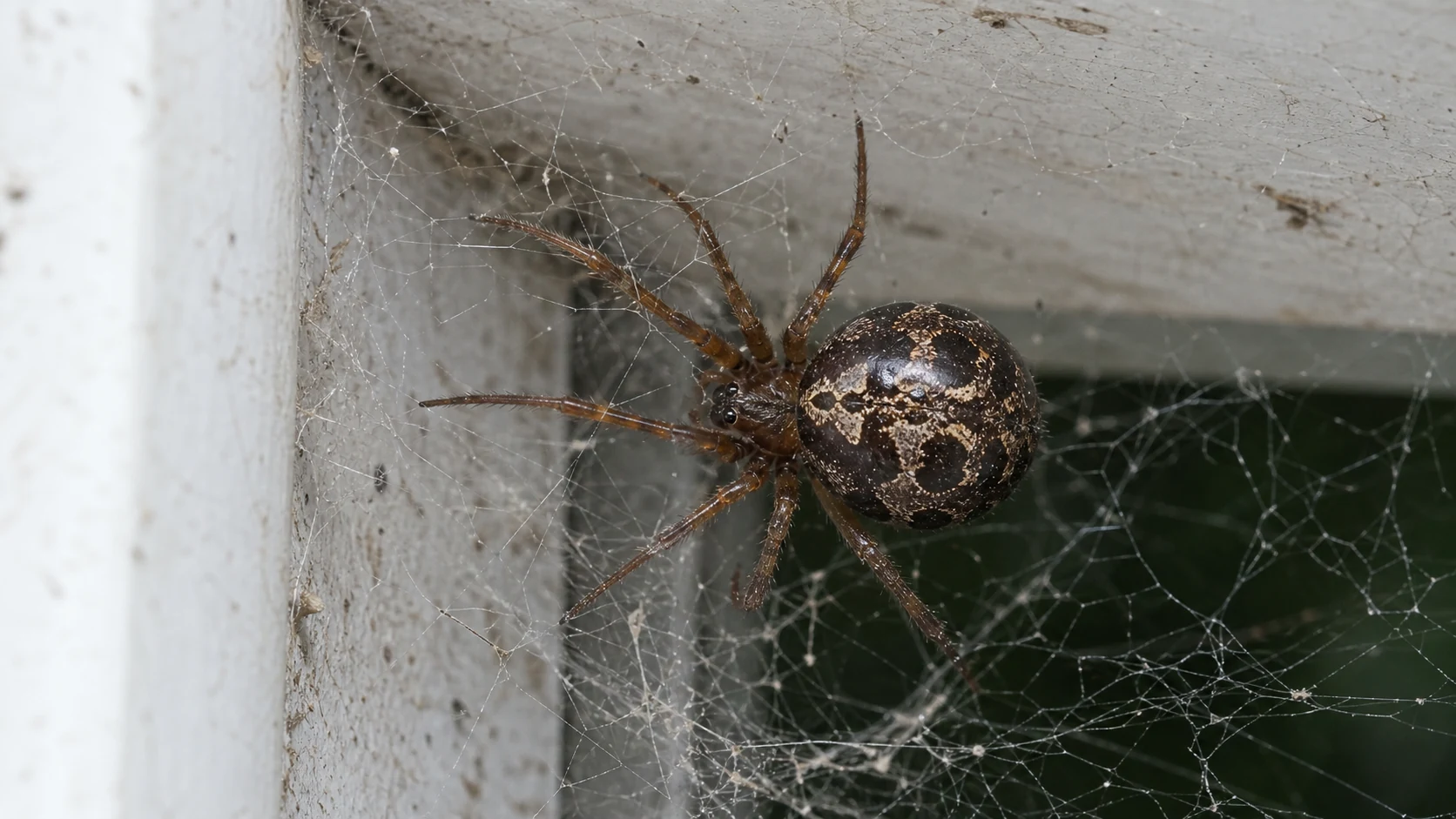
How to identify a false widow
-
Body
a glossy, rounded, dark brown abdomen - often described as “like a shiny coffee bean” - with cream or pale markings on top, sometimes resembling a skull pattern.
-
Size
body up to about 1.4cm in the noble false widow (the largest UK species), with a leg span around the size of a 50p coin.
-
Web
an untidy tangle of criss-cross strands in corners, window frames, sheds, garages, conservatories and around outdoor furniture - not the neat spiral of a garden spider.
-
Habits
mostly nocturnal and shy, sitting in or near the web rather than wandering across rooms.
The noble false widow (Steatoda nobilis) arrived in the south of England over a century ago and has spread steadily north, helped by warm buildings. Several harmless native spiders - especially the missing sector orb weaver and lace web spiders - are mistaken for it constantly.
The three false widows you will actually meet
-
Noble false widow (Steatoda nobilis)
the largest and the one behind the headlines - glossy brown, up to 1.4cm body, strongest around southern England but spreading north through warm buildings.
-
Cupboard spider (Steatoda grossa)
darker and plainer, often missing the skull marking, fond of cellars, cupboards and under-stair spaces. Frequently misreported as a black widow.
-
Rabbit hutch spider (Steatoda bipunctata)
the smallest of the three, common in sheds, hutches and outbuildings across the whole UK.
All three are established residents rather than new invaders - the noble false widow has been here since the 1870s. Identification matters because the harmless species vastly outnumber them: most “false widow” photos we are sent turn out to be missing sector orb weavers or lace web spiders.
False widow vs black widow: the difference that matters
There are no established black widow populations in the UK - the false widow is a relative that mimics the look without the medical significance. A true black widow is jet black with a red hourglass marking underneath; false widows are brown-toned with cream markings on top of the abdomen, and their bite, while unpleasant, is in a different league of severity. Occasional black widows arrive in imported goods, which is worth a professional identification if you find a jet-black, red-marked spider near unpacked freight - but a shiny dark spider in a UK conservatory is a false widow or a harmless lookalike, not a black widow.
Are false widows dangerous?
A false widow can bite if trapped against skin or pressed - clothes left on the floor, gardening gloves, that kind of situation. For most people the bite is comparable to a wasp sting: sharp pain, local swelling and redness that settles within a few days. Severe reactions are rare and usually relate to infection of the bite site or an unusual sensitivity, so keep any bite clean and see a pharmacist or GP if it worsens. The spiders are not aggressive and do not seek people out - but we completely understand that “mostly harmless” is not reassuring when they are breeding in your conservatory.
Professional false widow treatment
One spider can be relocated with a glass and a postcard. An established population - webs reappearing in the same corners, spiderlings around window frames in autumn, egg sacs in the shed - justifies treatment. Our technicians treat the harbourage areas the spiders actually use, remove webbing and egg sacs, and advise on the proofing and decluttering that stops the cycle repeating. See our spider pest control service for the full treatment detail. Every visit is by an RSPH (BPCA) Level 2 certified and trained technician and the work is guaranteed.
Reducing false widows around your home
- Vacuum corners, window reveals and behind furniture regularly - eggs and webs go with the dust.
- Declutter sheds, garages and conservatories, the three classic strongholds.
- Shake out gloves, boots and clothing stored in garages or outbuildings before use.
- Seal obvious gaps around window and door frames, vents and pipework.
Frequently asked questions
A shiny, rounded dark-brown abdomen with cream markings, legs spanning roughly a 50p coin, sitting in an untidy tangle web in a corner, window frame, shed or conservatory.
For most people it is similar to a wasp sting and settles within days. Keep the area clean and seek medical advice if swelling spreads or the site looks infected. Severe reactions are rare.
Autumn is mating season, when males wander and spiderlings disperse - and warm, cluttered, undisturbed spaces let populations build. Regular sightings in the same spots usually mean an established population worth treating.
No - they follow shelter and insect prey, not dirt. Conservatories, garages and window frames suit them in any home.
Treatment plus proofing and housekeeping brings long-lasting control. Because spiders can wander in from outside, we also advise on the entry points and conditions that attracted them.
No established populations - only rare individual arrivals in imported goods. Shiny dark spiders found in UK homes are false widows or harmless native lookalikes.
Sightings peak from late summer through autumn, when males wander in search of mates and spiderlings disperse into sheds, garages and window frames. That is also when treatment is most worthwhile.