
Found a bumblebee nest in your bird box, compost bin, under the decking or in the eaves? In most cases the kindest answer is to leave it - and where that is not possible, we relocate first and only ever treat as a genuine last resort. JG Pest Control takes an ethical, bee-first approach, and our technicians deal with bee enquiries every day of the season. We are open every day except Christmas Day, early until late.
Where bumblebees nest
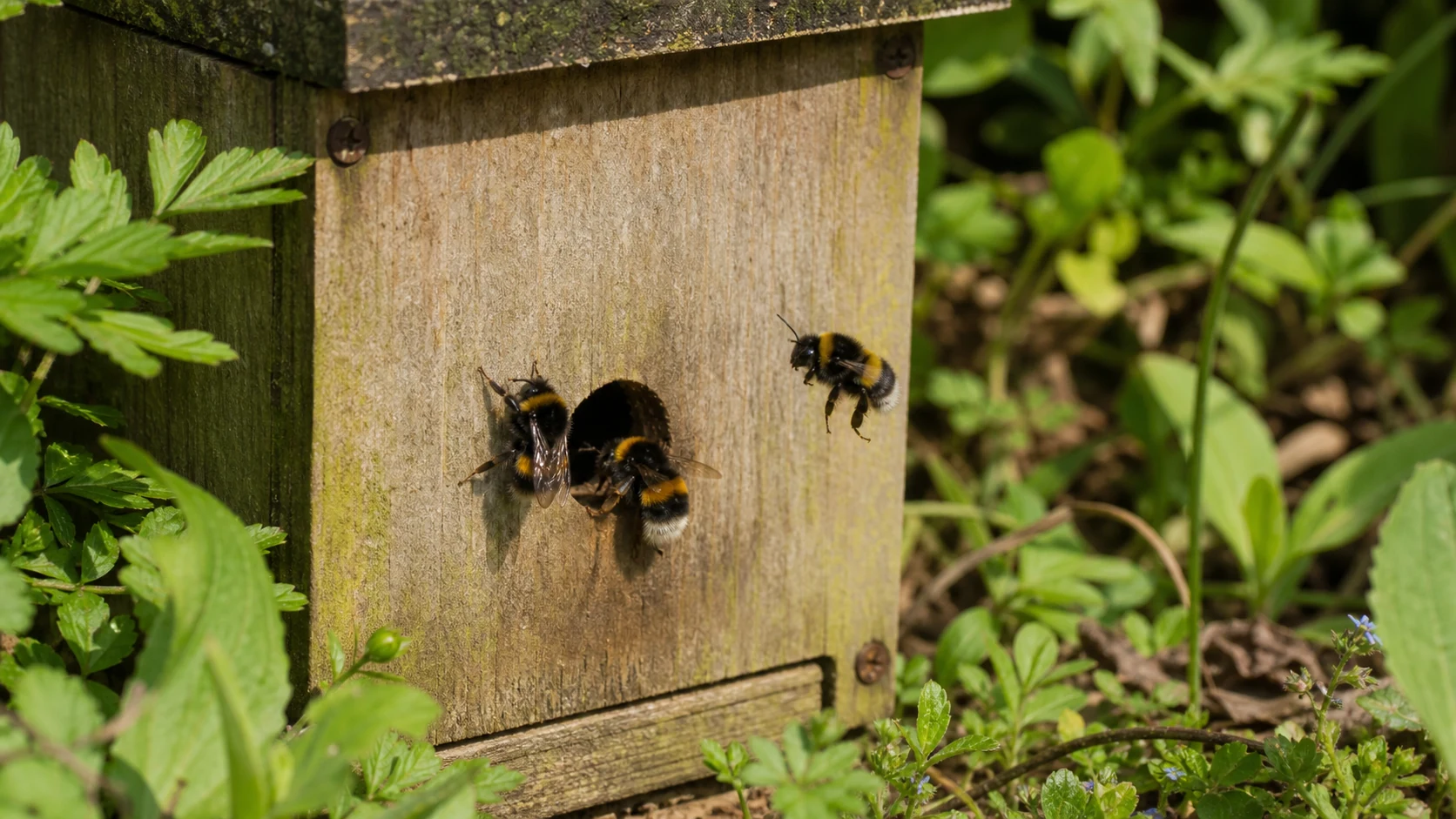
- Bird boxes. The tree bumblebee, a recent arrival to the UK, loves old bird boxes - if your “birds” suddenly hum, this is why.
- Under decking, sheds and paving. Old mouse holes and dry cavities at ground level suit most garden species.
- Compost bins and lawns. Warm, undisturbed and full of soft material.
- Eaves, soffits and cavity walls. The trickiest spots, and the ones most often confused with honey bees or wasps.
Should a bumblebee nest be removed?
Usually not. Bumblebee colonies are small - often a few hundred bees at most - and short-lived: the nest naturally dies off at the end of summer and is not reused the following year. Bumblebees are docile away from the nest entrance, vital pollinators, and several UK species are in decline. If the nest is somewhere you can give a little space until the season ends, that is genuinely the best outcome for everyone.
Removal makes sense when the nest is somewhere unavoidable - inside a wall vent by a door, in a bird box above a children’s play area, or where someone in the household is allergic to stings.
Ethical removal and relocation
Where a nest does have to go, our first option is relocation: moving the nest (bird box and all, where possible) to a safer spot so the colony completes its season naturally. Our technicians assess every nest honestly - if the right answer is “leave it alone, it will be gone by September”, we will tell you that for free rather than sell you a treatment you do not need. Only where relocation is impossible and the risk is real do we discuss treatment, and we will always explain why.
Not sure if you have bumblebees, honey bees, masonry bees or wasps? See our bee nest removal service or read about masonry bees - and if it turns out to be a wasp nest, we can usually treat it the same day.
Tree bumblebees in bird boxes
The tree bumblebee (Bombus hypnorum) deserves a special mention because it causes the most calls: it arrived in the UK in the early 2000s, spread fast, and nests in bird boxes and roof spaces from spring to mid-summer. You may see “swarming” outside the box - those are males waiting for new queens, they cannot sting, and the display looks far more dramatic than it is. The colony will be finished by late summer, after which the box can be cleaned out and rehung.
Frequently asked questions
Usually not. The colony dies off naturally at the end of summer and will not reuse the nest. Unless the nest is causing a real risk, leaving it alone is the best option - and we will tell you honestly if that is the case.
Advice is free, and we will not charge you to be told a nest can safely be left. Where relocation or removal is genuinely needed we quote first, with no obligation.
Often, yes - especially bird-box nests, which can be moved carefully to a quieter spot. Relocation is always our preferred option over treatment.
They can, but they are docile away from the nest entrance and far less defensive than wasps. Most stings happen when a nest is disturbed directly or a bee is trapped against skin.
Send us a photo or describe what you see - we identify the species first. Wasps we treat same day in most areas; for honey bees see our honey bee swarm page, as they need a different, ethical approach.