
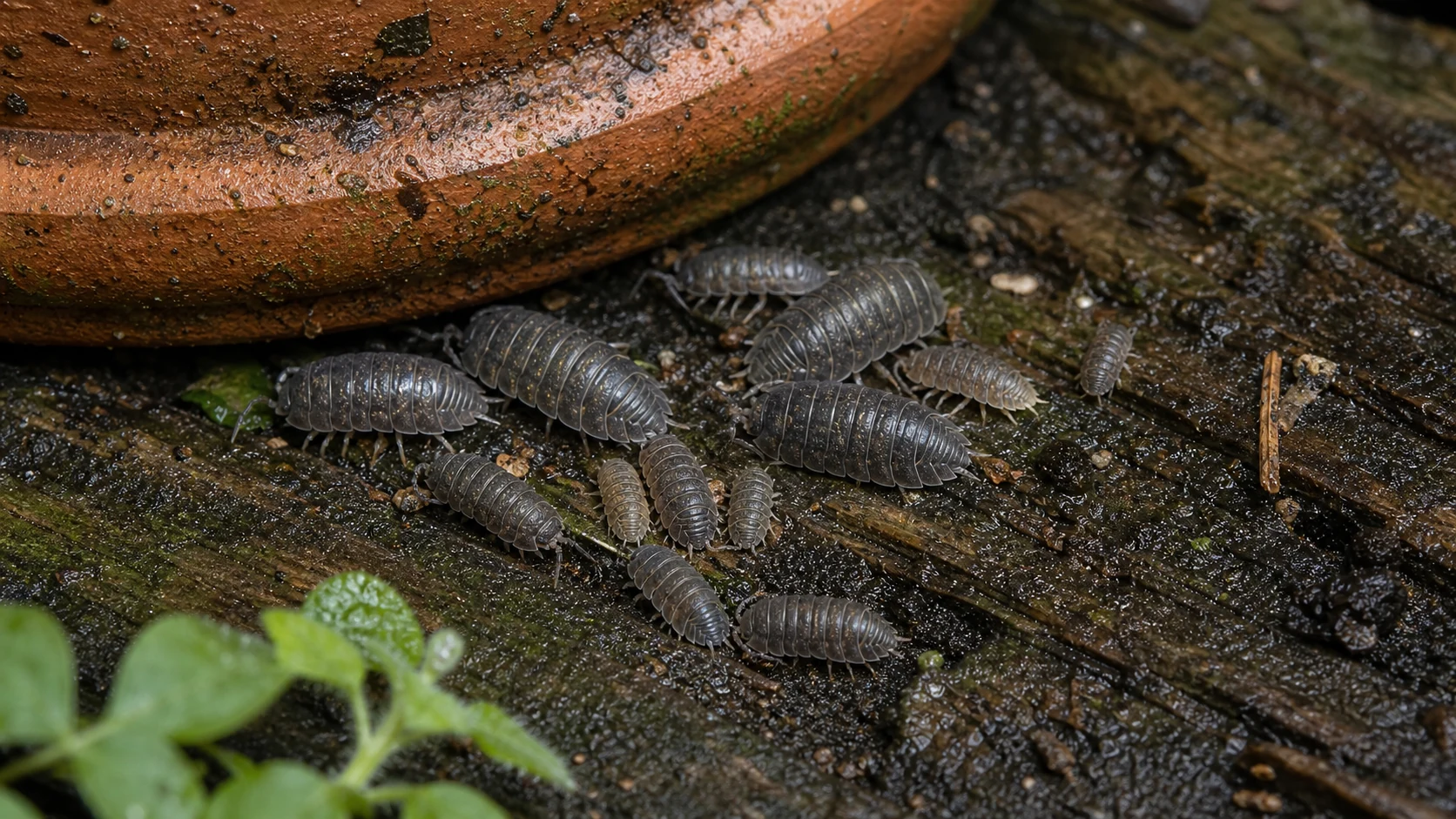
Woodlice - or slaters, pill bugs, cheesy bugs, chiggy pigs, monkey peas or grammersows, depending on where you grew up - are harmless outdoors and a damp signal indoors. They do not bite, sting, breed in dry houses or damage sound timber. If they keep appearing inside, the useful question is where the moisture is. JG Pest Control is open every day except Christmas Day, early until late.
Ask us about a woodlice problem
What are woodlice?
Woodlice are not insects at all - they are land-living crustaceans, closer to shrimp than to beetles, which is why they need moisture to breathe and die quickly in dry air. The UK has dozens of regional nicknames for them, and a couple of common species (the pill woodlouse is the one that rolls into a ball). Outdoors they are genuinely beneficial recyclers, eating rotting leaves and wood in compost heaps, log piles and under pots.
Why woodlice come indoors
-
Moisture next to the house
flower beds, mulch, log stores and clutter against the wall create a reservoir population at the doorstep.
-
Entry gaps
worn door thresholds, low airbricks, gaps around pipes and patio doors.
-
Damp indoors
regular sightings deep in the house - rather than the odd wanderer by a door - point to a humidity source: condensation, a leak, failing damp proofing, or wet under-floor voids.
-
Weather
heavy rain and hot dry spells both push them to migrate, which is when you suddenly find a dozen in the kitchen. Damp-loving earwigs often arrive the same way in late summer.
Are woodlice a problem?
Mostly no. They cannot bite or sting, they do not spread disease, and they only graze wood that is already soft and rotten - they do not create timber damage, they reveal it. The two situations worth attention: persistent indoor numbers (which mean damp worth investigating, and occasionally an under-floor void that needs ventilation work) and the cosmetic nuisance of dozens appearing in a conservatory or utility room every night.
What we do about them
Honest answer first: a few woodlice by the back door need a dustpan, not a technician. For persistent invasions our technicians find the harbourages and the moisture driving them, treat entry routes and refuge areas where justified, and advise on the proofing and drainage-side fixes - clearing mulch from walls, sealing thresholds, ventilating voids - that stop the nightly parade permanently. If chewed, soft timber turns up during the inspection we will tell you, and our woodworm treatment team can assess it. Every visit is by an RSPH (BPCA) Level 2 certified and trained technician.
Frequently asked questions
Occasional ones wander in from damp ground by the walls and die in the dry indoor air. Regular numbers deep in the house mean a moisture source - condensation, a leak or a damp void - worth finding.
They only graze wood that is already decaying. Finding many in one spot indoors can be a useful warning that timber there is damp - the woodlice are the symptom, not the cause.
No. They do not bite, sting or carry disease. Cats and dogs that eat one occasionally come to no harm.
All regional names for woodlice - slaters in Scotland and the north, cheesy bugs in Kent, chiggy pigs in the West Country, monkey peas, pea bugs and plenty more. Same creature everywhere.
Fix the moisture and the access: clear damp material from against the walls, seal thresholds and gaps, ventilate damp voids. Treatment has a role in heavy invasions, but dryness is what defeats them.