
A faint, rhythmic ticking or tapping from old beams on quiet spring nights is the mating call of the deathwatch beetle - and in older oak-framed buildings it deserves to be taken seriously. The larvae bore through structural hardwood for years before you hear a thing. JG Pest Control surveys and treats woodboring infestations across the UK. We are open every day except Christmas Day, early until late.
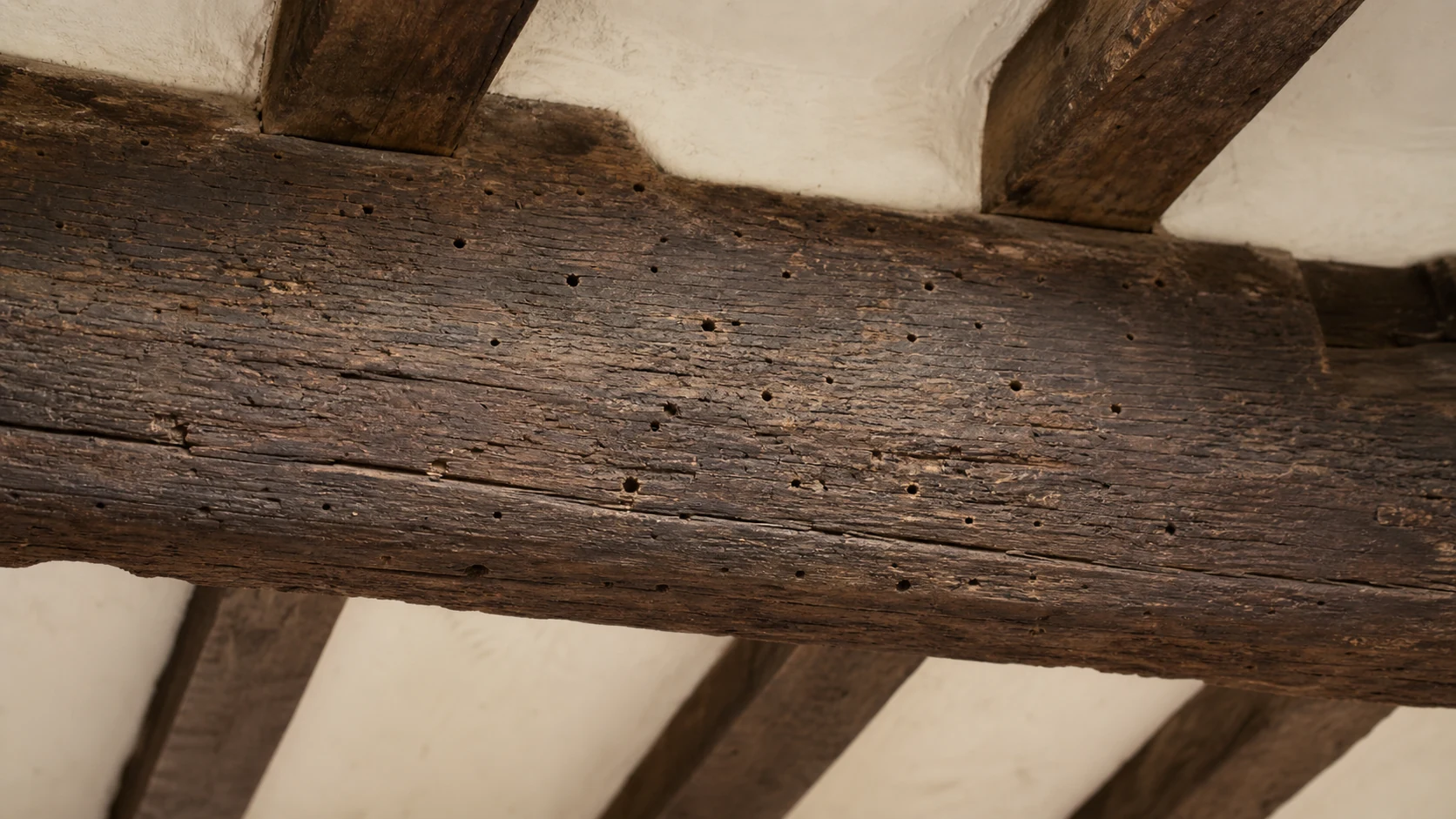
What is the deathwatch beetle?
The deathwatch beetle is a woodboring beetle, larger than the common furniture beetle (the usual “woodworm”), at around 7mm, chocolate brown with patches of yellowish hairs. Its larvae tunnel through old hardwood - oak above all - that has at some point been softened by damp and fungal decay. That makes it a creature of historic buildings: churches, barns, timber-framed cottages and period houses with oak beams, lintels and floor frames.
The famous ticking is the adult beetle knocking its head against the timber to attract a mate in spring. The name comes from centuries of people hearing it during silent night-time vigils over the sick - hence “deathwatch”.
Signs of deathwatch beetle
- Ticking - a series of rapid taps, repeated, from beams or floors on still spring evenings (roughly April to June).
- Exit holes around 3mm across - noticeably larger than the 1-2mm holes of common furniture beetle - in oak and other hardwoods.
- Coarse, gritty frass (bore dust) containing little disc-shaped pellets, collecting below beams.
- Adult beetles found near timbers or on window sills in spring.
- Weak or crumbling timber - in long-established attacks the interior of a beam can be honeycombed while the surface looks acceptable.
Why it matters more than ordinary woodworm
Common furniture beetle mostly attacks softwood and sapwood; annoying, but often superficial. Deathwatch beetle works deep inside structural oak, the larvae can take many years to mature (so infestations span decades), and activity concentrates exactly where a building can least afford it: bearing ends of beams, wall plates and joist ends where old damp has been at work. Assessing how much sound timber remains is as important as killing the insects.
Professional survey and treatment
Our technicians inspect the timbers, confirm the species from the holes and frass, establish whether the attack is active, and crucially trace the damp that made the wood attractive in the first place - deathwatch rarely thrives in genuinely dry oak. Treatment combines targeted professional insecticidal work with moisture control, and we tell you honestly when timbers need a structural opinion as well. For the common furniture beetle and general woodboring problems, see our woodworm treatment service. Every visit is by an RSPH (BPCA) Level 2 certified and trained technician.
Frequently asked questions
Rhythmic tapping from oak timbers in spring is the deathwatch beetle’s mating call. It confirms adult beetles are present, which makes a survey worthwhile - the larvae do the damage silently the rest of the year.
Potentially serious in older buildings: larvae tunnel deep in structural oak for years, concentrated where old damp weakened the wood. Plenty of attacks are manageable once assessed - the key is finding out how active and extensive it is.
Woodworm usually means the common furniture beetle - smaller holes (1-2mm), mostly softwoods. Deathwatch leaves 3mm holes in hardwood, almost always oak, with gritty pellet-filled frass, and targets structural timber.
Yes - with professional treatment of the affected timbers combined with fixing the damp that supports the infestation. Severely weakened timbers may also need repair, which the survey establishes.
It means adults are calling from somewhere in the timber. A survey establishes whether the attack is active and how far it extends - sometimes the activity is old and minor, sometimes not. Either way, it is worth knowing.