
Hundreds of sluggish flies around your loft, sash windows or an unused bedroom every autumn - and again on the first warm days of spring? Those are cluster flies, and the same building gets chosen year after year until it is treated and proofed. JG Pest Control treats cluster fly infestations across the UK. We are open every day except Christmas Day, early until late.
What are cluster flies?
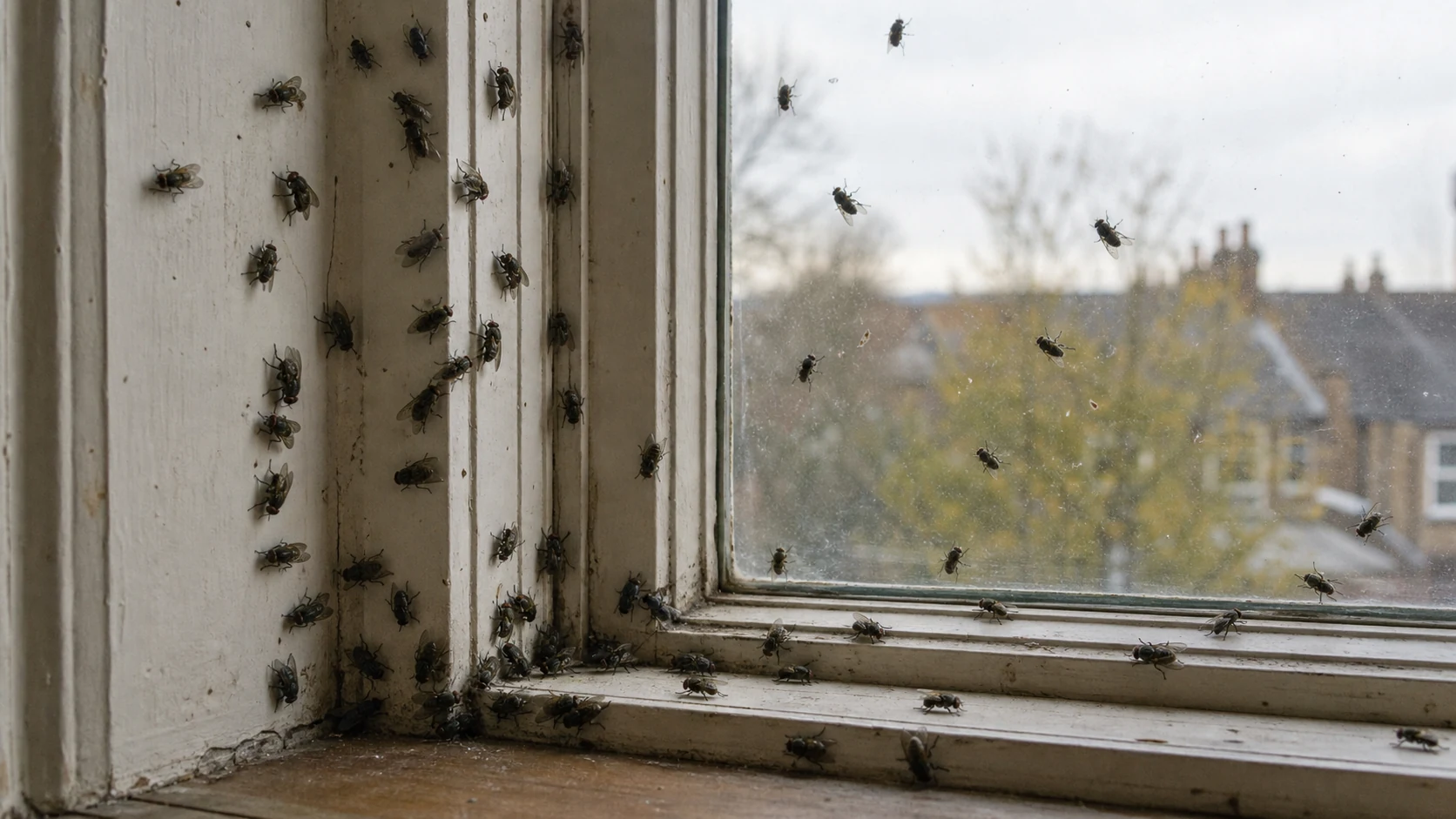
Cluster flies are slightly larger and slower than house flies, with golden hairs on the thorax and overlapping wing tips at rest. They spend summer outdoors (their larvae parasitise earthworms in grassland, which is why rural and edge-of-town properties get them worst), then as temperatures drop in autumn they gather - cluster - in the warm upper parts of buildings to hibernate: lofts, roof voids, sash window boxes, and south or west facing wall cavities.
They navigate by scent markers left by previous generations, which is the frustrating part: a building that has hosted cluster flies once tends to be chosen again every autumn, regardless of how clean it is.
Signs you have cluster flies
- Large numbers of dozy flies at upstairs windows in autumn, especially on sunny afternoons.
- A buzzing loft or roof void - sometimes thousands strong in a bad year.
- Flies reappearing on warm winter and early spring days as the hibernating mass wakes up.
- The same rooms affected every year - classically one corner bedroom or one end of the loft.
- A sweetish, unpleasant smell where large clusters have formed or died off.
Are cluster flies harmful?
They are not a hygiene risk in the way house flies or blowflies are - they do not breed indoors, bite, or target food. The problems are sheer numbers, the smell of large die-offs, staining around windows, and the secondary pests (like larder beetles and carpet beetles) that feed on the dead flies. For homes with solar panels, the warm void beneath panels is an increasingly common clustering spot.
Professional cluster fly treatment
Our technicians treat the voids and surfaces where the flies cluster - lofts, window boxes and roof spaces - using professional products and equipment that reach the hibernating mass, not just the visible stragglers. Timing matters: autumn treatment intercepts the flies as they arrive, and we advise on proofing (sealing entry gaps around fascias, vents and window frames) to cut down next year’s invasion. Persistent annual problems are usually best handled with a planned visit each autumn. See our fly pest control service for related fly problems. Every visit is by an RSPH (BPCA) Level 2 certified and trained technician.
Frequently asked questions
Cluster flies leave scent markers that guide each new generation back to the same building and often the same void. Until the harbourage is treated and entry points proofed, the pattern repeats every year.
They are not breeding indoors - they came in through gaps around the roofline, vents and window frames in autumn and have been hibernating in the loft or wall void. Warm days wake them and they head for the light of windows.
Sprays kill the flies you can see, but the hibernating mass in the void carries on regardless. Professional treatment reaches the cluster itself, which is what actually breaks the cycle.
Early autumn, as the flies arrive, with proofing advice to reduce next year. Spring treatments deal with wakers, but autumn is where the war is won.
They stain around windows and large die-offs can smell and attract other insects, but they do not damage the building itself or spread disease like bin flies do.