
If your box hedge is turning brown and covered in webbing, you almost certainly have box hedge caterpillars - the larvae of the box tree moth. They can strip a healthy hedge in a couple of weeks, and because there are several generations a year they keep coming back until the infestation is dealt with properly. JG Pest Control treats box tree moth caterpillars across the UK, with same-day visits often available. We are open every day except Christmas Day, early until late.
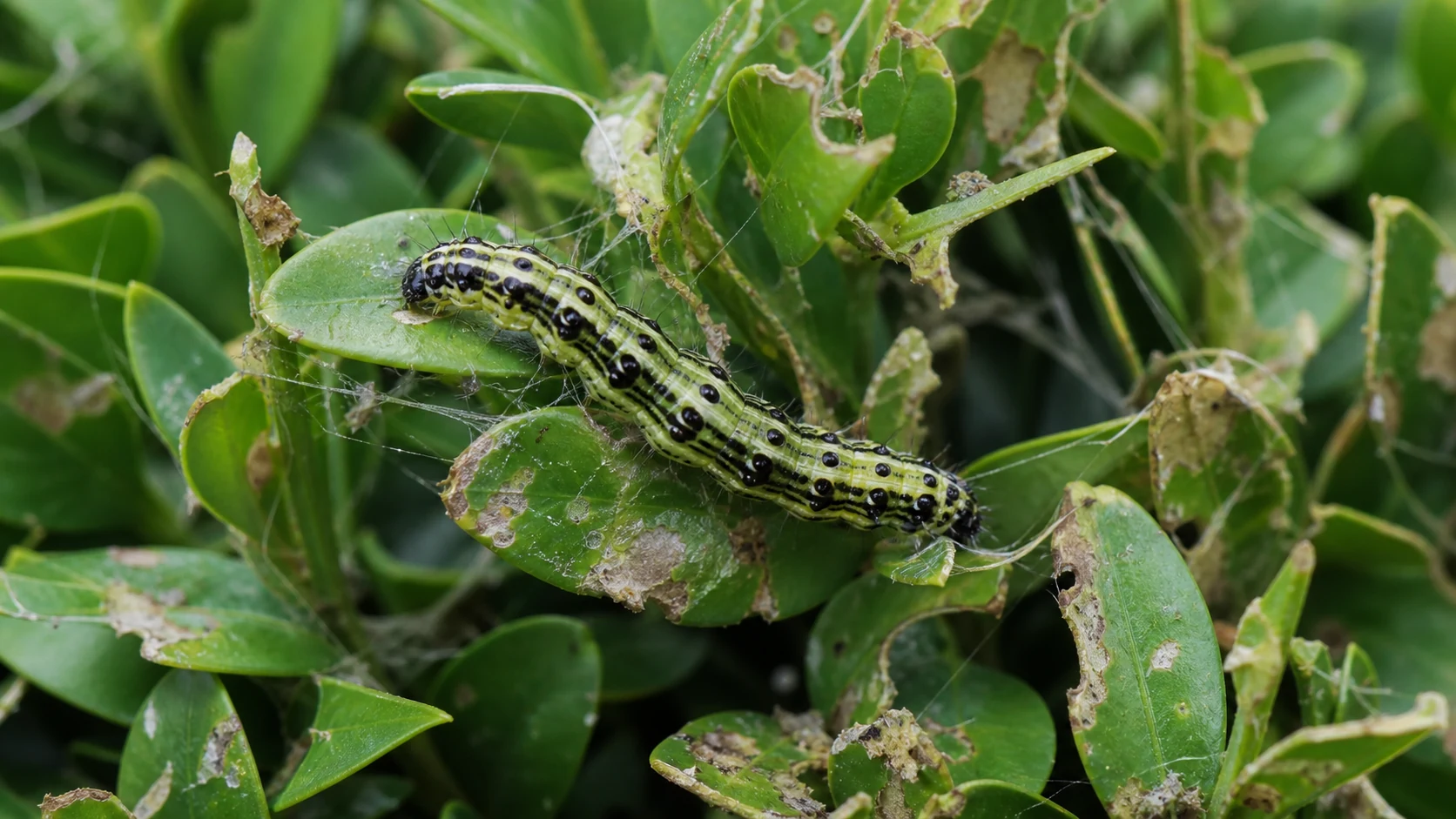
What are box hedge caterpillars?
Box hedge caterpillar, box tree caterpillar, box moth caterpillar and buxus caterpillar are all names for the same insect: the larva of the box tree moth (Cydalima perspectalis), which many people call the box hedge moth or simply the box moth. The moth arrived in the UK from East Asia in the 2000s and is now widespread, with London and the South East hit hardest, though it has spread across much of England and Wales.
The caterpillars feed almost exclusively on box (Buxus) - the slow-growing evergreen used for hedging, topiary and parterres. A heavy infestation can defoliate plants that took decades to grow, which is why early treatment matters so much.
How to identify box tree caterpillars
- The caterpillars. Greenish-yellow with thick black stripes and black spots, a shiny black head, and fine bristles. They grow to around 4cm.
- Webbing. Fine, pale webbing spun over and inside the hedge is usually the first thing people notice - the caterpillars feed under its protection.
- Patchy dieback. Leaves are eaten from the inside of the plant outwards, so damage is often well advanced before the outside of the hedge looks wrong.
- Pale pellets. Greenish-yellow frass (droppings) collects on and under the plant.
- The moths. White wings with a brown border, around 4cm across, flying from spring to autumn.
Why they are so destructive
Box tree moths produce two to three generations a year in the UK, roughly between April and October. Each generation of caterpillars feeds harder than the last, so a hedge that looked slightly thin in May can be brown and bare by August. The caterpillars also strip bark from stems, which can kill the plant even where some leaves survive. Because the moth has few natural predators here, infestations rarely burn out on their own.
Professional box hedge caterpillar treatment
Our technicians treat the caterpillars directly, using professional products applied into the webbing and inner foliage where they hide - the area garden sprays rarely reach. Treatment is timed to the life cycle, because eggs and pupae are far tougher than feeding caterpillars, and we advise on follow-up visits where a second generation is likely. Every visit is carried out by an RSPH (BPCA) Level 2 certified and trained technician and our work is guaranteed.
If you have a wider caterpillar problem - including nests of other species around the garden - see our caterpillar pest control service.
Can a box hedge recover?
Often, yes. Box is surprisingly resilient: if the infestation is stopped before the bark is stripped, most hedges re-leaf over the following season. Feed and water the plant after treatment, trim out dead wood, and keep an eye out for fresh webbing from late spring onwards. Where plants are too far gone, we can advise on whether replanting or switching to a box alternative makes more sense.
Frequently asked questions
If you can see webbing, green-and-black striped caterpillars and patchy brown dieback, it is the box tree caterpillar - the larva of the box tree moth. It is by far the most common cause of sudden box hedge damage in the UK.
They are not dangerous to people or pets - the damage is to the plants. The main risk is losing mature box hedging and topiary, which is slow and expensive to replace.
Light pruning helps you find the caterpillars but rarely stops an infestation, because eggs and larvae are spread through the whole plant. Professional treatment targets the caterpillars inside the webbing where trimming and shop sprays miss them.
While caterpillars are actively feeding - typically April to October. The earlier in an outbreak you treat, the more of the hedge you save. We are open every day except Christmas Day, so you will not wait long for a visit.
It can, because adult moths fly in from surrounding gardens. After treatment we advise monitoring from spring; catching the first generation early makes each following year easier.