
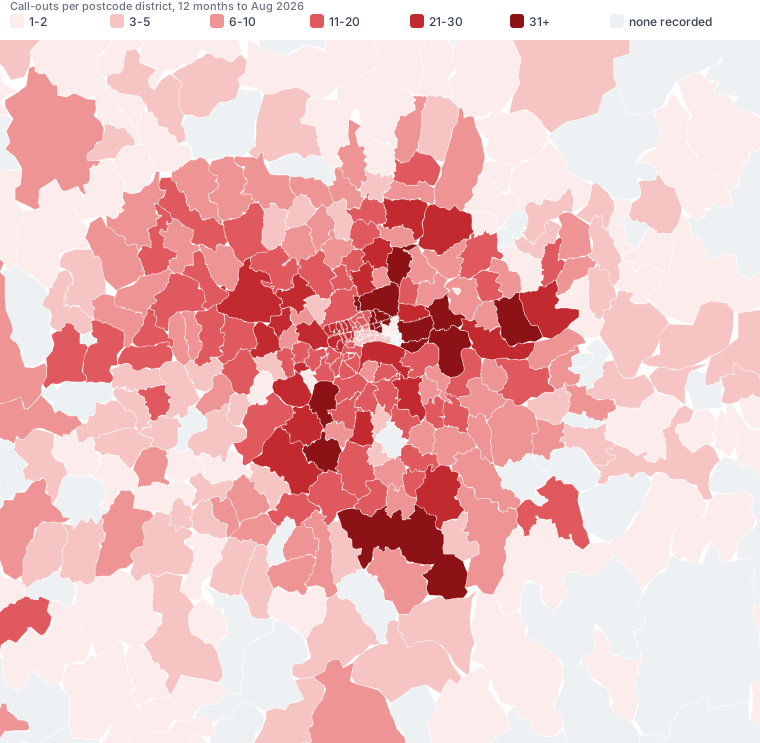
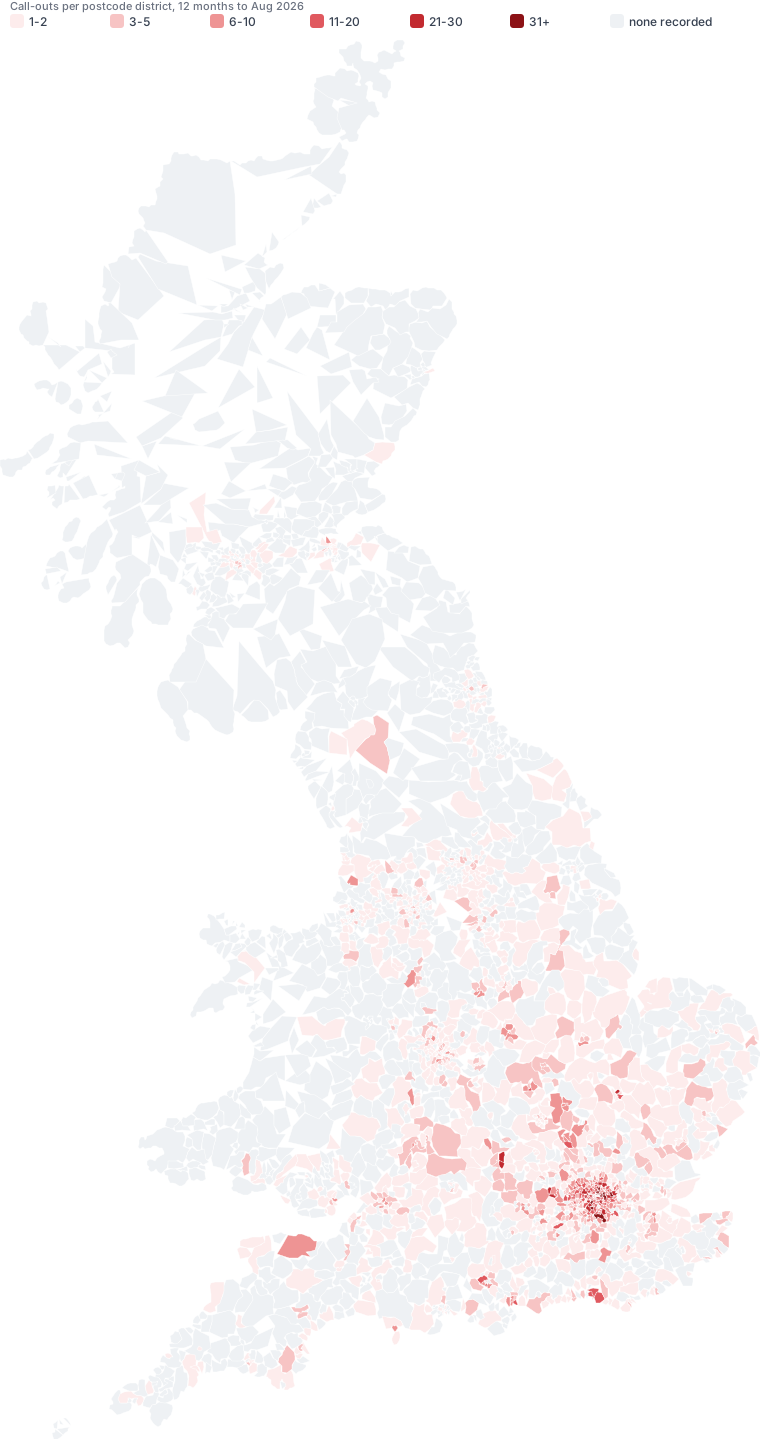
Based on 39,204 pest control call-outs with a valid postcode district, attended in the 12 months to August 2026. Bed bugs accounted for 4,703 of those call-outs, and London dominates the national picture.

Bed bugs are London’s pest. Our engineers attended 4,703 bed bug call-outs across the UK in the last 12 months, and the capital’s postcodes fill the top of the table: south-west London (SW) leads on 339 call-outs, with east London (E) on 320, south-east (SE) on 303 and north (N) on 275. No other British city comes close.
Key findings
- Croydon (CR0) and Whitechapel (E1) are London’s bed bug capitals, with 42 attended call-outs each in the 12 months to August 2026 (JG Pest Control call-out data).
- South-west London (SW) is the busiest postcode area in the UK for bed bugs, with 339 call-outs in 12 months.
- Slough (SL1) is the only district outside Greater London in the capital’s top 15, with 26 call-outs.
- Grouped central London codes hold their own: EC1 logs 33 call-outs, W1 26 and SW1 20.
- Outside London, Birmingham (114) and Oxford (98) lead the country.
London’s top 15 bed bug districts
| District | Area | Call-outs (12 months) |
|---|---|---|
| CR0 | Croydon | 42 |
| E1 | Whitechapel and Aldgate | 42 |
| N1 | Islington | 41 |
| SW11 | Battersea | 39 |
| E14 | Poplar and Canary Wharf | 35 |
| E3 | Bow | 32 |
| E6 | East Ham | 32 |
| SW17 | Tooting | 32 |
| N16 | Stoke Newington | 31 |
| NW6 | Kilburn | 28 |
| W12 | Shepherd’s Bush | 28 |
| W2 | Paddington and Bayswater | 27 |
| SL1 | Slough (commuter belt) | 26 |
| NW10 | Willesden and Harlesden | 26 |
| SE1 | Southwark and Borough | 25 |
What the map shows
The pattern is a ring around a busy core. The busiest single districts - Croydon (CR0), Whitechapel (E1), Islington (N1), Battersea (SW11) and Poplar (E14) - form a band of dense, fast-turnover rental housing around the centre. Central London is just as active once its patchwork of micro-districts is read together: on the map we group the lettered codes into their parents, and grouped EC1 (Clerkenwell and the City fringe) logs 33 call-outs, W1 (the West End) 26, SW1 (Westminster and Victoria) 20 and WC1 (Bloomsbury) 14.
Slough (SL1) is the only district outside Greater London to break into the top 15 - a reminder that bed bugs follow commuter corridors. They spread through luggage, transport and second-hand furniture, so the busiest districts are the best connected ones.
The UK picture
In a hotspot? What to do
Check mattress seams, bed frames and headboards for live insects, shed skins and the tell-tale pepper-like droppings. Bites in lines of three or four along exposed skin are another early sign - our guide to the signs of bed bugs covers what to look for.
If you find them, act fast: a light infestation is dramatically cheaper and quicker to resolve than an established one. We carry out more bed bug heat treatments than any other UK company - one whole-room treatment kills every life stage, including eggs, in a single visit - and our K9 detection dogs can confirm whether an infestation is active before you commit to treatment. For same-day help anywhere in the capital, see our London bed bug treatment service. We are open every day except Christmas Day, early until late.
Frequently asked questions
In our call-out data for the 12 months to August 2026, CR0 (Croydon) and E1 (Whitechapel and Aldgate) top the table with 42 attended bed bug call-outs each, followed by N1 (Islington) on 41 and SW11 (Battersea) on 39.
Density of flats and shared housing, a fast-moving rental market, and heavy commuter and visitor traffic all help bed bugs spread. They travel in luggage, second-hand furniture and clothing, so districts with high turnover of people see more infestations.
No. The hotspot map reflects where treatments are most often needed, not an inevitability. It does mean it pays to check mattress seams and headboards regularly, and to be careful with second-hand furniture and luggage after travel.
Professional treatment is the only reliable route for an established infestation. We carry out more bed bug heat treatments than any other UK company - a single whole-room heat treatment kills adults, nymphs and eggs in one visit, without repeat chemical applications.