
Earwigs look menacing - the rear pincers do that - but they are harmless to people, do not crawl into ears any more than any other insect, and indoors they are visitors from damp ground outside rather than residents. Persistent numbers in the house are worth treating and proofing. JG Pest Control is open every day except Christmas Day, early until late.
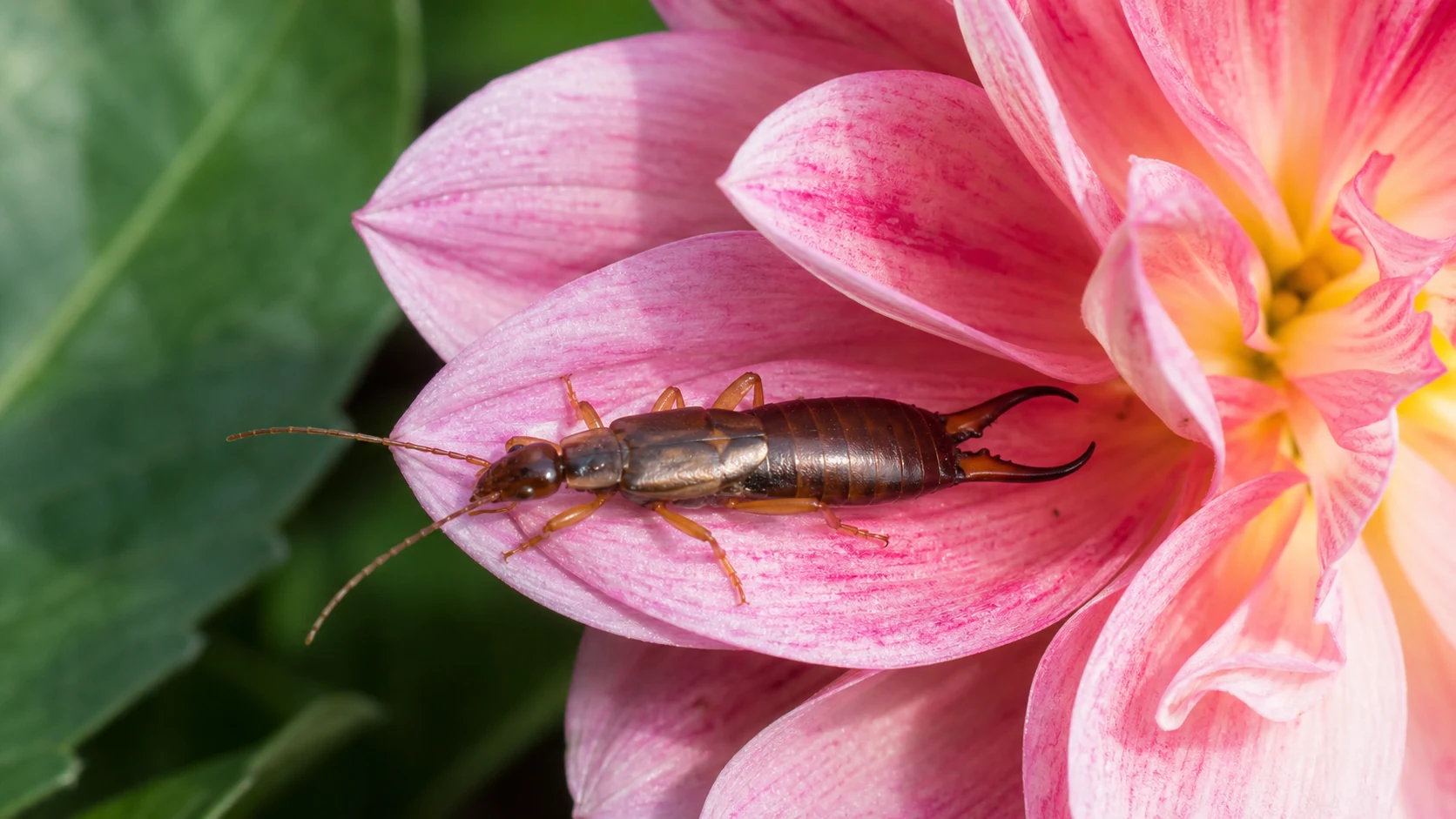
What are earwigs?
The common earwig is a slim, glossy red-brown insect around 1.5cm long with a pair of curved pincers (cerci) at the tail - more curved in males, straighter in females. They feed at night on decaying plant matter, aphids and soft plant tissue, and spend the day wedged into tight, damp crevices: under pots and stones, in dahlia and chrysanthemum blooms, behind bark, inside hollow canes, and in the rubber seals and frames of patio doors.
Two myths to retire: the pincers can give the gentlest of nips if you handle one, but cannot break skin or hurt; and the ear thing is folklore - they have no interest in ears, and cases are no more common than for any other small wandering insect.
Why earwigs come indoors
- Damp, sheltered ground right against the house - planters, mulch, log piles, climbing plants on the wall.
- Hot dry spells and heavy rain, both of which push them to migrate in search of moisture or shelter.
- Gaps at thresholds, patio door tracks, low vents and around pipes.
- Washing left on the line and cut flowers - the classic accidental lifts indoors.
Indoors is a dead end for them: houses are too dry for earwigs to breed, so an “infestation” is really a steady trickle from a healthy population just outside.
Do earwigs cause damage?
In the house, no - no bites, no disease, no damage to fabric or timber. In the garden they are double agents: they eat aphids (genuinely useful in fruit trees) but also chew ragged holes in dahlias, clematis and seedlings. Most gardens are better off tolerating them; most households just want them out of the kitchen, which is fair.
What we do about them
For persistent indoor numbers, our technicians treat the entry routes and the harbourages along the building line - the band of pots, mulch and clutter where the population actually lives - and advise on the proofing (threshold seals, vent mesh, moving moisture-holding material away from walls) that keeps them out. It is a quick, effective visit, and every one is carried out by an RSPH (BPCA) Level 2 certified and trained technician. If you are seeing several different crawling insects, our insect control team will identify what is what.
Frequently asked questions
No more than any other insect - which is to say, vanishingly rarely and by accident. The name comes from old folklore, not from anything earwigs actually do.
The pincers can give a tiny pinch if you pick one up, but cannot break skin. No venom, no bite, no disease.
Weather - a hot dry spell or a wet one - has pushed the population outside your walls to migrate, and they are finding gaps at doors and vents. Treat the building line and seal the gaps and the trickle stops.
Effectively never - they need damp soil and crevices to breed, and centrally heated homes are too dry. Indoor earwigs are visitors, not colonists.
Move pots, mulch and stored timber away from the walls, fix door threshold seals and patio track gaps, mesh low vents, and shake out washing and flowers before bringing them in. Treatment along the building line deals with heavy populations.