
Tiny pale insects crawling on walls, window sills, in kitchen cupboards or over stored food packets are usually booklice - and despite the name they are not lice, do not bite, and are really a damp problem wearing an insect costume. JG Pest Control identifies booklice properly and treats the conditions that cause them. We are open every day except Christmas Day, early until late.
Get an identification and quote
What are booklice?
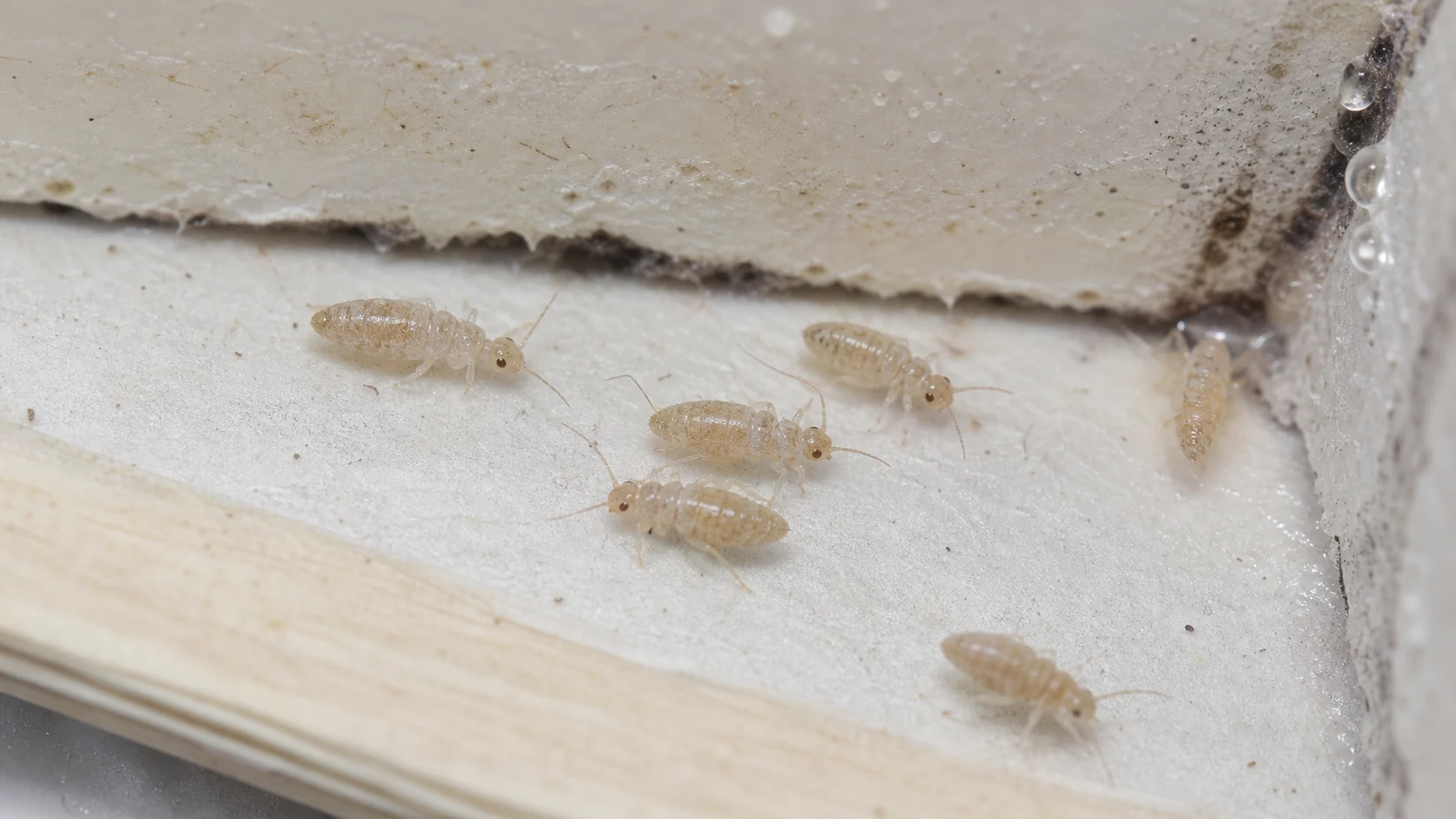
Booklice (psocids) are soft-bodied insects around 1-2mm long, ranging from translucent white to grey-brown. They feed on microscopic moulds, mildew and starchy residues, which is why they turn up wherever humidity is high: new plaster drying out, bathrooms, window reveals with condensation, the backs of kitchen cupboards, and badly ventilated stores. The name comes from their habit of grazing the starch paste and mould in old book bindings.
They are wingless or near enough, they do not bite or sting, they do not live on people or pets, and they are not a sign of dirt - new-build homes get them constantly while the plaster dries.
Where you will see them
- On fresh plaster and around recently decorated rooms - the classic new-build complaint.
- In kitchen cupboards, especially around flour, cereals and dried goods that have absorbed moisture.
- On window sills, bathroom walls and anywhere condensation forms.
- In stored cardboard, books and paperwork kept somewhere humid like a garage or loft.
Booklice or bed bugs?
This is the comparison that worries people most, because young bed bugs are also small and pale. The differences: booklice wander in the open on walls and sills and are found near damp, while bed bug nymphs hide in mattress seams and bed frames and leave dark spotting; booklice never bite, bed bugs do. If you are itchy at night and seeing small insects, rule bed bugs in or out properly - see our bed bug treatment page or send us a photo for free identification.
Getting rid of booklice
The lasting cure is drying the environment: ventilation, heating, a dehumidifier in affected rooms, fixing condensation and any leaks, and discarding infested dried foods. Booklice cannot survive sustained low humidity. Where an infestation is heavy or persistent - commonly in food cupboards or commercial storage - our technicians treat the harbourages, find the moisture source, and advise on stopping it returning. In commercial food settings booklice are a stock contamination issue, and we handle them as part of structured insect control programmes. Every visit is by an RSPH (BPCA) Level 2 certified and trained technician. If the small insects you are seeing have pincers at the tail, you are more likely looking at earwigs - another damp-linked visitor we deal with.
Frequently asked questions
Usually booklice (psocids) - 1-2mm mould-feeders that appear where there is humidity: new plaster, condensation, bathrooms and kitchen cupboards. They are harmless and do not bite.
They mean some area is humid enough to grow the invisible mould they eat - drying plaster, condensation or a leak. Fix the moisture and the booklice starve out.
They contaminate rather than poison - infested flour, cereals and dried goods should be discarded and the cupboard cleaned and dried. In food businesses they are a stock and audit problem worth professional attention.
Booklice wander openly near damp and never bite. Bed bug nymphs hide in bed frames and mattress seams, and bites with dark spotting on bedding point to them. Send us a photo if you are unsure - identification is free.
Once the humidity drops, yes - populations collapse without their mould food source. Persistent booklice are telling you the damp has not actually been fixed.