
Think you have seen an Asian hornet? Look for the almost-black body, a single yellow-orange band near the tail and bright yellow leg tips - then report it. The Asian hornet (also called the yellow-legged hornet, Vespa velutina) is an invasive species that preys on honey bees, and the UK runs a national reporting and eradication effort to stop it establishing. This page covers how to tell it apart from our native hornet, what to do if you find one, and how JG Pest Control can help. We are open every day except Christmas Day, early until late.
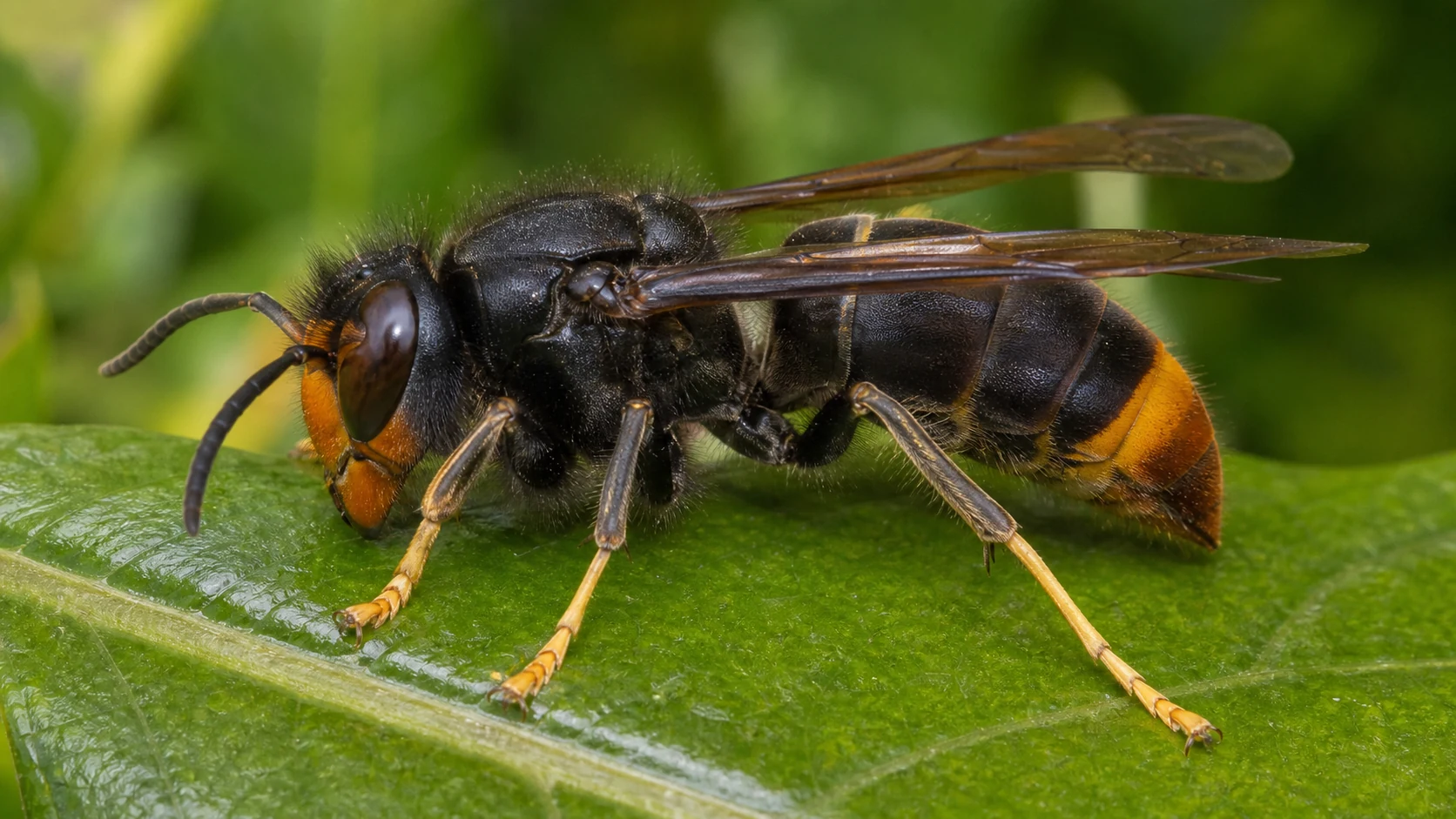
Asian hornet vs native European hornet
- Asian hornet (Vespa velutina). Slightly smaller than our native hornet. Velvety dark brown to black body, one yellow-orange band on the fourth segment of the abdomen, an orange face, and distinctive yellow lower legs - the “yellow-legged” in the name.
- European hornet (Vespa crabro). Larger, with much more yellow on the abdomen and chestnut-brown colouring. It is a native species, an important predator in its own right, and not a notifiable insect.
- Common confusion. Big queen wasps, hoverfly mimics and even the harmless wood wasp are regularly mistaken for Asian hornets. If in doubt, photograph it from a safe distance.
What to do if you see an Asian hornet
Report it. The UK government asks for all suspected sightings to be reported through the free Asian Hornet Watch app or the online reporting form, ideally with a photo. Confirmed nests are tracked and destroyed by the authorities, because finding and removing every nest is what keeps the species from establishing in the UK.
- Do not approach or disturb a suspected nest. Asian hornets defend their nest vigorously if it is disturbed.
- Photograph from a distance if it is safe to do so - a picture makes identification far faster.
- Report promptly. Early reports in spring are especially valuable, when queens are founding new nests.
How JG Pest Control helps
Our technicians deal with stinging insects every day, and we are happy to help identify what you are seeing - send us a photo and a description. If it turns out to be a wasp nest or a native hornet nest, we can treat it the same day in most areas. If we believe it is a genuine Asian hornet, we will tell you and make sure it gets reported through the official route, because suspected Asian hornet nests in the UK are handled by the national authorities rather than private companies.
Every visit is carried out by an RSPH (BPCA) Level 2 certified and trained technician, and our wasp and hornet work is guaranteed.
Are Asian hornets dangerous?
For most people a sting is painful but no more medically serious than a wasp sting, and away from the nest the insects are not aggressive. The two real concerns are nest defence - they respond in numbers if a nest is disturbed - and their impact on honey bees and other pollinators, as a single nest consumes large numbers of insects through the season. That ecological threat is why reporting matters so much.
Frequently asked questions
Asian hornets are mostly dark with one yellow-orange band near the tail, an orange face and yellow leg ends. Native European hornets are bigger and much more yellow overall. If you are unsure, photograph it from a safe distance and get it identified.
Use the free Asian Hornet Watch app or the government online reporting form, with a photo if possible. Confirmed nests are dealt with by the national authorities.
Suspected Asian hornet nests are eradicated by the authorities as part of the national response, and we will help you get a sighting reported. Wasp nests and native hornet nests we treat ourselves, usually the same day.
Sightings and nest finds have risen in recent years, mostly in the south and east of England, and the national strategy is to find and destroy every nest to stop the species establishing. Prompt reporting is a big part of why that has worked so far.
That is the most common outcome - and the easiest. We treat wasp nests the same day in most areas, with guaranteed results.