Every autumn, harlequin ladybirds cluster indoors to hibernate, sometimes in their thousands. Here is what is happening, and how to clear them out and stop them coming back. RSPH (BPCA) Level 2 certified and trained technicians across the UK.
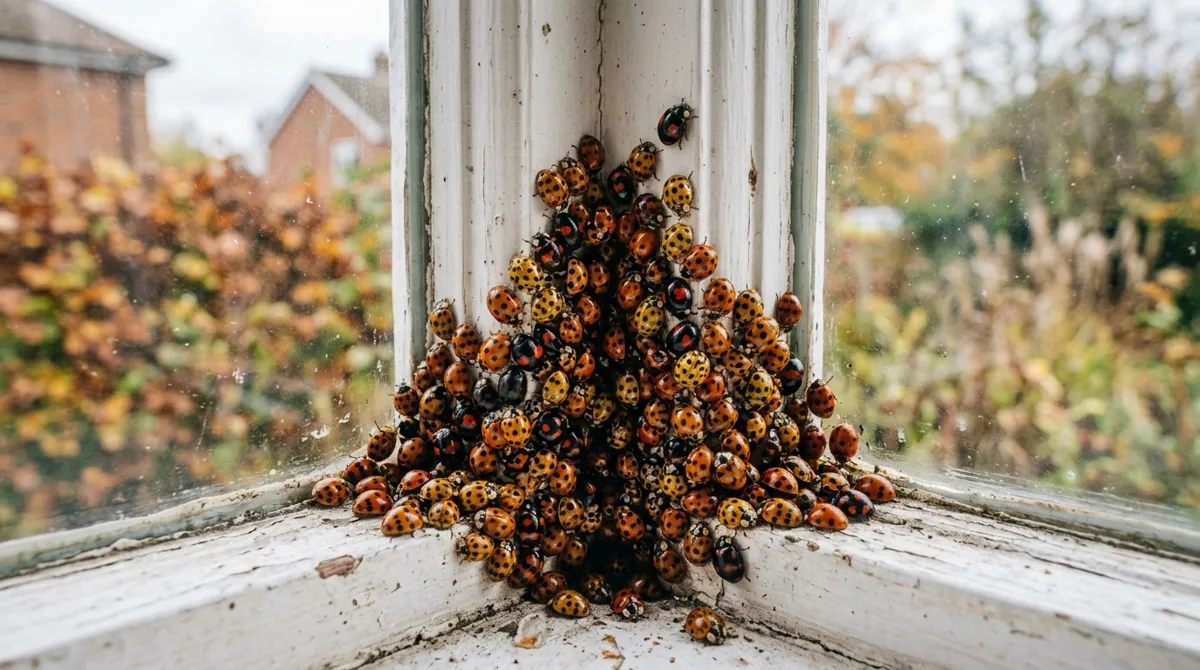
If you are suddenly finding large numbers of ladybirds gathering on sunny walls, around your window frames or up in the loft, you are almost certainly looking at harlequin ladybirds (ladybugs, as many people call them) searching for somewhere to spend the winter. It happens every autumn, usually through September and October, and they can arrive in their hundreds or even thousands.
JG Pest Control are specialists in harlequin ladybird control and removal. Most ladybirds are harmless, but when they cluster indoors in large numbers they become a genuine nuisance. Our experienced, discreet and friendly technicians offer a guaranteed service across the UK.
Ladybirds are beetles, usually 1 to 10mm long and round in shape, with hard, brightly coloured and patterned fore-wings (elytra) and biting mandibles. The invasive harlequin species arrived in England around 2004 and has been spreading northward ever since.
Harlequin ladybirds clustered in a window corner in autumn.
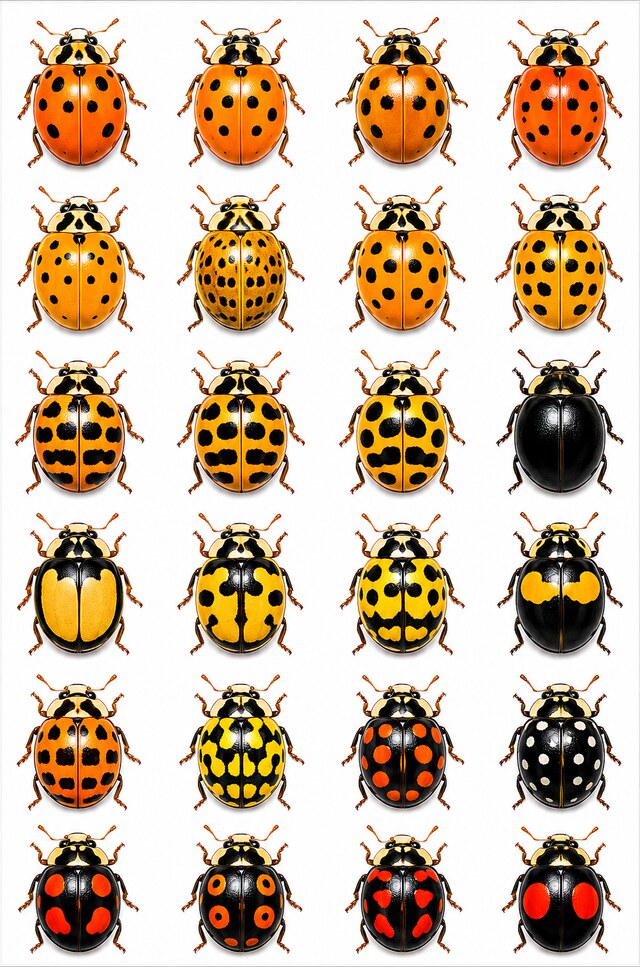
The Harlequin (Harmonia axyridis), also called the Multicoloured Asian ladybird, is widely recognised as one of the most invasive insect species on the planet. Its appearance varies enormously, which makes it hard to separate from native ladybirds.
Look for a high number of spots on the elytra, often between 15 and 21, sometimes in a grid-like pattern, with an overall size of around 7 to 8mm. The wide variety of colour forms shown here is typical of the Harlequin.
Signs of a Ladybird Infestation
Autumn ClusteringLarge groups gathering on sunny walls and windows in autumn as they look for somewhere to hibernate
Indoor SwarmsHarlequins are known to collect inside buildings in the thousands, sometimes tens of thousands
Loft and Cavity HideoutsLadybirds overwintering in lofts, wall cavities and around window frames
Staining and OdourHarlequins can leave yellow staining and an unpleasant smell on surfaces and fabrics
Occasional BitesWhen other food is scarce, Harlequins may bite, leaving a small mark or swelling
Recurring Each YearThe same sheltered spots are reused season after season unless entry points are sealed
Are Ladybirds Harmful?
Native ladybirds are harmless and even beneficial in the garden
The invasive Harlequin is the main nuisance species indoors
Large indoor clusters can stain surfaces and leave an odour
Some people react to the occasional Harlequin bite
Our Treatment Approach
Locate clustering and entry points around the property
Removal of existing ladybird clusters indoors
Residual space treatment of cracks and crevices for fast results
Advice on proofing gaps to stop them returning
Why Choose JG
Specialists in Harlequin ladybird control
RSPH (BPCA) Level 2 certified and trained technicians
Up-to-date chemicals and organic solutions
A guaranteed eradication service across the UK
How Do I Get Rid of Ladybirds?
For clusters that are already indoors, the most effective and honest approach is physical removal - vacuuming them up and emptying the contents well away from the house. Where numbers are very high, we make good use of the most up-to-date chemicals and organic solutions on the market, with a targeted space treatment of the cracks and crevices where ladybirds gather to bring things under control quickly. Our eradication service is guaranteed.
Because harlequins return to the same sheltered spots each year, lasting control combines removal with proofing of the gaps around windows, eaves and cavities that let them in. Our technicians will advise on the simple proofing measures that make the biggest difference for your property.
Harlequin Ladybird Questions
They are almost always harlequin ladybirds looking for somewhere warm and sheltered to spend the winter. As the weather cools in autumn they cluster on sunny, south and west facing walls, then squeeze in around window frames, into lofts and behind fascia boards. The same warm spots get reused year after year, which is why the problem returns each season unless the gaps are sealed.
They are not dangerous and do not carry disease. When food is scarce a harlequin may give a small, harmless nip if it lands on bare skin, but it is nothing to worry about. The real nuisance is the sheer numbers indoors and the marks they can leave behind.
When disturbed, harlequins release a little yellow fluid from their leg joints. This is called reflex bleeding and it is their defence against predators. The fluid has a distinct smell and can stain walls, curtains and other light fabrics, so it is best to vacuum them up rather than squash them.
Yes. The harlequin is an invasive species that arrived in the UK around 2004 and spread quickly. It outcompetes our native ladybirds for food and will even eat their eggs and larvae, which is why native numbers have fallen in many areas. Native ladybirds are harmless and good for the garden - it is the invasive harlequin that becomes a household nuisance.
For clusters that are already indoors, vacuuming them up and emptying the contents well away from the house is the cleanest method - squashing them risks staining and the smell. Where numbers are very high, our technicians can carry out a targeted treatment of the cracks and crevices where they gather to bring things under control quickly.
Because they return to the same sheltered spots each autumn, lasting control is really about proofing - sealing the gaps around window frames, eaves, soffits and air bricks before the weather turns in late summer. Our technicians will point out the entry points that matter most for your property and advise on the simple measures that make the biggest difference.
No, ladybirds are not a protected species. That said, native ladybirds are beneficial and best left alone in the garden. It is specifically the invasive harlequin, clustering indoors in large numbers, that is treated as a household pest.
Reviewed by our experts
Written / verified by
Roy Couch, Technician Manager
Roy Couch is the Technician Manager at JG Pest Control, leading the technician team across the UK. He holds the BPCA Diploma and the RSPH Level 2 Award in the Safe Use of Aluminium Phosphide, and is qualified in the Safe Use of Rodenticides.
Peter Bowers-Davis is a board volunteer at the British Pest Control Association (BPCA), the UK trade body for professional pest management. He works across the Tyro UK group of companies, including JG, setting technical standards, treatment protocols and training programmes.
Contains information related to marketing campaigns of the user. These are shared with Google AdWords / Google Ads when the Google Ads and Google Analytics accounts are linked together.
90 days
__utma
ID used to identify users and sessions
2 years after last activity
__utmt
Used to monitor number of Google Analytics server requests
10 minutes
__utmb
Used to distinguish new sessions and visits. This cookie is set when the GA.js javascript library is loaded and there is no existing __utmb cookie. The cookie is updated every time data is sent to the Google Analytics server.
30 minutes after last activity
__utmc
Used only with old Urchin versions of Google Analytics and not with GA.js. Was used to distinguish between new sessions and visits at the end of a session.
End of session (browser)
__utmz
Contains information about the traffic source or campaign that directed user to the website. The cookie is set when the GA.js javascript is loaded and updated when data is sent to the Google Anaytics server
6 months after last activity
__utmv
Contains custom information set by the web developer via the _setCustomVar method in Google Analytics. This cookie is updated every time new data is sent to the Google Analytics server.
2 years after last activity
__utmx
Used to determine whether a user is included in an A / B or Multivariate test.
18 months
_ga
ID used to identify users
2 years
_gali
Used by Google Analytics to determine which links on a page are being clicked
30 seconds
_ga_
ID used to identify users
2 years
_gid
ID used to identify users for 24 hours after last activity
24 hours
_gat
Used to monitor number of Google Analytics server requests when using Google Tag Manager